Why pilgrims come
Visit the resting place and legacy of St. Andrew the Apostle
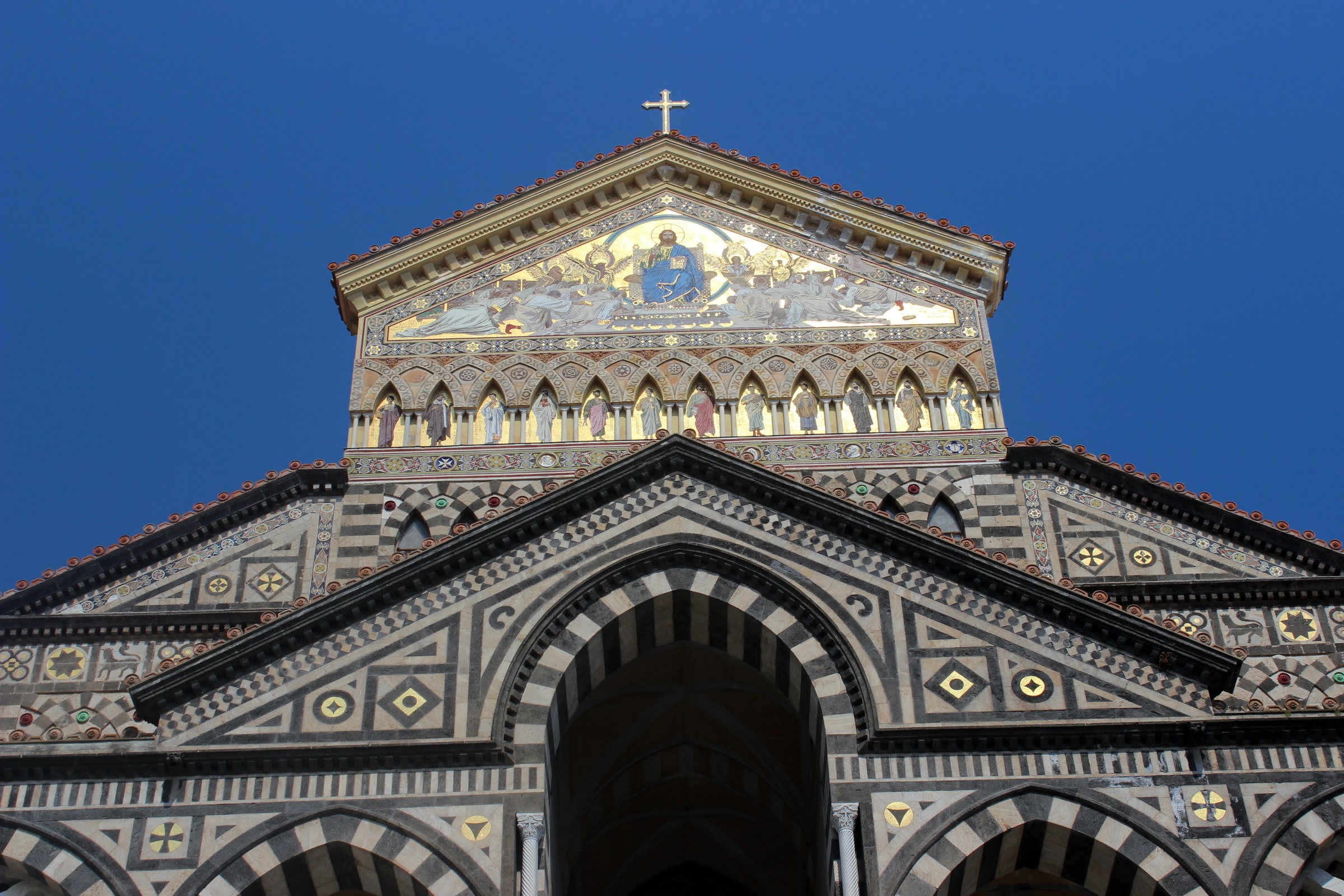
Above Amalfi’s steep central stair, the cathedral gathers the city around the tomb of St. Andrew the Apostle. The Archdiocese of Amalfi-Cava de’ Tirreni records that Cardinal Pietro Capuano brought the apostle’s relics from Constantinople and placed them beneath the crypt altar in 1208. That custody made a maritime republic on the Tyrrhenian coast one of Christianity’s principal apostolic pilgrimage destinations.
The crypt was transformed in the Baroque period into a luminous underground sanctuary. Behind its ornament is a simple spiritual claim: the brother whom Jesus called beside the Sea of Galilee is honored here. Amalfi also preserves devotion to the “manna of St. Andrew,” a liquid associated with the tomb and received within the cathedral’s liturgical tradition. Report it as a living devotion, not a laboratory conclusion or a guaranteed spectacle.
The wider complex includes the cathedral, the older Basilica of the Crucifix, the Paradise Cloister, and diocesan art. The layered buildings reveal Amalfi’s medieval Mediterranean connections and the long civic bond with its patron. Descend to the crypt with the Gospel call of Andrew in mind, pray for unity among Christians, and leave time for the whole cathedral complex rather than treating the tomb as a quick coastal stop. Current worship, museum, and visitor access should be confirmed with the official cathedral and archdiocese.
Climb from Amalfi’s piazza, then descend into the crypt to pray near the relics of the first-called Apostle.
The sacred connection
People and objects remembered here
These relationships are part of the destination record, with feast days and catalog qualifications shown where available.
principal relics traditionally enshrined beneath the crypt altar
Feast: November 30Tomb and bodily remains · Longstanding ecclesial tradition
The crypt is an active place of prayer within the cathedral complex.What to notice
Look closely at the place and its story
The apostolic crypt
Pray beneath the altar where St. Andrew’s relics were placed in 1208.
The manna devotion
Understand the liquid associated with the tomb within Amalfi’s ecclesial tradition.
Cathedral, cloister, and older basilica
Read the full complex as the history of a Christian maritime city.
Feasts, anniversaries & celebrations
How to read this page
Sources, tradition, and what is verified
The destination record was last checked on 9/27/2026.
This page records the site’s tradition as “Roman Catholic cathedral and traditional apostolic tomb.” That wording describes the nature of the claim and keeps devotional tradition distinct from independently verified history.