Why pilgrims come
Visit the resting place and legacy of St. Elizabeth Ann Seton
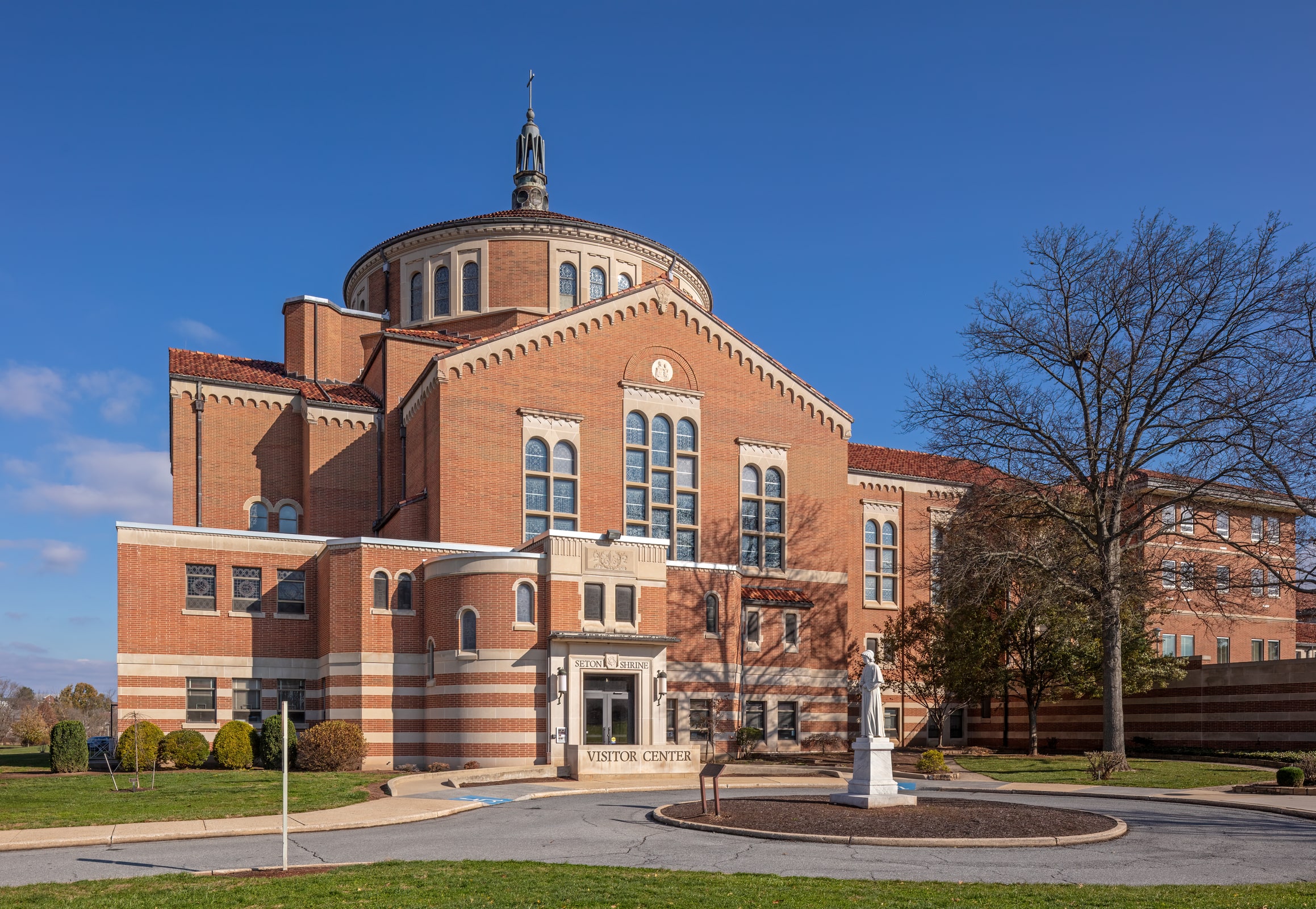
The National Shrine in Emmitsburg preserves the tomb of Saint Elizabeth Ann Seton, the first native-born citizen of the United States to be canonized. Her remains rest in a copper casket within the Altar of Relics beneath the basilica’s principal altar, making the church both a national sanctuary and the physical center of pilgrimage to her life.
Elizabeth Ann Bayley Seton was a New York wife, mother, widow, convert, foundress, and educator. After entering the Catholic Church, she came to Maryland and established the community that became the Sisters of Charity of St. Joseph’s. The small school she opened in Emmitsburg helped shape the parochial-school tradition in the United States. Her sanctity was formed through grief, financial uncertainty, motherhood, friendship, the Eucharist, and persevering service rather than through distance from ordinary life.
The present basilica was completed in 1965. After her beatification, the church became the national shrine, and her remains were transferred to the altar in 1968. The surrounding campus gives the tomb historical depth: the museum, the Stone House and White House associated with the early community, the cemetery, and the landscape of St. Joseph’s Valley allow pilgrims to follow her vocation rather than encounter only a reliquary.
Pray first at the Altar of Relics, then walk the historic grounds. Parents, teachers, converts, widows, and people rebuilding life after loss will find distinct points of connection. The shrine is active and schedules tours, Mass, confession, exhibits, and seasonal programs; verify current arrangements directly before travel.
Begin at Mother Seton’s tomb, then walk the homes, school landscape, museum, and cemetery that turn her biography into a place-based pilgrimage.
The sacred connection
People and objects remembered here
These relationships are part of the destination record, with feast days and catalog qualifications shown where available.
tomb, historic home, school, and principal national shrine
Feast: January 4Tomb and bodily remains · Ecclesiastically documented
Enshrined beneath the altar of the basilica.What to notice
Look closely at the place and its story
The Altar of Relics
Pray where Mother Seton’s remains rest beneath the basilica altar.
The historic homes
Enter the domestic settings in which the Sisters of Charity and their school took shape.
The museum
Trace her life as wife, mother, widow, convert, foundress, and educator.
St. Joseph’s Valley
Walk the landscape that became the cradle of her American Catholic community.
Feasts, anniversaries & celebrations
How to read this page
Sources, tradition, and what is verified
The destination record was last checked on 9/27/2026.
This page records the site’s tradition as “Roman Catholic basilica, national shrine, and saint’s tomb.” That wording describes the nature of the claim and keeps devotional tradition distinct from independently verified history.