Why pilgrims come
Discover what makes Basilica of Notre-Dame de la Garde a place of pilgrimage
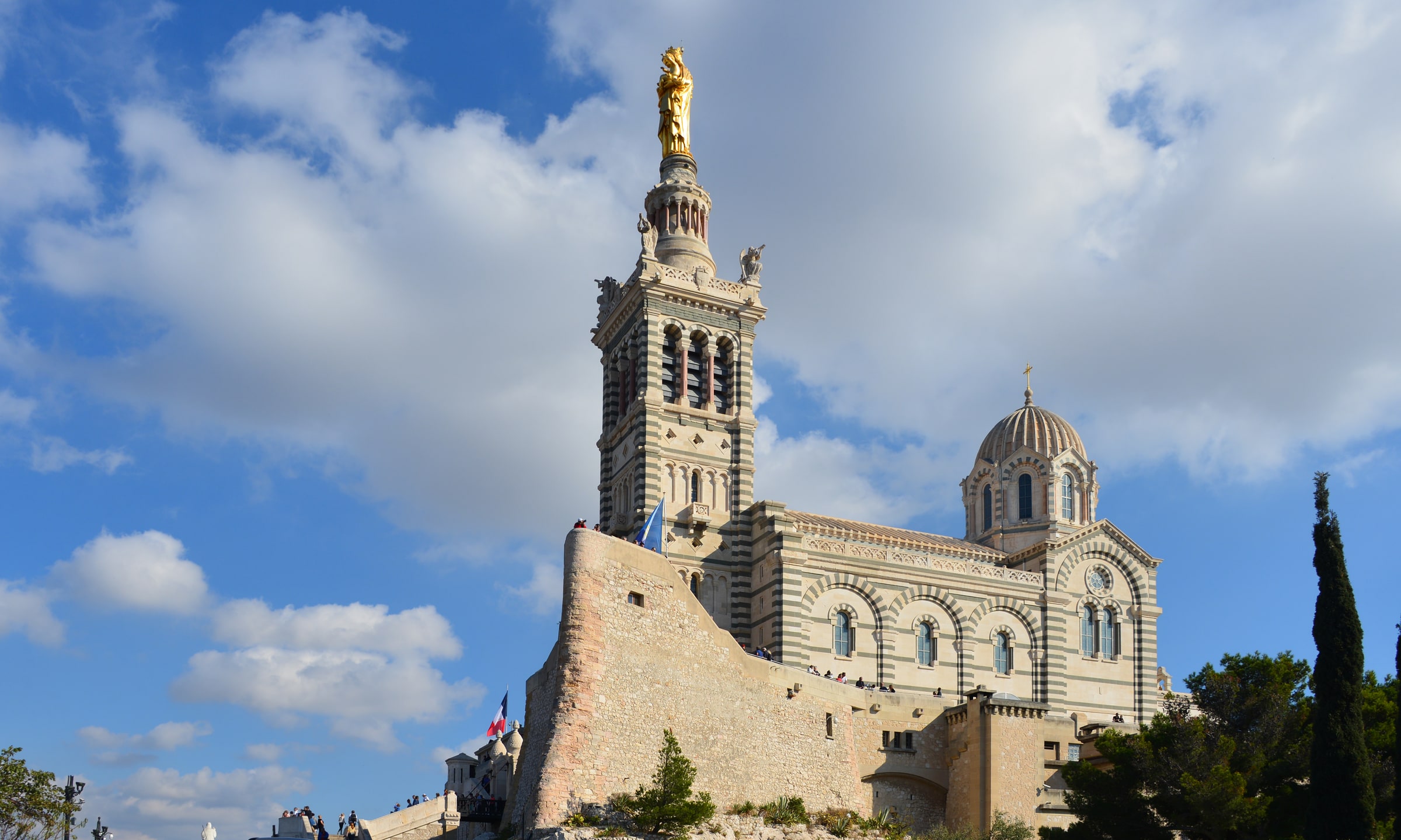
Marseille’s “Bonne Mère” crowns a hill above the old port. A Marian chapel stood here by 1214; the present Romano-Byzantine church was consecrated in 1864 and later raised to a minor basilica. Mosaics, sailors’ ex-votos, and the golden statue above the bell tower preserve the city’s prayer for protection and safe return.
Climb to Notre-Dame de la Garde as generations of Marseille’s sailors and families have done: begin in the austere crypt, continue into the mosaic-filled upper church, read the ex-votos, and end with prayer over the city and sea.
What to notice
Look closely at the place and its story
The austere crypt
Begin below before entering the luminous upper basilica.
Romano-Byzantine mosaics
Let the gold, color, and biblical imagery direct attention from spectacle toward prayer.
Sailors’ ex-votos
Read model ships and memorial plaques as acts of thanksgiving from a Mediterranean port.
The golden “Bonne Mère”
Look up to the restored monumental Virgin and Child that watches over Marseille.
Feasts, anniversaries & celebrations
How to read this page
Sources, tradition, and what is verified
The destination record was last checked on 9/15/2026.
This page records the site’s tradition as “Catholic.” That wording describes the nature of the claim and keeps devotional tradition distinct from independently verified history.