Why pilgrims come
Discover what makes Basilica of Our Lady of Aparecida a place of pilgrimage
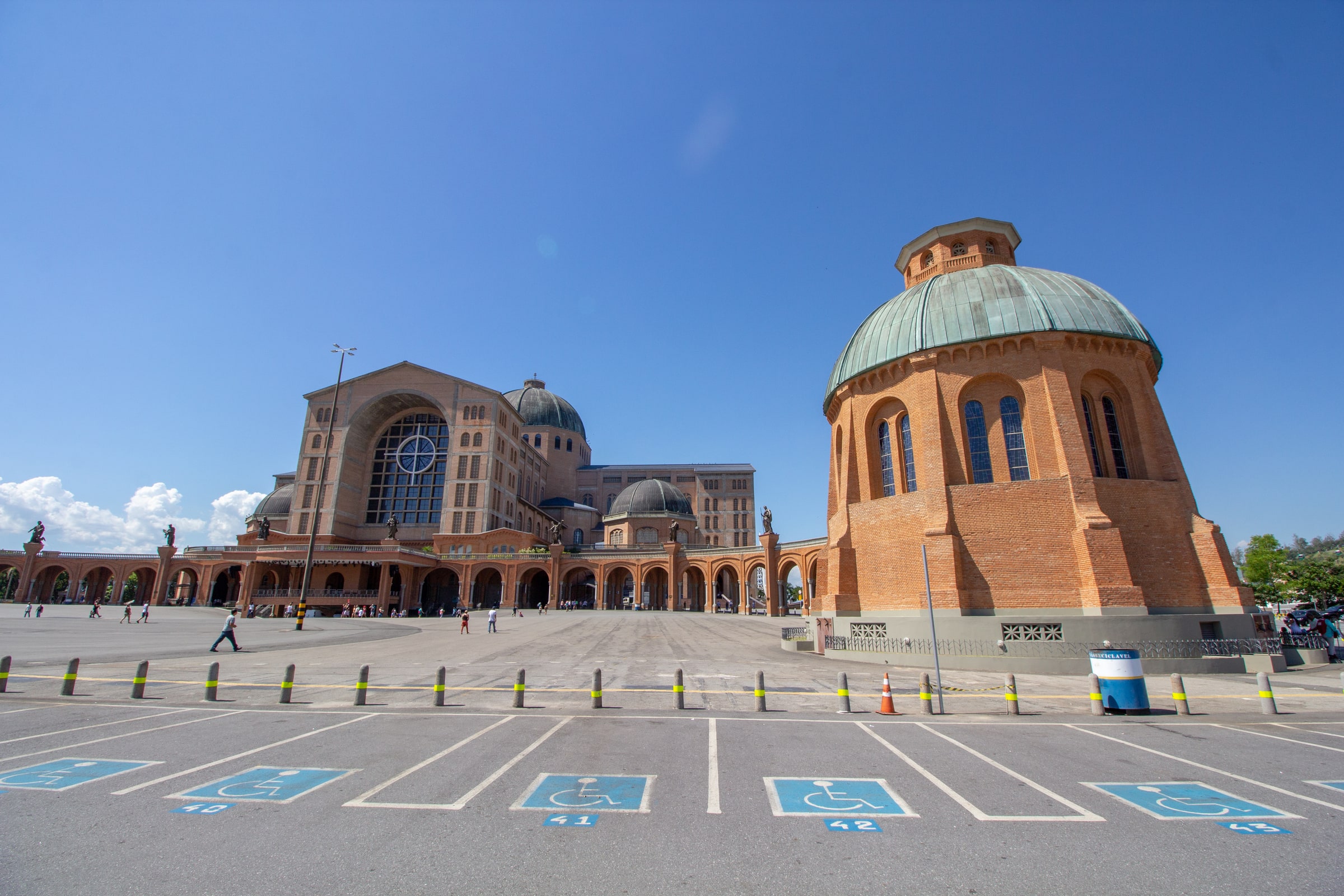
In October 1717, fishermen João Alves, Felipe Pedroso, and Domingos Garcia drew a small, broken terracotta image of the Virgin Mary from the Paraíba River in two pieces—first the body and then the head—and afterward made an abundant catch. The image was kept in local homes before a public chapel was built in 1732, followed by a church in 1745 and the present historic basilica in 1888. As devotion spread across Brazil, the cornerstone of a much larger sanctuary was laid in 1946 and construction began in 1955. Pope St. John Paul II consecrated the new basilica and granted it the title of Minor Basilica in 1980; the image was transferred there in 1982, and Brazil’s bishops declared it the National Shrine in 1983. Today it is the world’s largest shrine dedicated to Mary and the spiritual home of Brazil’s patroness.
The heart of an Aparecida pilgrimage is not the scale of the building but the small original image enshrined above the main sanctuary. Begin with Mass and prayer before the image, then give the basilica’s mosaics and sacred art time to unfold as catechesis. The Promise Room preserves thousands of offerings left in gratitude for prayers answered, while the museum and the Passarela da Fé connect the modern sanctuary to the older church that once housed the image. Redemptorist missionaries have cared for pilgrims here since 1894, and visits by Pope St. John Paul II, Pope Benedict XVI, and Pope Francis show the shrine’s importance far beyond Brazil.
The sacred connection
People and objects remembered here
These relationships are part of the destination record, with feast days and catalog qualifications shown where available.
Venerated Marian image · Ecclesiastically received devotional image
Pilgrim circulation near the image can be controlled during large gatherings.What to notice
Look closely at the place and its story
The original image
Pray before the small terracotta image found in two pieces in the Paraíba River in 1717—the object at the center of more than three centuries of Brazilian devotion.
The basilica’s vast sacred-art program
Read the vast interior, dome, tiled art, and mosaics as a visual catechesis designed to lead immense crowds toward the altar and the mysteries of faith.
The Promise Room
See photographs, objects, and votive gifts left by pilgrims as a living archive of petitions, gratitude, and Brazilian popular devotion.
The historic basilica
Cross the Passarela da Fé to the 1888 Mother Basilica, the image’s former home, and trace the devotion from its intimate beginnings to the national shrine.
Feasts, anniversaries & celebrations
How to read this page
Sources, tradition, and what is verified
The destination record was last checked on 9/14/2026.
This page records the site’s tradition as “Catholic.” That wording describes the nature of the claim and keeps devotional tradition distinct from independently verified history.
Continue nearby