Why pilgrims come
Visit the resting place and legacy of St. Ambrose
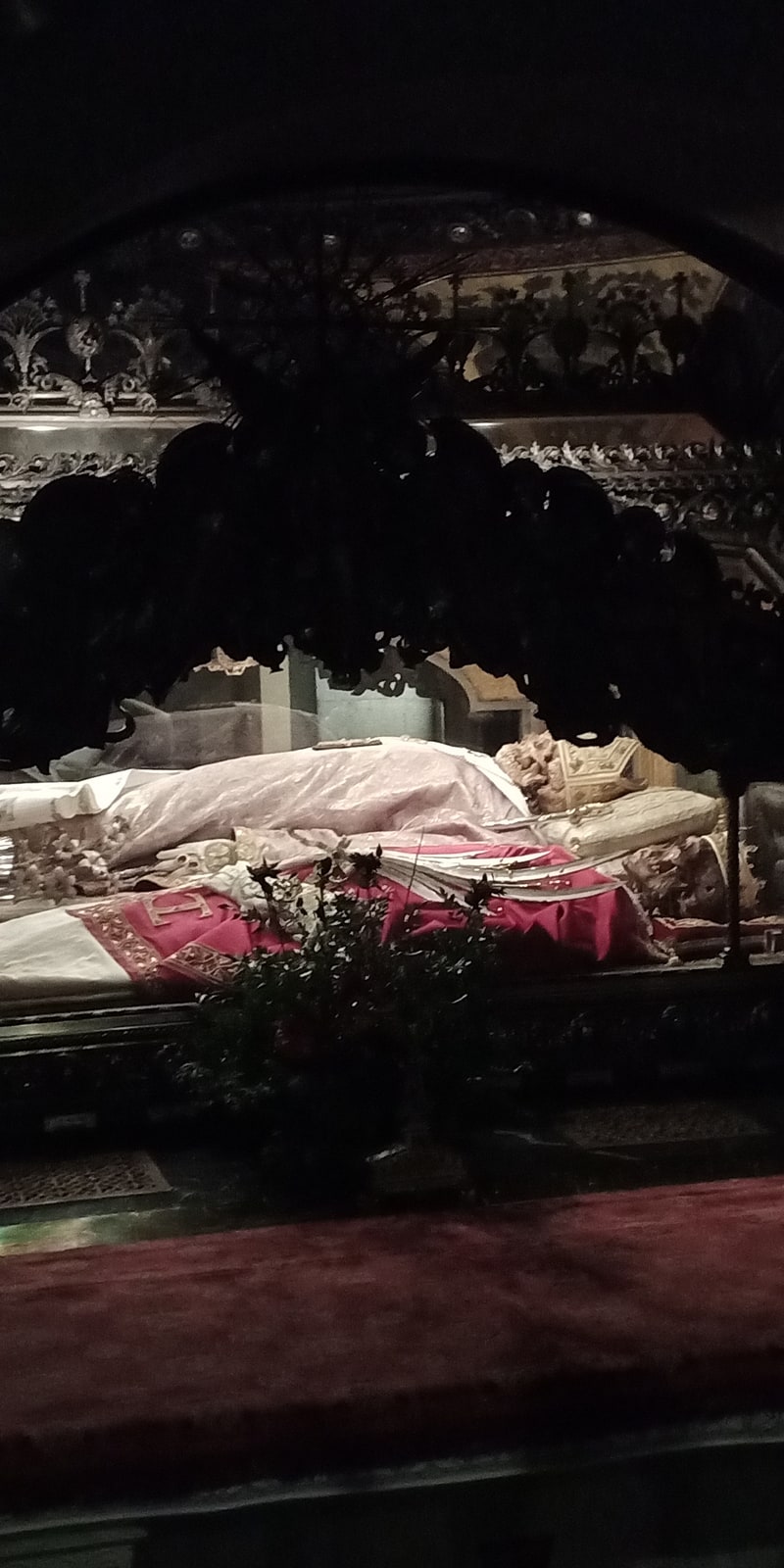
Sant’Ambrogio is Milan’s church of memory: founded by Bishop Ambrose in the fourth century, rebuilt through the Romanesque period, and still gathered around the bodies of Ambrose and the martyrs Gervasius and Protasius. In 386 Ambrose discovered the martyrs’ remains and placed them beneath the altar of the basilica he had built. He was buried beside them after his death in 397.
Their remains are now visible in the crypt beneath the high altar. The Archdiocese of Milan records that the bodies were rediscovered in 1871 and restored to public veneration. Above them, the ninth-century golden altar of Vuolvinus wraps the shrine in scenes of Christ and Ambrose, binding relic, Eucharist, civic history, and sacred art together.
Ambrose should not be remembered merely as the bishop who baptized Augustine. He defended Nicene faith, confronted imperial power, formed Milan’s liturgy, preached Scripture, composed hymns, and helped establish a distinctly Western pattern of episcopal leadership. Pray in the crypt, then examine the ambo, mosaics, sarcophagi, and atrium as witnesses to a church that has carried Milan’s Christian identity for more than sixteen centuries. Confirm Mass and visitor access with the basilica or Archdiocese, especially around Ambrose’s December 7 feast.
Meet Milan’s patron beside the martyrs he discovered, beneath the altar of the basilica he founded.
The sacred connection
People and objects remembered here
These relationships are part of the destination record, with feast days and catalog qualifications shown where available.
body venerated in the crypt
Feast: December 7body venerated beside St. Ambrose
Feast: June 19body venerated beside St. Ambrose
Feast: June 19Tombs and bodily remains · Ecclesiastically and historically documented
Veneration follows the active basilica’s opening and liturgical schedule.What to notice
Look closely at the place and its story
Three saints in the crypt
Venerate Ambrose between the martyrs Gervasius and Protasius.
The golden altar
Read Vuolvinus’s ninth-century masterpiece as a shrine around bodies and Eucharist.
The church Ambrose founded
Stand within the long architectural memory of Milan’s fourth-century bishop.
Feasts, anniversaries & celebrations
How to read this page
Sources, tradition, and what is verified
The destination record was last checked on 9/27/2026.
This page records the site’s tradition as “Roman Catholic basilica, Doctor of the Church tomb, and early-martyr shrine.” That wording describes the nature of the claim and keeps devotional tradition distinct from independently verified history.
Continue nearby