Why pilgrims come
Visit the resting place and legacy of St. Cecilia
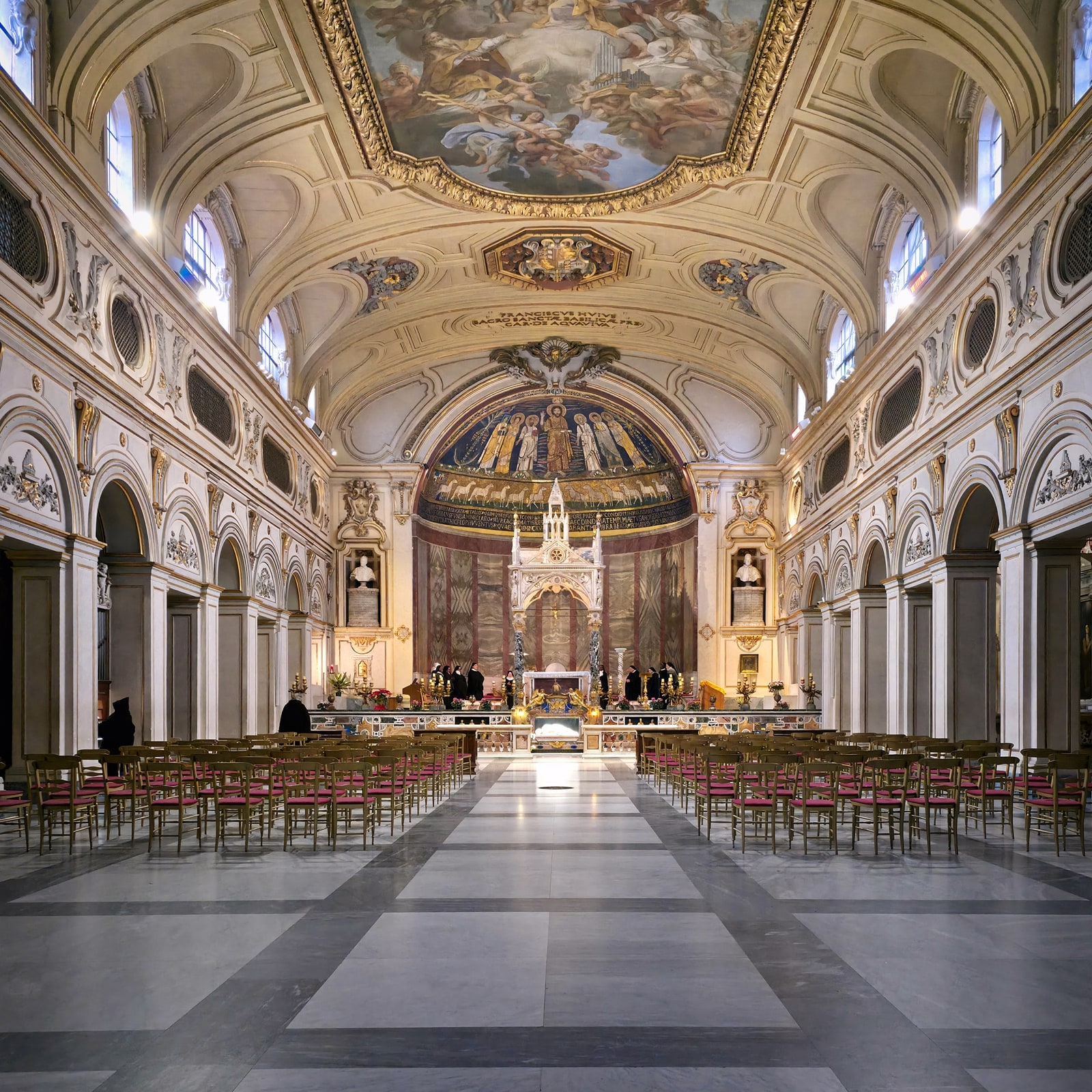
In the quieter streets of Trastevere, Santa Cecilia preserves Rome’s principal shrine to the virgin martyr long honored as patron of music. Tradition associates the church with Cecilia’s house and martyrdom. Pope Paschal I rebuilt the basilica in the ninth century and translated her relics from the Catacomb of St. Callixtus to the confessio beneath the altar.
The most unforgettable image is Stefano Maderno’s 1600 marble figure of Cecilia, lying on her side with her face turned away. The sculptor presented the work as a record of the position in which her body was found when the tomb was opened in 1599. The statue does not dramatize violence; its restraint makes the altar into a meditation on fidelity hidden from public view.
The basilica also rewards careful attention above and below: Pietro Cavallini’s Last Judgment survives in the nuns’ choir, the crypt gathers saints and patrons of the church, and archaeological spaces preserve Roman remains traditionally associated with Cecilia’s home. Some areas have restricted hours or separate arrangements. Pray at the confessio, ask the saint’s intercession for musicians and all who serve the liturgy, and verify access with the basilica before travel—especially around November 22.
Cecilia’s memorial on November 22 has particular meaning for church musicians, but her witness should not be reduced to patronage of music. The surviving early evidence for her biography is limited and later Passion narratives supply many familiar details. What is historically secure is the antiquity of her Roman cult, the church bearing her name, and the continuing veneration of relics translated here in the ninth century. The page therefore distinguishes received martyr tradition from facts documented by the basilica, archaeology, and the history of worship.
Pray before the Roman martyr’s confessio, then let Maderno’s quiet sculpture teach fidelity without spectacle.
The sacred connection
People and objects remembered here
These relationships are part of the destination record, with feast days and catalog qualifications shown where available.
principal relics venerated beneath the high altar
Feast: November 22Tomb and bodily remains · Longstanding ecclesial tradition
The tomb is approached within the active basilica; other areas have separate access.What to notice
Look closely at the place and its story
Cecilia beneath the altar
Honor the martyr at the confessio that anchors the basilica.
Maderno’s marble witness
Contemplate the sculpture made after the 1599 opening of the tomb.
Cavallini’s Last Judgment
Seek the surviving medieval fresco in the nuns’ choir when access permits.
Feasts, anniversaries & celebrations
How to read this page
Sources, tradition, and what is verified
The destination record was last checked on 9/29/2026.
This page records the site’s tradition as “Roman Catholic basilica, martyr tomb, and monastic church.” That wording describes the nature of the claim and keeps devotional tradition distinct from independently verified history.
Continue nearby