Why pilgrims come
Visit the resting place and legacy of St. Anthony of Padua
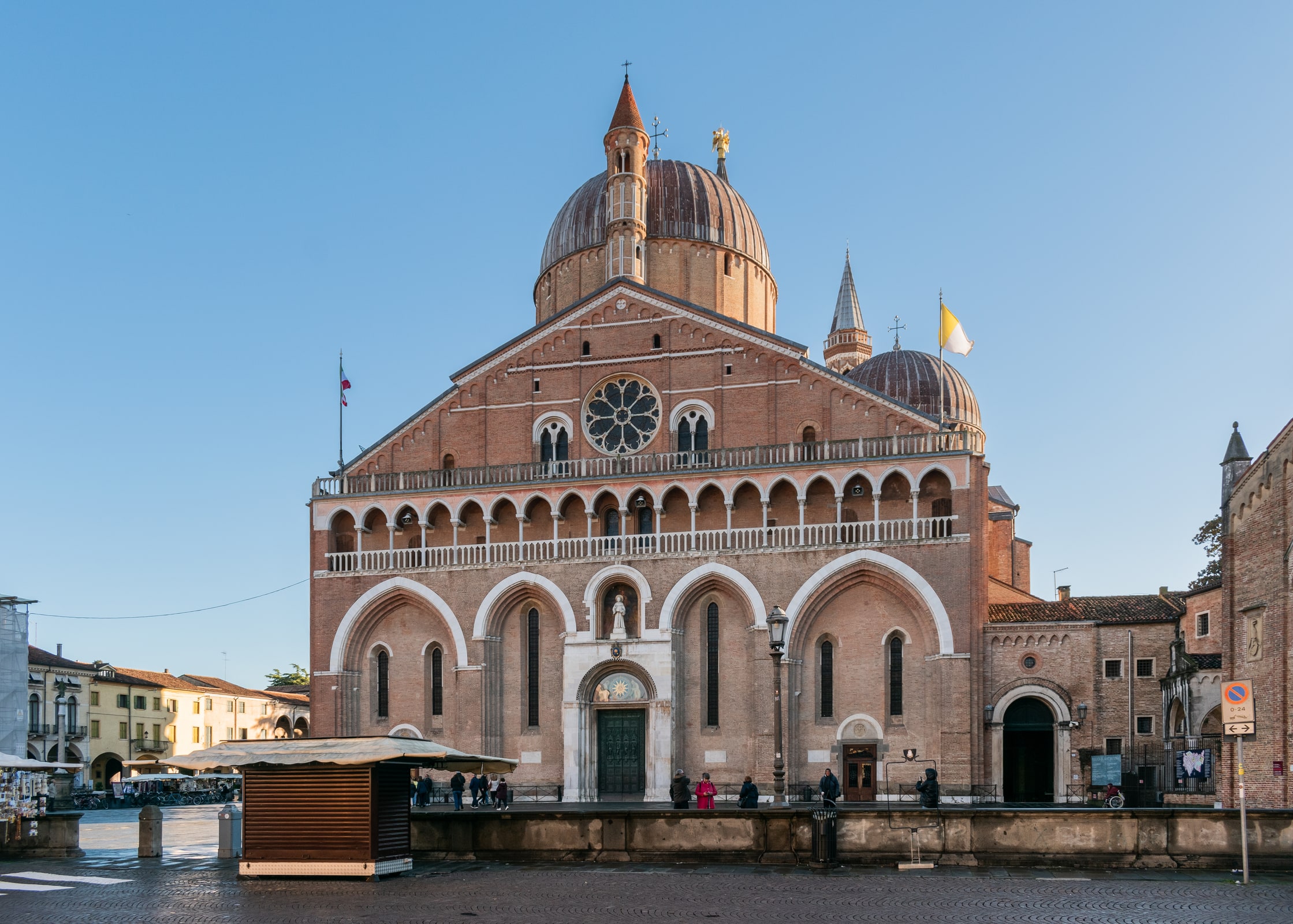
Begun in 1232, one year after St. Anthony’s death, Padua’s beloved “Il Santo” grew around the tomb of the Franciscan preacher whose command of Scripture, defense of the poor, and ministry of reconciliation drew devotion almost immediately. Romanesque massing, Gothic chapels, and Byzantine-inspired domes make the building visually distinctive, but the basilica remains first a working sanctuary of Mass, confession, preaching, and intercession.
The Chapel of the Ark preserves Anthony’s tomb. Pilgrims traditionally approach the rear of the marble monument and place a hand there while praying, a gesture that should remain quiet and never become a hurried photo ritual. The adjacent chapels, cloisters, and Madonna Mora preserve the wider Franciscan setting in which the saint’s memory is lived.
The Chapel of the Relics tells a remarkable second chapter. When St. Bonaventure examined Anthony’s remains during their translation on April 8, 1263—more than thirty years after the saint’s death—the tongue was found intact. The basilica preserves it in a 1436 reliquary. Above it is the saint’s jawbone in a fourteenth-century reliquary; below it is the vocal apparatus recovered during the scientific examination of 1981. The habit and the coffin that once held his body are also kept in the chapel.
Catholic devotion reads the tongue in relation to Anthony’s preaching of the Gospel, not as an isolated curiosity. The basilica’s Feast of the Translation of the Relics, popularly called the “Feast of the Tongue,” is its most important Anthony celebration after June 13. Its date follows the shrine’s annual calendar and must be verified rather than assigned an unchanging civil date.
Allow the relic chapel to return you to the Word Anthony preached. Pray at the tomb, celebrate the sacraments, and then continue through Catholic Padua to Arcella, which remembers his death, and the other churches that place his final ministry within the life of the city.
“Il Santo” joins Anthony’s tomb to the Chapel of the Relics, where his incorrupt tongue, jawbone, and vocal apparatus direct attention to a life spent preaching Scripture. Receive the site through prayer and the sacraments, not as a cabinet of curiosities.
The sacred connection
People and objects remembered here
These relationships are part of the destination record, with feast days and catalog qualifications shown where available.
Tomb
Feast: June 13Tomb and bodily remains · Ecclesiastically documented
In the Chapel of the Ark; pilgrims traditionally touch the rear of the tomb in prayer.First-class relic · Ecclesiastically documented
Shown with other principal relics in the Treasury Chapel.First-class relic · Ecclesiastically documented
The fourteenth-century reliquary is positioned above the reliquary of the tongue.First-class relic · Recovered during the Church-supervised 1981 examination
Preserved in a modern reliquary below the incorrupt tongue.What to notice
Look closely at the place and its story
Tomb of St. Anthony
Join pilgrims in the Chapel of the Ark and entrust intentions to the saint’s intercession.
Chapel of the Relics
Venerate the incorrupt tongue, jawbone, and vocal apparatus while remembering Anthony’s service to the Word of God.
Chapel of the Madonna Mora
Visit the older devotional heart associated with the friars and the saint’s burial.
Franciscan cloisters
Leave time for the quieter cloisters and the living presence of the friars.
Feasts, anniversaries & celebrations
How to read this page
Sources, tradition, and what is verified
The destination record was last checked on 9/28/2026.
This page records the site’s tradition as “Catholic.” That wording describes the nature of the claim and keeps devotional tradition distinct from independently verified history.