Why pilgrims come
Visit the resting place and legacy of St. Martin of Tours
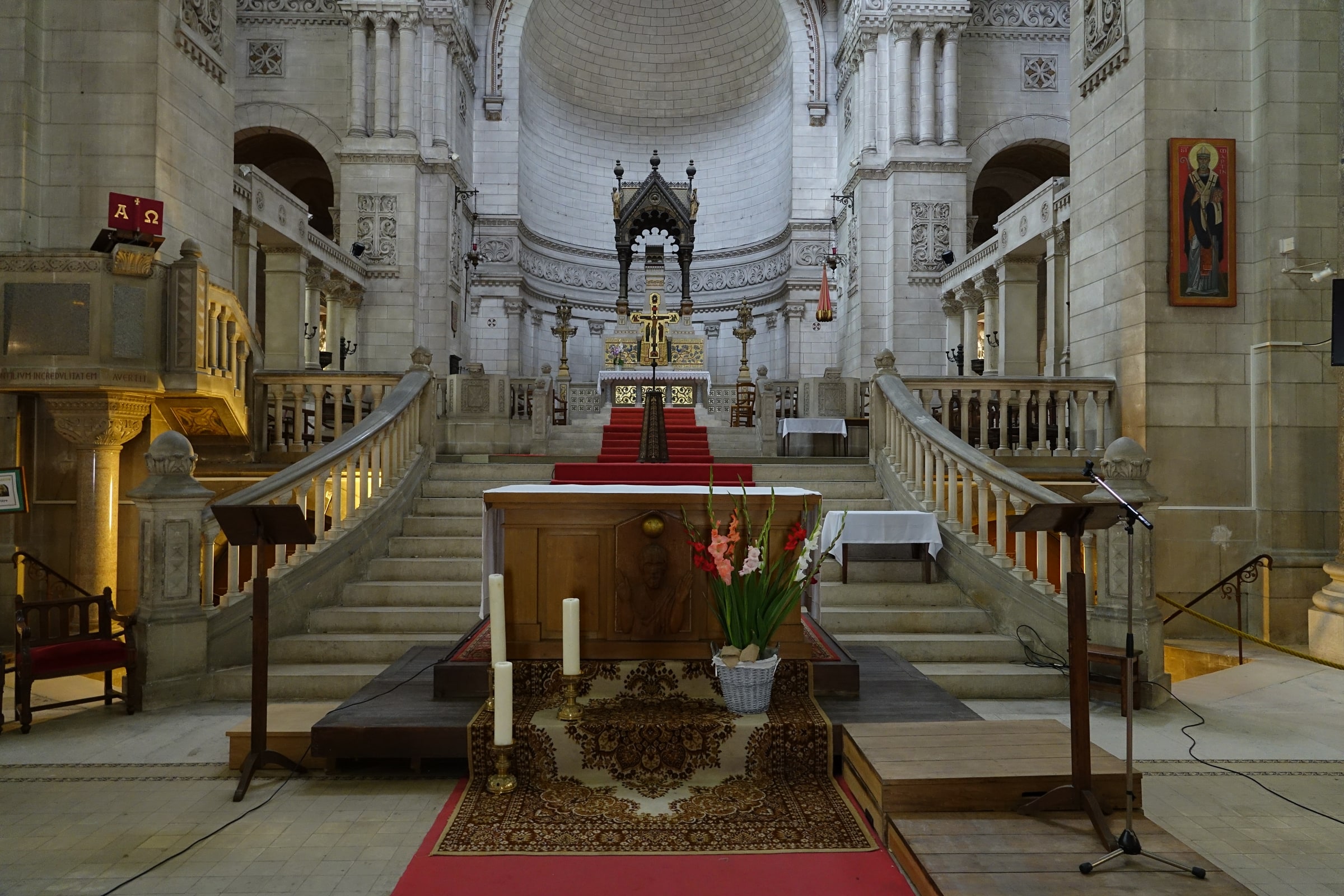
The modern Basilica of St. Martin stands over the recovered tomb of one of Western Christianity’s most beloved pastors. Martin, the Roman soldier who shared his cloak with a poor man and later became bishop of Tours, died in 397. His burial place drew pilgrims across medieval Europe and made Tours a major center of charity, monastic life, and episcopal memory.
The great medieval basilica was damaged in the Wars of Religion and largely demolished after the French Revolution. In the nineteenth century, archaeological work identified the tomb’s location beneath the dense city blocks. A new, smaller basilica was built over it, with the crypt placing the saint’s tomb directly below the raised sanctuary. The current building is therefore not a recreation of the lost medieval church but a deliberate act of recovery.
Martin’s story can become sentimental if reduced to the divided cloak. The official basilica emphasizes bishop, evangelizer, monk, peacemaker, and friend of the poor. Descend to the crypt, pray for the grace to recognize Christ in the vulnerable, and then walk the nearby surviving towers and streets that mark the footprint of the former pilgrimage complex. Verify liturgies and visitor times with the basilica, especially around November 11.
Descend to the recovered tomb of the soldier, monk, and bishop whose divided cloak became a school of Christian charity.
The sacred connection
People and objects remembered here
These relationships are part of the destination record, with feast days and catalog qualifications shown where available.
tomb in the basilica crypt
Feast: November 11Tomb and bodily remains · Historically and ecclesiastically documented
The crypt is the principal pilgrimage space of the active basilica.What to notice
Look closely at the place and its story
The recovered tomb
Pray in the crypt built around the rediscovered burial place of St. Martin.
The cloak and the poor Christ
Move beyond legend into Martin’s lifelong conversion toward charity.
The lost medieval basilica
Trace surviving towers and streets to understand the scale of the former pilgrimage center.
Feasts, anniversaries & celebrations
How to read this page
Sources, tradition, and what is verified
The destination record was last checked on 9/27/2026.
This page records the site’s tradition as “Roman Catholic basilica and documented historic tomb of a bishop-saint.” That wording describes the nature of the claim and keeps devotional tradition distinct from independently verified history.