Why pilgrims come
Encounter the Eucharistic tradition and its surviving evidence
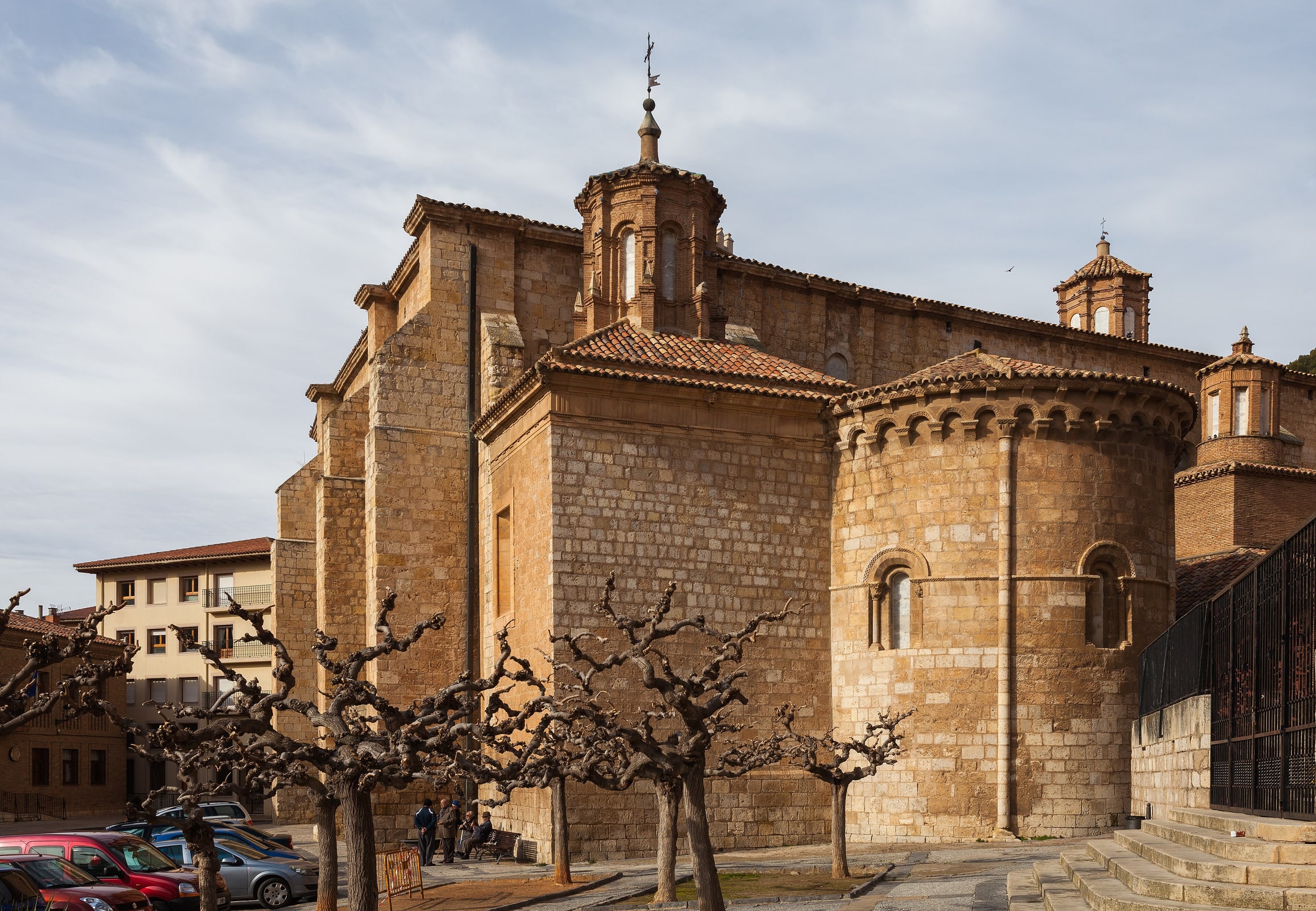
Daroca’s Basilica of St. Mary of the Sacred Corporals preserves one of Spain’s most influential medieval Eucharistic relics: a corporal traditionally marked by six consecrated Hosts during the military campaign at Chío near Llutxent in 1239. The basilica—not a generic map point in Daroca—is the present place of custody, regular prayer, and pilgrimage.
The received account says a priest from Daroca celebrated Mass for Christian troops on February 23, 1239. Six captains were to receive Communion, but an attack interrupted the liturgy. The priest wrapped the consecrated Hosts in the corporal and concealed them. When he returned, the Hosts were said to have left blood-like impressions on the cloth. The commanders interpreted the discovery as a sign and disputed which community should receive the relic.
Tradition resolves the dispute through a mule carrying the reliquary. Allowed to choose its own path, it traveled north and finally stopped near the former convent of San Marcos outside Daroca on March 7. The official Daroca pastoral unit recounts that the Corporals were first deposited there and later transferred to Santa María, the city’s principal church, where they remain.
Historical precision requires another layer. The University of Zaragoza’s account points to the Carta de Chiva, a notarial reconstruction made in 1340 from testimony gathered about a century after the reported event. That document is important evidence for the established medieval tradition, but it is not a same-day battlefield record. Catholic Tourist therefore identifies the military, mule, and miraculous-stain narrative as received tradition grounded in later medieval documentation.
The relic became so important that Daroca developed a monumental setting around it. The Sacred Corporals are kept in an elaborate Gothic reliquary attributed to Pere Moragues and associated with the late fourteenth century, with later additions. The church’s Chapel of the Corporals and museum preserve art, documents, and objects that show the devotion’s role in the city’s identity.
The parish maintains a current calendar with Eucharist celebrated in the Corporals chapel and regular Holy Hours before the Blessed Sacrament. That living schedule matters more to pilgrims than an unverified generic opening time. Exact hours change by date and season, so the official calendar and visits page should be consulted immediately before travel.
Corpus Christi is the great movable frame for Daroca’s devotion. The city’s observance and procession should be verified annually rather than assigned one permanent civil date. A separate fragment known as the Hijuela eventually reached Carboneras de Guadazaón; it should not be confused with the principal Corporals preserved in Daroca.
This page does not present stains as though Catholic Tourist had conducted forensic testing. It records an active Catholic basilica, an extant medieval cloth and reliquary, a documented fourteenth-century tradition, and centuries of public veneration. The strongest visit combines the Chapel of the Corporals, the basilica museum, Mass or adoration when scheduled, and the medieval urban landscape of Daroca.
Venerate the Sacred Corporals in their dedicated chapel, read the medieval documentation honestly, and join the basilica’s current Eucharistic worship.
The story & the place today
What happened here—and what a pilgrim can find now
Each record separates the devotional tradition from the present-day visitor evidence. A mapped locality remains visible even when an exact shrine or surviving object has not yet been verified.
The Sacred Corporals of Daroca
The received tradition says six consecrated Hosts left blood-like impressions on a corporal during a military campaign near Llutxent; a mule later carried the relic to Daroca.
Near Chío and Llutxent in the Kingdom of Valencia, according to tradition
The Sacred Corporals
Chapel of the Sacred Corporals, Basilica of St. Mary, Daroca
Living Eucharistic devotion and movable Corpus Christi observance
Visitor note: Venerated at the basilica; verify current visiting hours
Church wording: Centuries-old Eucharistic pilgrimage tradition — Basilica and Pastoral Unit of Daroca
The Carta de Chiva of 1340 records testimony roughly a century after the reported 1239 event.
The sacred connection
People and objects remembered here
These relationships are part of the destination record, with feast days and catalog qualifications shown where available.
Eucharistic contact relic · Historic relic under parish custody within the received 1239 tradition
Consult the basilica visits page and current liturgical calendar.What to notice
Look closely at the place and its story
The Sacred Corporals
Venerate the medieval cloth in the dedicated chapel without overstating its evidentiary status.
Gothic reliquary
Study the remarkable metalwork associated with Pere Moragues and later additions.
Carta de Chiva
Place the tradition within its documented 1340 notarial reconstruction.
Living chapel worship
Check the parish calendar for Mass and Holy Hour in the Chapel of the Corporals.
The mule’s journey
Follow the received story from Llutxent to Daroca while recognizing its devotional character.
How to read this page
Sources, tradition, and what is verified
The destination record was last checked on 9/30/2026.
This page records the site’s tradition as “Roman Catholic Eucharistic pilgrimage of the Sacred Corporals.” That wording describes the nature of the claim and keeps devotional tradition distinct from independently verified history.