Why pilgrims come
Discover what makes Church of Porta Panagia a place of pilgrimage
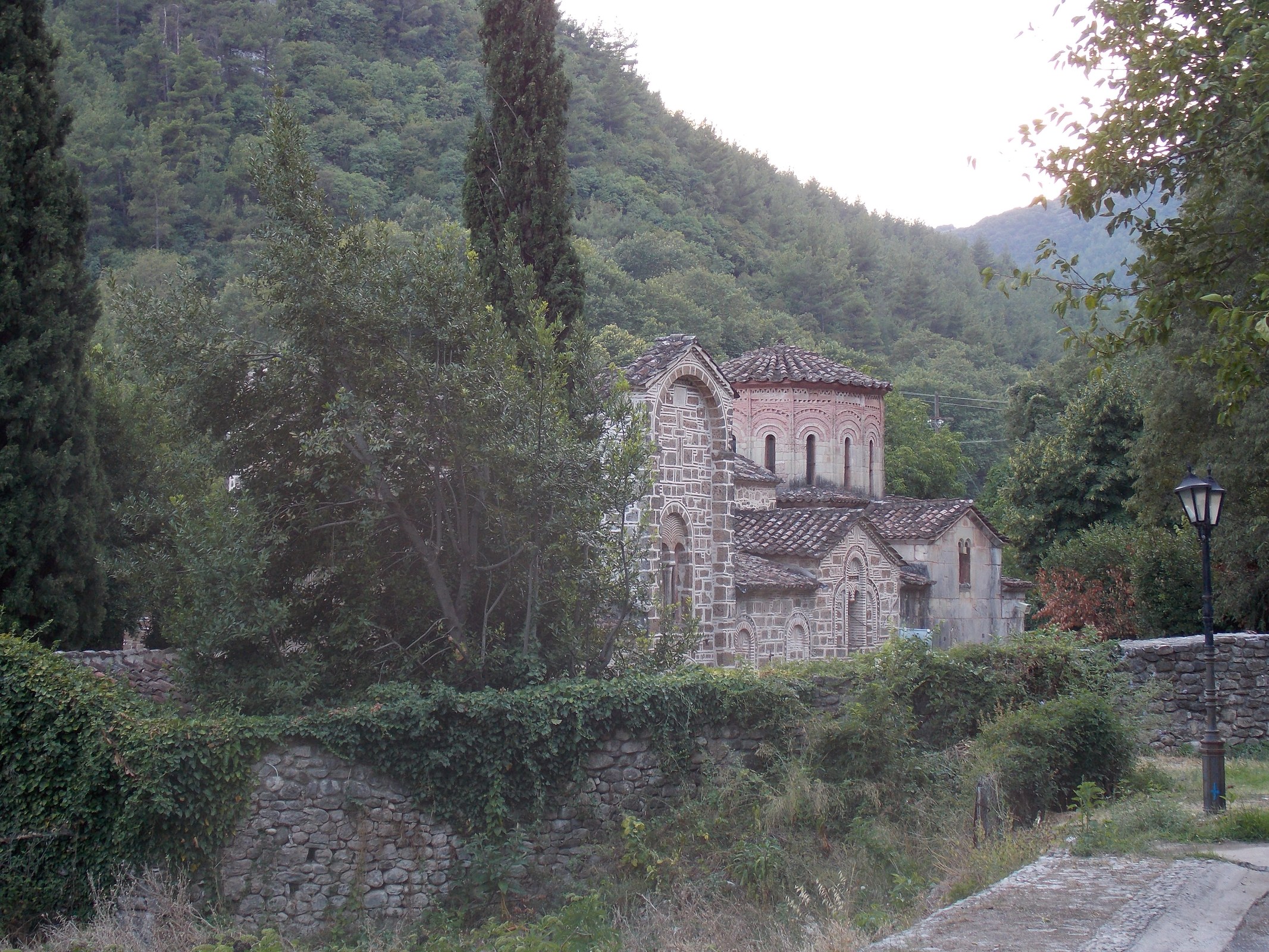
At Pyli, where the plain of Thessaly meets the passage into the Pindus mountains, Porta Panagia preserves the heart of a medieval monastery. Its name points toward the Mother of God and the gateway landscape around it. This is a Greek Orthodox church, a place to approach as a guest of another Christian community rather than as an unmarked extension of a Catholic itinerary.
The church was founded in 1283 by John Angelos Komnenos Doukas. It served as the katholikon, or principal church, of the monastery dedicated to the Unconquerable Mother of God. The Greek word katholikon describes its role within a monastery; it does not mean that this was a Roman Catholic foundation. The monastery was later dissolved, while the church survived and is now associated with the Monastery of St. Vissarion at Dousiko.
Look first at how the building is put together. Stone and brick form the characteristic Byzantine cloisonné masonry. Reused ancient material joins the medieval work. The main church is a three-aisled, cross-roofed basilica, and its later outer narthex adds another stage to the story. The present church is the result of centuries, not a single moment sealed in 1283.
Inside, the exceptional treasures are the mosaics of Christ and the Mother of God beside the sanctuary screen. Regional heritage sources date them to the late thirteenth century and note their unusual arrangement, reversing the more familiar positions. They belong to the worshiping life of the church: figures addressed in prayer, not simply rare objects to be collected through a camera.
The marble iconostasis is another survivor. A fire in 1855 damaged much of the sculptural decoration, while important elements remained. The outer narthex also preserves later painting. These details matter because a common online description calls Porta Panagia remarkably unchanged since its foundation. Its endurance is real, but it includes loss, additions, repair, and care by successive generations.
A pilgrim can give the visit a simple shape: pause outside to understand the landscape, enter quietly, and spend time with the images of Christ and His Mother before studying architectural details. Never touch a mosaic, carved screen, or painted surface. Ask about photography and follow the instructions of the church’s custodians.
Catholic visitors are welcome to appreciate and pray respectfully in an Orthodox holy place, but should observe Orthodox sacramental discipline and arrange Catholic Mass or confession elsewhere. Confirm opening and service times locally. Porta Panagia can enrich a Thessaly journey without making every historic church a pilgrimage destination: its particular claim is the combination of Marian monastic devotion, an unusually important mosaic ensemble, and a surviving Byzantine sacred setting.
Enter a Greek Orthodox Marian church founded in 1283, with exceptional Byzantine mosaics and a layered monastic history.
What to notice
Look closely at the place and its story
Christ and the Mother of God
Contemplate the late-thirteenth-century mosaics beside the sanctuary screen.
The monastic church
Understand katholikon as a monastery’s main church and learn about the 1283 foundation.
Surviving marble work
Notice the iconostasis while recognizing the losses caused by the 1855 fire.
The gateway landscape
Place the church within the river valley and mountain passage that shaped Pyli.
How to read this page
Sources, tradition, and what is verified
The destination record was last checked on 11/26/2026.
This page records the site’s tradition as “Greek Orthodox; dependency of the Monastery of St. Vissarion (Dousiko).” That wording describes the nature of the claim and keeps devotional tradition distinct from independently verified history.