Why pilgrims come
Encounter the Eucharistic tradition and its surviving evidence
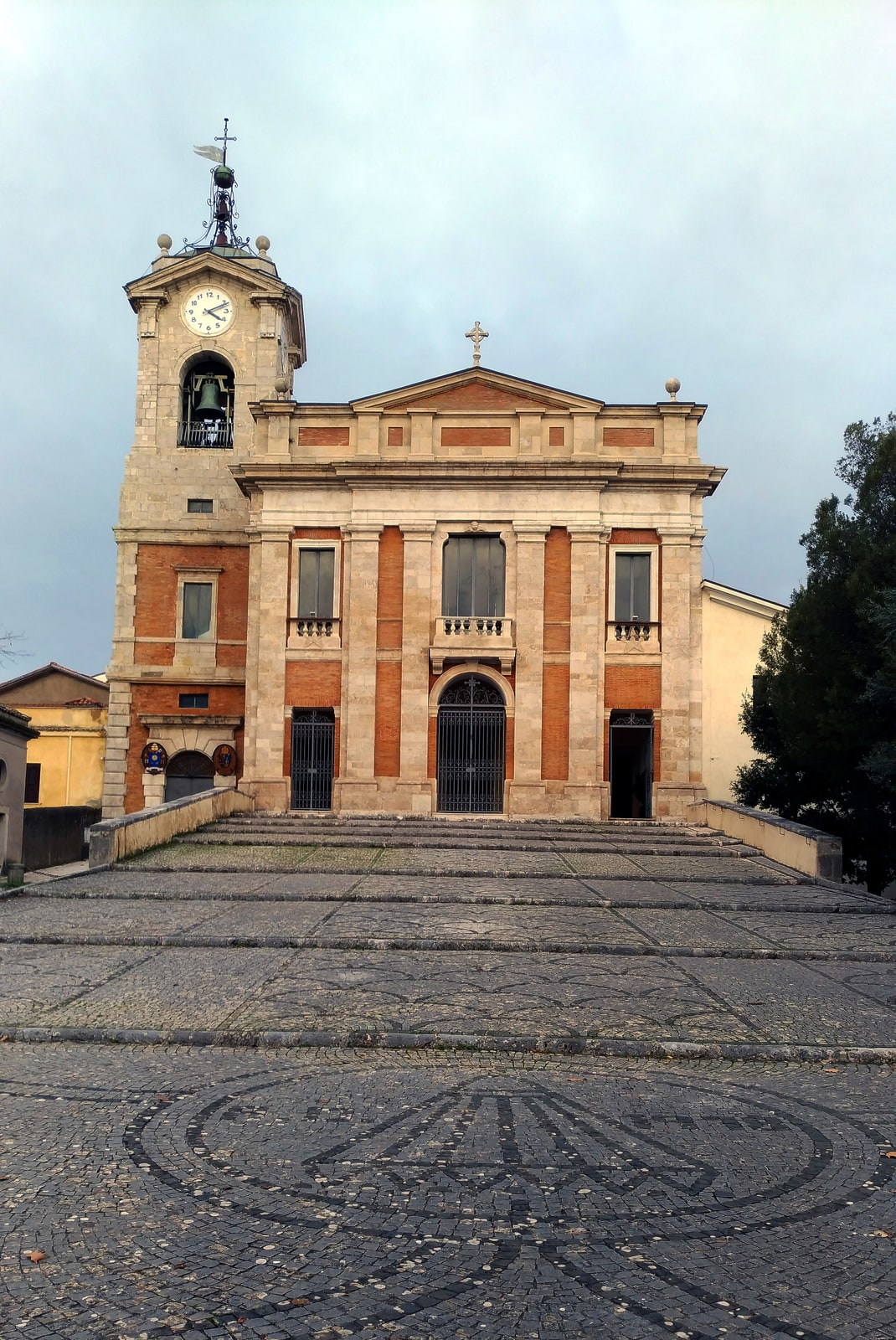
High on Alatri’s ancient acropolis, the Co-Cathedral of St. Paul preserves the object locally known as the Ostia Incarnata—the “Incarnate Host”—and the documentary memory of an event reported to Pope Gregory IX in 1228. This is not merely a city-level miracle pin. The glass reliquary stands beside the right aisle of an active Catholic church, where the tradition is still commemorated each March 13.
The diocesan account says that, late in 1227 or early in 1228, a young woman removed a consecrated Host after Communion at the urging of another woman who intended to use it for a love potion. When the Host was later unwrapped, it was reported to have changed into flesh. The two women confessed the sacrilege to the bishop and sought forgiveness. The narrative should be read as a medieval Catholic account of sin, repentance, sacramental reverence, and mercy—not as a recipe for sensational content.
Alatri possesses an unusually early written witness. On March 13, 1228, Gregory IX sent Bishop Giovanni V a mandate responding to the report. The diocesan website identifies that papal text as the record of the event, and the diocese continues to organize an annual commemoration. The letter’s existence securely documents what the bishop reported and how the pope addressed the pastoral case. It does not, by itself, function as a modern laboratory analysis of the material now displayed.
The relic remains visible in a glass case along the right aisle. The Diocese of Anagni-Alatri calls it a consecrated particle extraordinarily changed into human flesh and records recent diocesan pilgrimages with the reliquary. Catholic Tourist preserves that ecclesial description while distinguishing custody and devotion from scientific proof. No peer-reviewed modern forensic report was located in the official source stack reviewed for this page.
The co-cathedral deserves attention beyond the event. Its long history includes Cosmatesque marble fragments from a medieval ambo associated with Pope Honorius III’s 1222 visit. The church also keeps the relics of Alatri’s patron, Pope St. Sixtus I, traditionally brought to the city in 1132, and the remains of Blessed Maria Raffaella Cimatti, remembered for her service to the sick. Those devotions should not be confused with the Eucharistic relic, but they make the building a richer pilgrimage destination.
Every March 13 the diocese renews the memory of the Ostia Incarnata with liturgy in the co-cathedral. The fixed anniversary is suitable for the Catholic Tourist calendar; exact Mass and procession times still require annual verification. The approaching eight-hundredth anniversary in 2028 has already prompted a joint diocesan and municipal planning committee.
The church is reached through Alatri’s elevated historic center. Visitors should expect an uphill approach, old paving, and possible access changes during liturgies. No dependable daily opening or confession timetable was located on the diocesan page, so pilgrims making a special journey should contact the parish or diocese rather than relying on map-app hours.
Pray here with the documentary precision the site deserves. There is a medieval papal response, a relic under continuing diocesan custody, a yearly local commemoration, and an active co-cathedral. Those are strong historical and ecclesial facts. The transformation itself belongs to the Church’s received Eucharistic tradition and is presented as such.
Venerate the Ostia Incarnata within the active co-cathedral and understand the 1228 papal mandate without turning a medieval tradition into an unsupported scientific claim.
The story & the place today
What happened here—and what a pilgrim can find now
Each record separates the devotional tradition from the present-day visitor evidence. A mapped locality remains visible even when an exact shrine or surviving object has not yet been verified.
The Incarnate Host of Alatri
A papal mandate dated March 13, 1228 responds to the bishop’s report that a consecrated Host taken sacrilegiously was later found as flesh. The object is preserved in the co-cathedral.
Alatri, in the former Diocese of Alatri
The Ostia Incarnata
Glass reliquary beside the right aisle of the Co-Cathedral of St. Paul
Annual diocesan commemoration on March 13
Visitor note: Publicly visible when the church is open
Church wording: Long-standing diocesan Eucharistic miracle tradition — Diocese of Anagni-Alatri; medieval mandate of Pope Gregory IX
Reported to the bishop in late 1227 or early 1228 and addressed by Gregory IX on March 13, 1228.
The sacred connection
People and objects remembered here
These relationships are part of the destination record, with feast days and catalog qualifications shown where available.
Eucharistic relic · Under diocesan custody and publicly venerated within the received 1228 tradition
View during church opening; liturgy and parish access take priority.What to notice
Look closely at the place and its story
The Ostia Incarnata
See the Eucharistic relic in its glass case beside the right aisle.
Gregory IX’s 1228 mandate
Understand the unusually early papal response that documents the bishop’s report and pastoral case.
March 13 commemoration
Encounter a living diocesan devotion renewed annually rather than a disconnected museum object.
St. Sixtus and Blessed Cimatti
Recognize the church’s other relic traditions without confusing them with the Eucharistic event.
Cosmatesque fragments
Look for the medieval marble remains connected with the church’s long papal and architectural history.
Feasts, anniversaries & celebrations
How to read this page
Sources, tradition, and what is verified
The destination record was last checked on 9/30/2026.
This page records the site’s tradition as “Roman Catholic diocesan Eucharistic devotion.” That wording describes the nature of the claim and keeps devotional tradition distinct from independently verified history.