Why pilgrims come
Discover what makes Convent of the Immaculate Conception and Museum of Venerable María de Jesús de Ágreda a place of pilgrimage
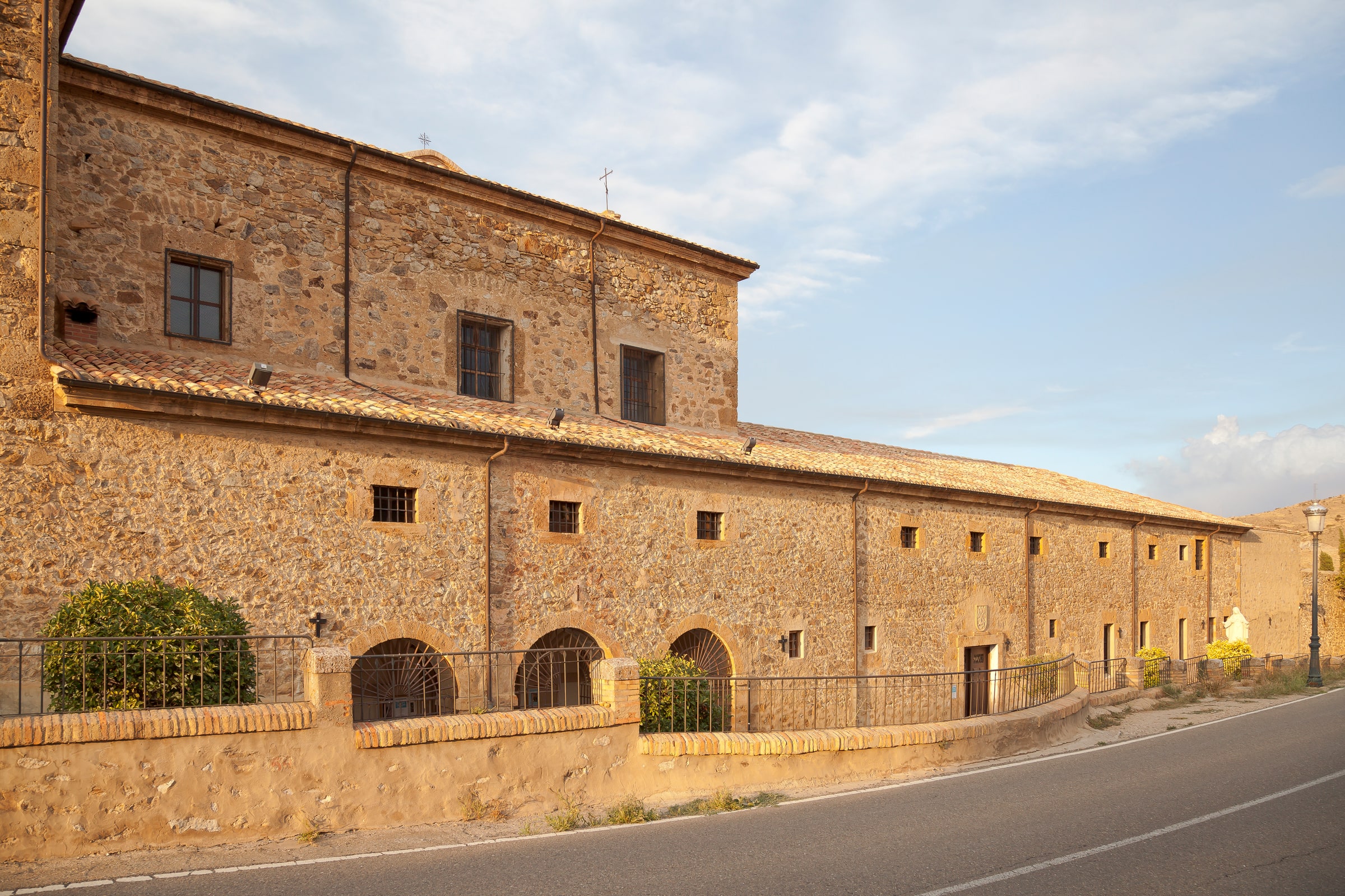
At the edge of Ágreda in northern Spain stands the monastery that gives the “Lady in Blue” story a real and visitable center. The Monastery of the Immaculate Conception is not a later memorial loosely attached to Venerable María de Jesús de Ágreda. She supervised its construction as a young abbess, moved her community into it in 1633, lived and wrote here, died here in 1665, and remains buried in its church.
María Coronel y Arana had entered Conceptionist life in 1619, when her family home became the community’s first convent. The larger monastery was built after that house proved inadequate. Its restrained Franciscan architecture, enclosure, church, archives, and continued community life preserve the setting in which María governed, prayed, wrote, and maintained an extensive correspondence with King Philip IV. This is an active religious house as well as a historic destination, so the contemplative life of the sisters takes priority over tourism.
The church preserves María’s body in a sealed, glass-fronted coffin beneath a recumbent figure near the altarpiece of St. Francis. The town and convent traditionally describe the body as incorrupt. That received description should be reported faithfully but carefully: physical preservation is not itself proof of sanctity, a medical conclusion, or a substitute for the Church’s canonization process. María currently bears the title Venerable; she has not been beatified or canonized.
The associated museum introduces her writings, correspondence, community, and seventeenth-century world. It also helps visitors understand why this cloistered Spanish abbess became connected with the American Southwest. In 1629, Jumano people from areas of present-day Texas and New Mexico told Franciscan missionaries that a woman dressed in blue had already instructed them in the Christian faith and told them to seek the friars. Franciscan Alonso de Benavides later interviewed María in Spain and identified her with the figure remembered as the “Lady in Blue.”
The sources establish that Franciscans recorded and investigated this testimony; they do not turn a reported bilocation into an independently reproducible historical fact. Catholic pilgrims are not required to believe the private revelation or bilocation tradition. The Holy See’s use of the title Venerable recognizes heroic virtue, not the automatic authentication of every extraordinary story connected with her.
The story also requires respect for the Jumano people. They were the witnesses whose account startled the missionaries, not passive scenery in a European legend. The colonial mission setting involved cultural encounter, unequal power, and consequences that cannot be erased by telling only the miraculous portion. A responsible visit holds together the Franciscan record, María’s reported experience, and the dignity and agency of the Indigenous communities named in the account.
Pope Francis returned attention to María in 2023 when he received a conference organized around the Venerable by the Pontifical International Marian Academy. His address emphasized three dimensions of her life: love of Scripture, Marian mysticism, and concern for evangelization. That emphasis offers the best way to enter the convent. Look beneath the spectacular claims toward a woman formed by sustained listening, communal responsibility, spiritual writing, and a desire that Christ be known.
María’s best-known work, The Mystical City of God, grew from her Marian spirituality and reported private revelations. Pilgrims should neither dismiss it as a curiosity nor treat it as another Gospel. Private revelation does not add to the deposit of faith and must remain subordinate to Scripture, the liturgy, and the Church’s public teaching. The museum and convent context allow the work to be approached within her complete vocation instead of isolated quotations online.
Access to the church and museum can change with the sisters’ enclosure, worship, conservation work, and local arrangements. Consult the official convent or Ágreda visitor information shortly before traveling. Dress and behave for an active monastery, keep silence near the choir and burial place, and do not photograph the sisters or restricted areas. A preserved body is never a spectacle.
A thoughtful pilgrimage begins in the church, continues through the museum, and ends by returning the Lady in Blue story to the ordinary disciplines that sustained María’s life. Pray for contemplative communities, missionaries, Indigenous peoples whose testimony is too often told without their names, and everyone responsible for discerning reports of extraordinary spiritual experiences. The deepest question here is not whether a visitor can solve a seventeenth-century mystery, but whether listening to God’s Word produces humility, fidelity, and charity.
Visit the monastery María de Jesús built and governed, pray in the church where her body is preserved, and use the museum to place the Lady in Blue tradition within her complete Conceptionist vocation.
The sacred connection
People and objects remembered here
These relationships are part of the destination record, with feast days and catalog qualifications shown where available.
What to notice
Look closely at the place and its story
The convent she built
Enter the monastery complex completed under María’s leadership and occupied by her community from 1633.
Her burial place
Pray in the church where her preserved body rests in a sealed, glass-fronted coffin.
The museum of the Venerable
Place her writings, correspondence, Marian spirituality, and the Lady in Blue tradition within seventeenth-century history.
A living Conceptionist community
Remember that the monastery remains a house of contemplative prayer whose enclosure and worship take priority over tourism.
How to read this page
Sources, tradition, and what is verified
The destination record was last checked on 11/2/2026.
This page records the site’s tradition as “Roman Catholic — Order of the Immaculate Conception (Conceptionist Franciscan).” That wording describes the nature of the claim and keeps devotional tradition distinct from independently verified history.