Why pilgrims come
Visit the resting place and legacy of St. Thomas Aquinas
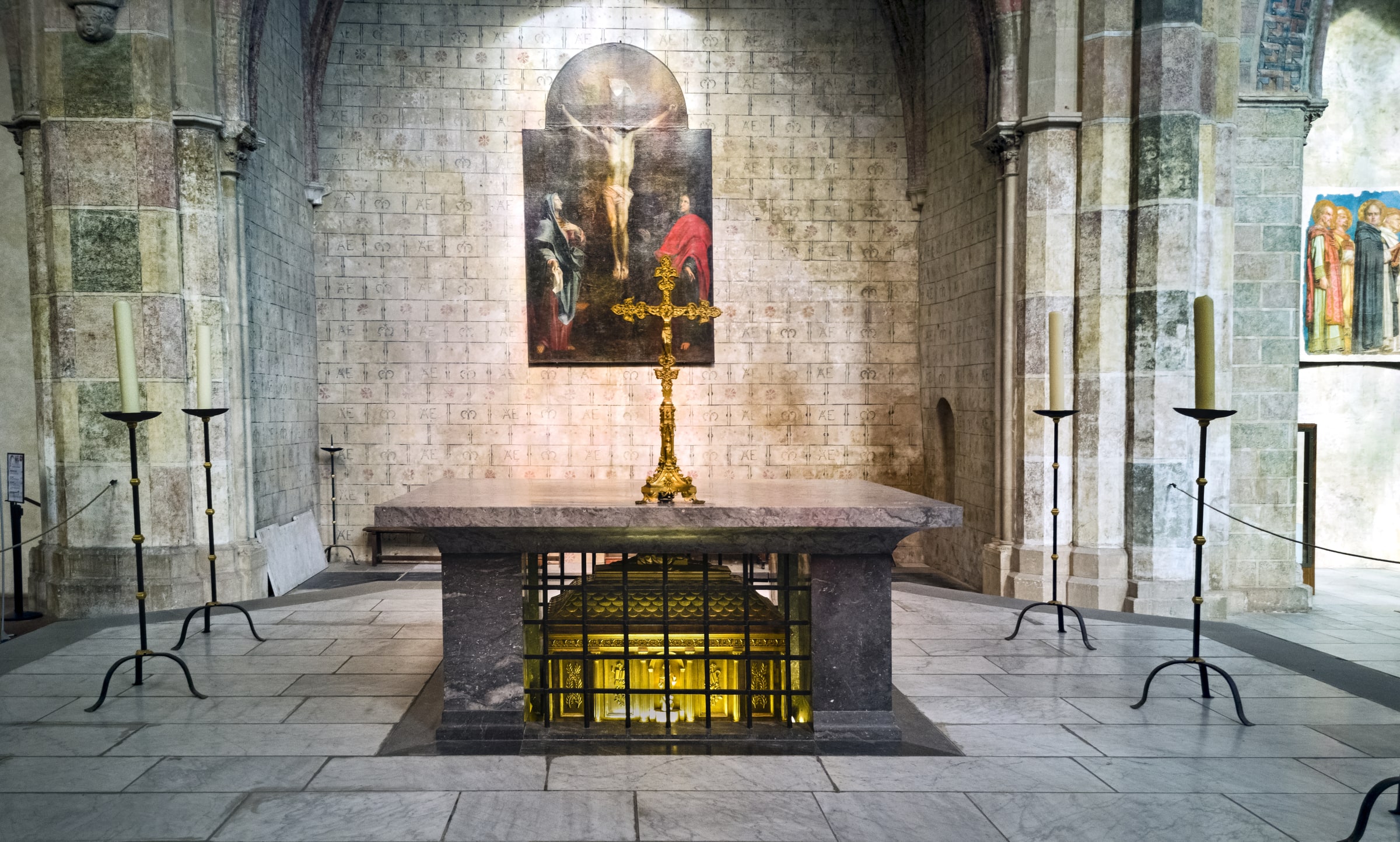
The brick Gothic church of the Jacobins preserves the principal relics of St. Thomas Aquinas, Dominican friar, theologian, and Doctor of the Church. Thomas died at Fossanova in 1274. Nearly a century later, Pope Urban V entrusted his relics to the Dominicans of Toulouse, where they were received in 1369. They now rest beneath the modern altar in the center of the church.
The placement changes how the building is read. The famous palm-tree vault is not only an architectural marvel: its ribs open above a shrine to a thinker whose theology joined disciplined reason to contemplation. Thomas’s intellectual work grew from prayer, preaching, community, and the Eucharist. Pilgrims should resist reducing him to a stack of books—or the church to a photography stop.
The convent is now administered as a civic monument, while the relics remain a Catholic sacred presence. Opening hours, admission, and event closures therefore follow municipal visitor rules. Begin with prayer at the altar, read a short passage from Thomas’s Eucharistic hymns, then walk the cloister and chapter spaces that recall the Order of Preachers. The January 28 feast is the principal annual occasion for devotion; verify any Mass or procession with the local diocese and Dominicans.
Pray beside the Church’s great Dominican theologian, then let the famous palm vault turn intellectual wonder upward.
The sacred connection
People and objects remembered here
These relationships are part of the destination record, with feast days and catalog qualifications shown where available.
principal bodily relics enshrined beneath the church altar
Feast: January 28Tomb and bodily remains · Ecclesiastically documented translation
Visitor access follows municipal monument hours and event closures.What to notice
Look closely at the place and its story
Aquinas beneath the altar
Honor the saint’s principal relics at the heart of the former Dominican church.
The palm-tree vault
Stand under the radiating Gothic ribs and let beauty serve contemplation.
The Order of Preachers in Toulouse
Read the convent within the city where Dominican preaching took early root.
Feasts, anniversaries & celebrations
How to read this page
Sources, tradition, and what is verified
The destination record was last checked on 9/27/2026.
This page records the site’s tradition as “Dominican church, saint’s tomb, and civic historic monument.” That wording describes the nature of the claim and keeps devotional tradition distinct from independently verified history.