Why pilgrims come
Discover what makes Milk Grotto of Our Lady a place of pilgrimage
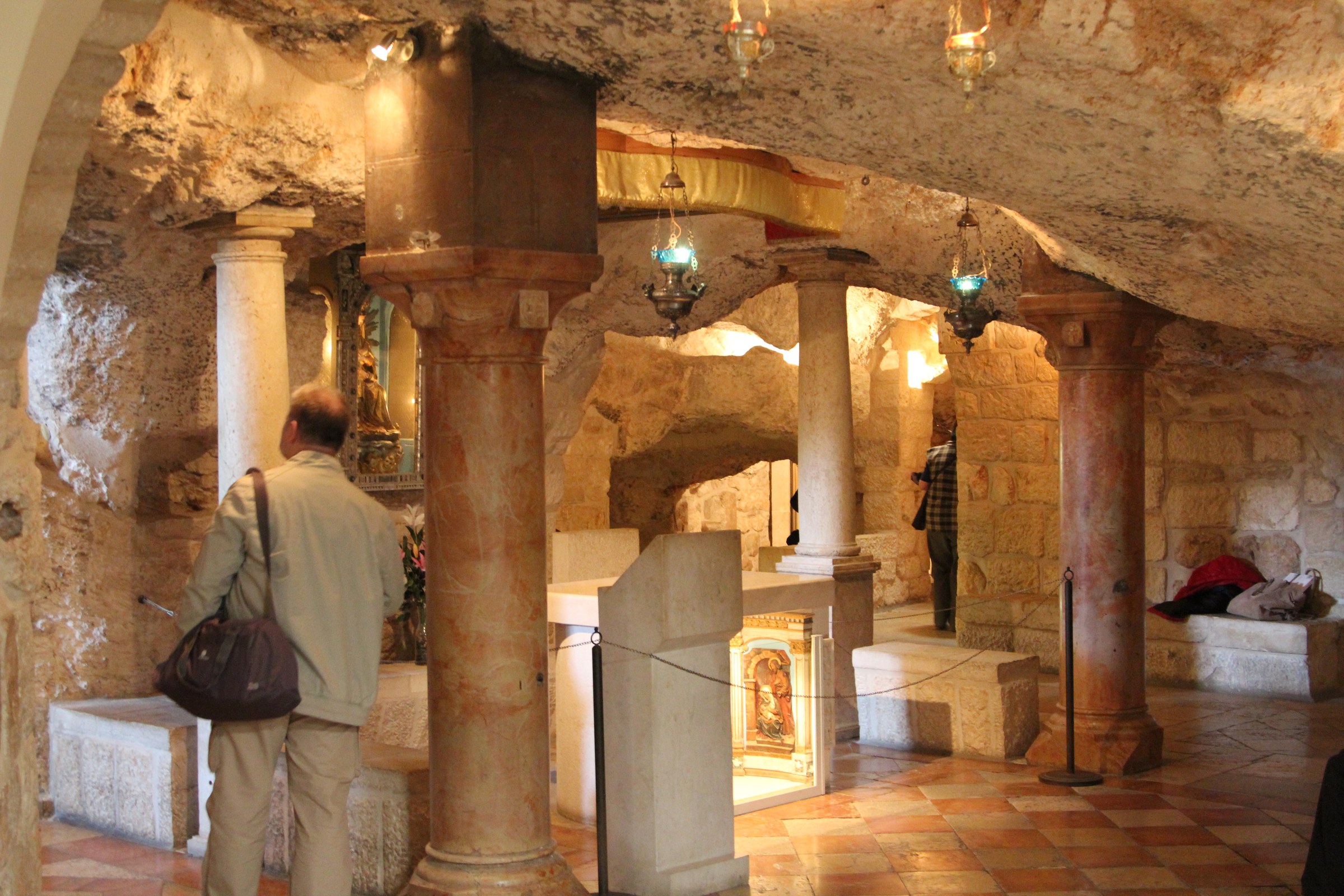
A short walk from the Church of the Nativity leads to a quieter Bethlehem shrine, the Milk Grotto. Here pilgrims encounter the Holy Family through the ordinary tenderness of a mother feeding her child. The Franciscan Custody of the Holy Land cares for a place long associated with prayer for children, mothers, and families.
According to the local Christian tradition, Mary nursed Jesus in this cave before the Holy Family’s flight into Egypt. A drop of her milk fell on the rock and made it white. The Gospel of Matthew recounts the flight into Egypt, but it does not identify this grotto or describe the change in the stone. Those details belong to the shrine’s devotional tradition and should be received with that distinction intact.
The Custody traces veneration here to the fourth century and the distribution of small pieces of the white rock to the early centuries that followed. Christian and Muslim women have both been drawn to the place. Across different lives and generations, pilgrims have brought the hope of conceiving a child, concern for a pregnancy, or difficulty nursing an infant. The whiteness of the cave has become a visible focus for those prayers.
The story has continued through letters rather than only through stone. The Franciscans preserve testimonies, photographs, and messages from families who attribute the birth of a child or other graces to prayer associated with the Milk Grotto. An exhibition explains the history and brings some of those voices before visitors. These are expressions of thanksgiving and reported favors, not a collection that proves every claim by medical investigation.
Give the archive the same care you would give a family telling you its story. Joy deserves gratitude; suffering also deserves room. A shrine of hope should never imply that an unanswered prayer reflects a failure of faith. The prayer offered here can include couples carrying infertility, parents who have lost a child, and families living with uncertainty.
The grotto is also connected with Eucharistic prayer. The Custody describes a passage toward a chapel of the Blessed Sacrament and the nearby community of the Perpetual Adorers. Ask the caretakers which spaces are accessible during your visit, then allow time for silence as well as looking at the cave and its displays.
Some accounts mention the distribution of powdered stone. This guide does not recommend consuming it or treating devotional objects as medicine. The purpose of a pilgrimage is prayer, not a promised remedy. Before traveling, confirm current access with the Franciscan Custody and consult current travel guidance: conditions in Bethlehem can change, and an old visitor report cannot establish present access. When possible, join the grotto to a slower pilgrimage through the Nativity rather than adding it as a hurried curiosity.
Visit the Franciscan shrine where an ancient tradition remembers Mary nursing Jesus, and pray for children and families.
What to notice
Look closely at the place and its story
The white grotto
Hear the tradition of Mary nursing Jesus while distinguishing it from the Gospel’s account of the flight into Egypt.
Family testimonies
Read the exhibition and thanksgiving letters with gratitude and care for those still waiting or grieving.
Eucharistic prayer
Ask about access to the Blessed Sacrament chapel and make time for silent prayer.
A Bethlehem pilgrimage
Connect this intimate Marian shrine with the Church of the Nativity nearby.
How to read this page
Sources, tradition, and what is verified
The destination record was last checked on 11/26/2026.
This page records the site’s tradition as “Roman Catholic.” That wording describes the nature of the claim and keeps devotional tradition distinct from independently verified history.
Continue nearby