Why pilgrims come
Discover what makes Oratory of the Holy Face a place of pilgrimage
The Oratory of the Holy Face occupies the former Tours home of Venerable Léon Papin-Dupont, the layman remembered as the "Holy Man of Tours." Its story is joined to Sister Marie of St. Peter, a Discalced Carmelite who reported interior communications concerning reparation for blasphemy, profanation of Sunday, the Holy Name of God, and the suffering Face of Christ. Those communications arose within the Carmel of Tours; Dupont's house later became the public center from which the devotion spread. The distinction matters: this Oratory is not presented as the physical setting of a visible apparition, and private revelations are not articles of faith required of Catholics.
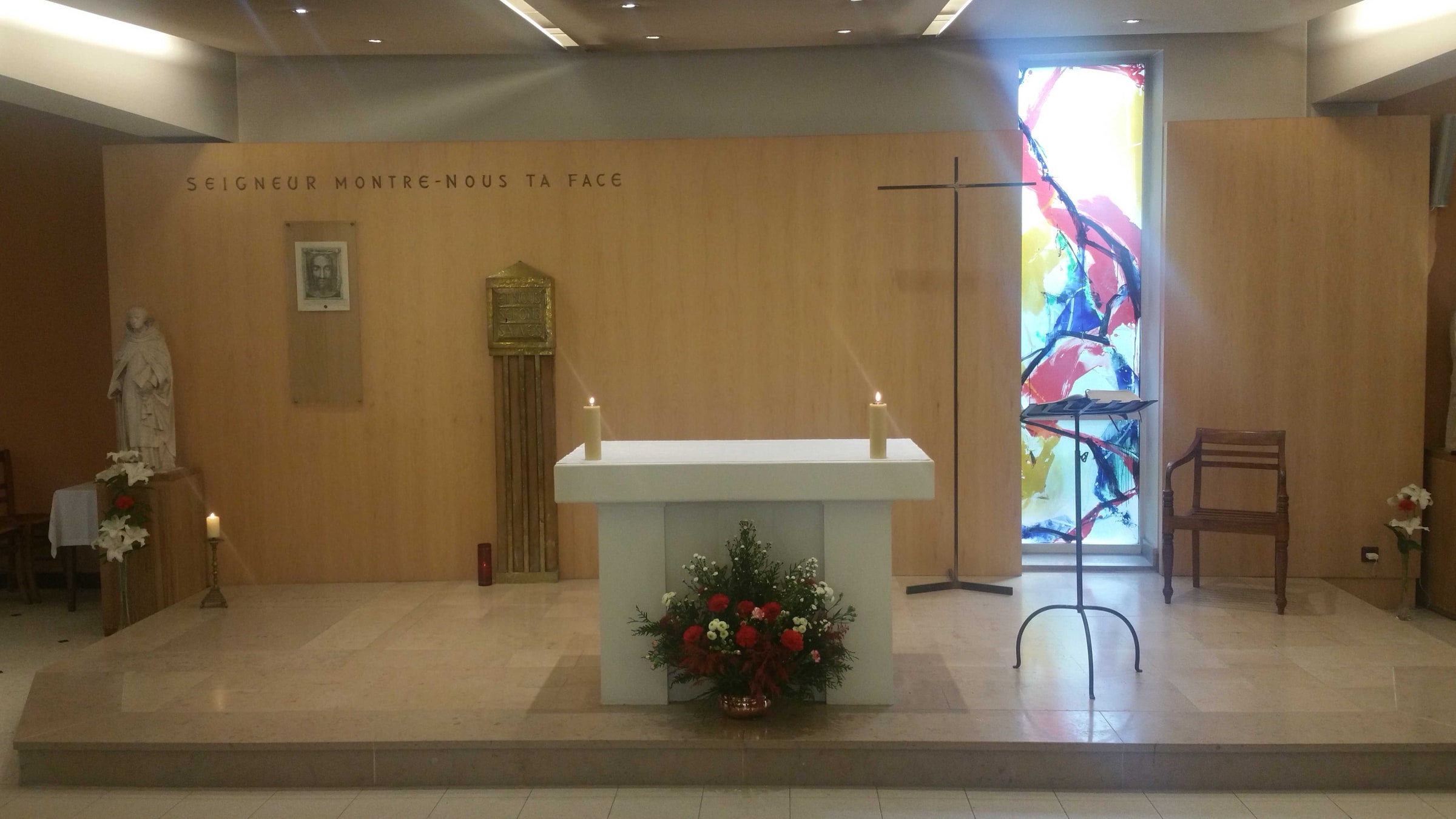
In Holy Week of 1851, Dupont placed an image of the Holy Face in his parlor and lit an oil lamp before it as an outward act of adoration. He began praying with visitors and using oil from the lamp for devotional anointing. Reports of physical and spiritual favors drew growing numbers of pilgrims. After Dupont's death in 1876, his home became an oratory, and the devotion continued through the shrine and the Archconfraternity of the Holy Face.
The lamp-oil custom remains alive today. The Oratory's official account says that its chaplains and successive custodians continued the practice and that pilgrims still request small bottles of oil that has burned before the Holy Face image. This is not a single surviving reserve of nineteenth-century oil, nor should an individual bottle be described as a relic. It is newly supplied devotional oil associated with the continuously maintained sanctuary lamp and the prayer tradition begun by Dupont. The shrine also does not establish that the present physical lamp fixture is necessarily the identical object first lit in 1851.
The Oratory is explicit about the proper Catholic meaning of the practice: the oil is not medicine and possesses no automatic power. A small anointing is an exterior expression of faith, joined to prayer in the merits of Christ's Passion, confidence in divine mercy, and the intercession of Venerable Léon Papin-Dupont. Reported cures remain reported favors rather than guarantees. The shrine recalls Dupont's insistence that prayer and anointing should lead toward confession, Holy Communion, conversion, and deeper Christian life.
Pilgrims can pray before the Holy Face image and lamp at 8 rue Bernard Palissy, attend the Oratory's liturgy, and ask the shrine about the present availability of devotional oil. Distribution and international mailing conditions can change, so consult the official oil page or contact the Oratory before relying on shipment. The Golden Arrow prayer belongs within this same spirituality of praise and reparation: it should lead the pilgrim to honor God's Name and contemplate Christ, not to treat the oil as a charm or the Oratory as a place of guaranteed healing.
Enter the former home of Venerable Léon Papin-Dupont as a living shrine of prayer and reparation. Pray before the Holy Face image and the continuously maintained sanctuary lamp, and understand why the Oratory still distributes oil associated with that lamp. The oil is devotional—not medicine, a relic, or a promise of healing. Preserve the geography: Sister Marie of St. Peter's reported interior communications arose in the Tours Carmel, while Dupont's house became the public center of the devotion.
What to notice
Look closely at the place and its story
The Holy Face image and vigil lamp
Pray where Dupont fostered the devotion from 1851 and where a lamp continues to burn before the Holy Face image.
The continuing lamp-oil devotion
Learn why the Oratory still distributes oil associated with the sanctuary lamp—and why the shrine calls it an act of faith rather than medicine, a relic, or a guaranteed cure.
Sister Marie's reported revelations
Learn how reported interior communications in the Tours Carmel inspired the work of reparation.
Two places, one spiritual history
Keep the Carmel revelation setting distinct from the present Oratory in Dupont's former home.
A living archconfraternity
See how the devotion continued through prayer, enrollment, and the shrine's present ministry.
How to read this page
Sources, tradition, and what is verified
The destination record was last checked on 10/4/2026.
This page records the site’s tradition as “Catholic.” That wording describes the nature of the claim and keeps devotional tradition distinct from independently verified history.