Why pilgrims come
Encounter the Eucharistic tradition and its surviving evidence
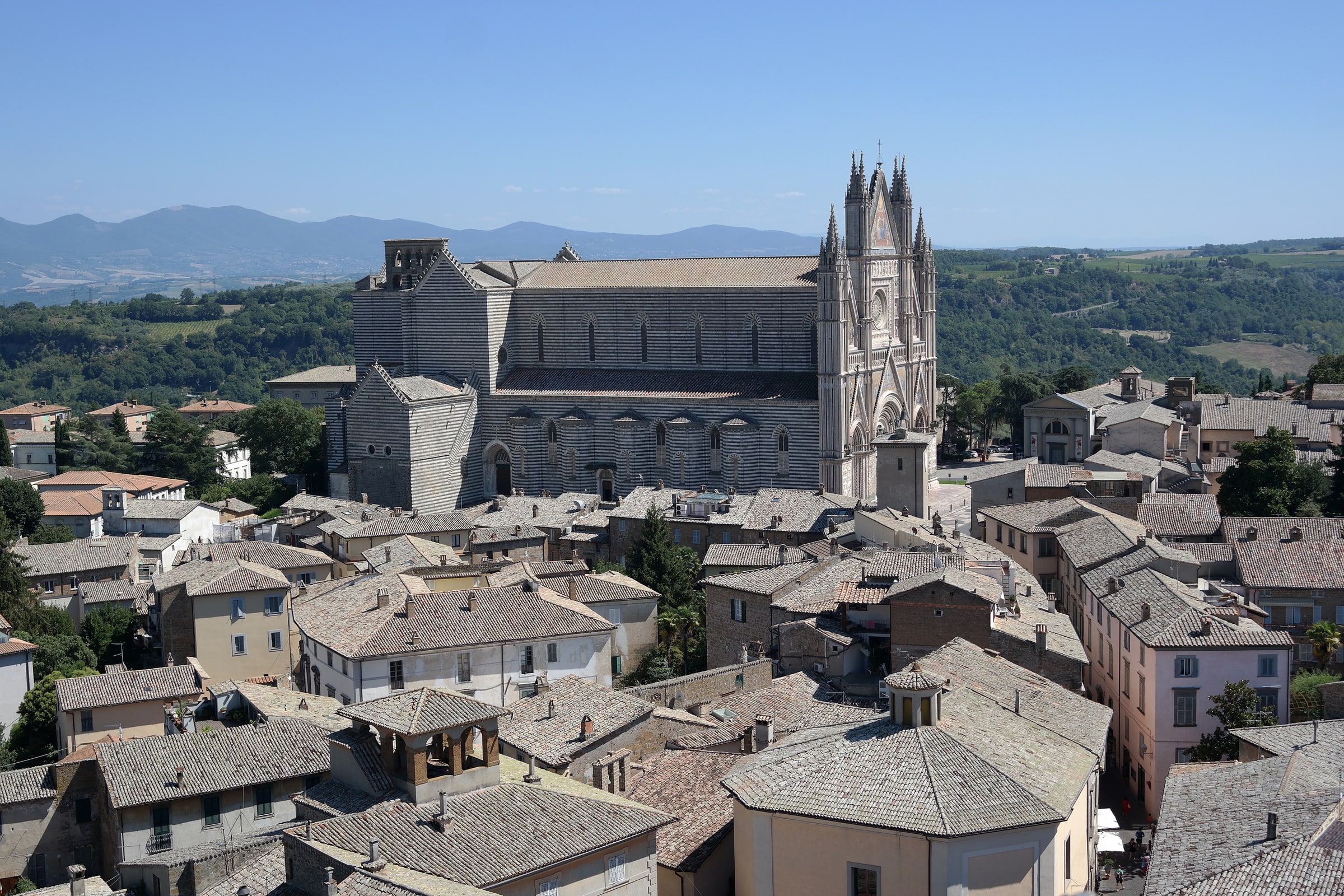
Orvieto Cathedral is the present home of the blood-stained altar linen associated with the Eucharistic miracle reported at nearby Bolsena in 1263. The geography is essential: the Mass tradition belongs to the Basilica of Santa Cristina in Bolsena, while the corporal was brought to Pope Urban IV at Orvieto and is now preserved in the cathedral's Chapel of the Corporal.
According to the received tradition, a Bohemian priest—commonly identified as Peter of Prague—was traveling toward Rome while struggling with doubts about Christ's Real Presence. During Mass at Santa Cristina, blood was reported to have come from the consecrated host and marked the corporal, the square linen placed beneath the sacred vessels.
Urban IV was then residing at Orvieto. The corporal was brought to him, and in 1264 he issued the bull Transiturus de hoc mundo, extending the solemnity of Corpus Christi to the universal Church. The feast had earlier roots in the visions and advocacy of St. Juliana of Liège, so the Bolsena tradition should be understood as part of that larger history rather than its sole cause.
The cathedral was begun in 1290 and became one of Italy's great Gothic churches. Its Chapel of the Corporal was built in the mid-fourteenth century. Frescoes cover the walls with scenes of the Bolsena tradition and other Eucharistic narratives. The sacred linen itself is kept in a Gothic tabernacle beyond the altar; the celebrated 1338 reliquary by Ugolino di Vieri is displayed within the museum circuit.
Orvieto renews this memory each year at Corpus Christi with a procession of the Blessed Sacrament and the Sacred Corporal, accompanied by a historical civic procession. Corpus Christi is movable, so the calendar must compute the date each year rather than store a fixed anniversary.
For pilgrims, this is a two-city journey. Pray at Santa Cristina in Bolsena, where the Mass is remembered and blood-marked stones are venerated, then travel roughly twenty-five kilometers to Orvieto to encounter the corporal and its continuing liturgical memory. In the cathedral, worship takes precedence over sightseeing; access to the chapel and museum objects can change during services and solemn observances.
Treat Bolsena and Orvieto as one pilgrimage in two places: the remembered Mass at Santa Cristina and the preserved corporal in Orvieto Cathedral.
The story & the place today
What happened here—and what a pilgrim can find now
Each record separates the devotional tradition from the present-day visitor evidence. A mapped locality remains visible even when an exact shrine or surviving object has not yet been verified.
The Mass at Bolsena and the Sacred Corporal at Orvieto
Catholic tradition relates that a priest celebrating Mass at Santa Cristina in Bolsena saw blood from the consecrated host stain the corporal. The linen was brought to Pope Urban IV at Orvieto and remains the center of the cathedral’s Eucharistic devotion.
Basilica of Santa Cristina, Bolsena
The Sacred Corporal, a liturgical linen bearing stains associated with the reported event
Chapel of the Corporal, Orvieto Cathedral
Annual corpus christi procession
Visitor note: Active cathedral and chapel; museum and cult access follow separate schedules and liturgical restrictions
Church wording: Longstanding public Catholic veneration linked to the universal solemnity of Corpus Christi — Basilica of Santa Cristina, Diocese of Orvieto-Todi, and the cathedral’s custodians
Urban IV promulgated Transiturus in 1264. The feast also grew from the earlier Liège tradition associated with St. Juliana; the reported Bolsena event and Orvieto relic became central to its Italian memory.
The sacred connection
People and objects remembered here
These relationships are part of the destination record, with feast days and catalog qualifications shown where available.
Eucharistic relic · Publicly preserved and venerated by Orvieto Cathedral within the received Catholic tradition
Cult access to the chapel is normally possible within cathedral hours but may be restricted during liturgies; verify current arrangements.What to notice
Look closely at the place and its story
Chapel of the Corporal
Pray where the sacred linen is preserved within one of Italy’s great Gothic cathedrals.
Bolsena and Orvieto together
Keep the event site and the present place of custody geographically distinct.
Ugolino di Vieri’s reliquary
See the 1338 masterpiece created to honor the corporal in the cathedral museum.
Corpus Christi in a living city
Understand the annual procession as continuing Catholic worship, not simply medieval pageantry.
Feasts, anniversaries & celebrations
How to read this page
Sources, tradition, and what is verified
The destination record was last checked on 9/22/2026.
This page records the site’s tradition as “Roman Catholic; cathedral and Corpus Christi pilgrimage.” That wording describes the nature of the claim and keeps devotional tradition distinct from independently verified history.
Continue nearby