Why pilgrims come
Meet the Catholic history preserved at this place
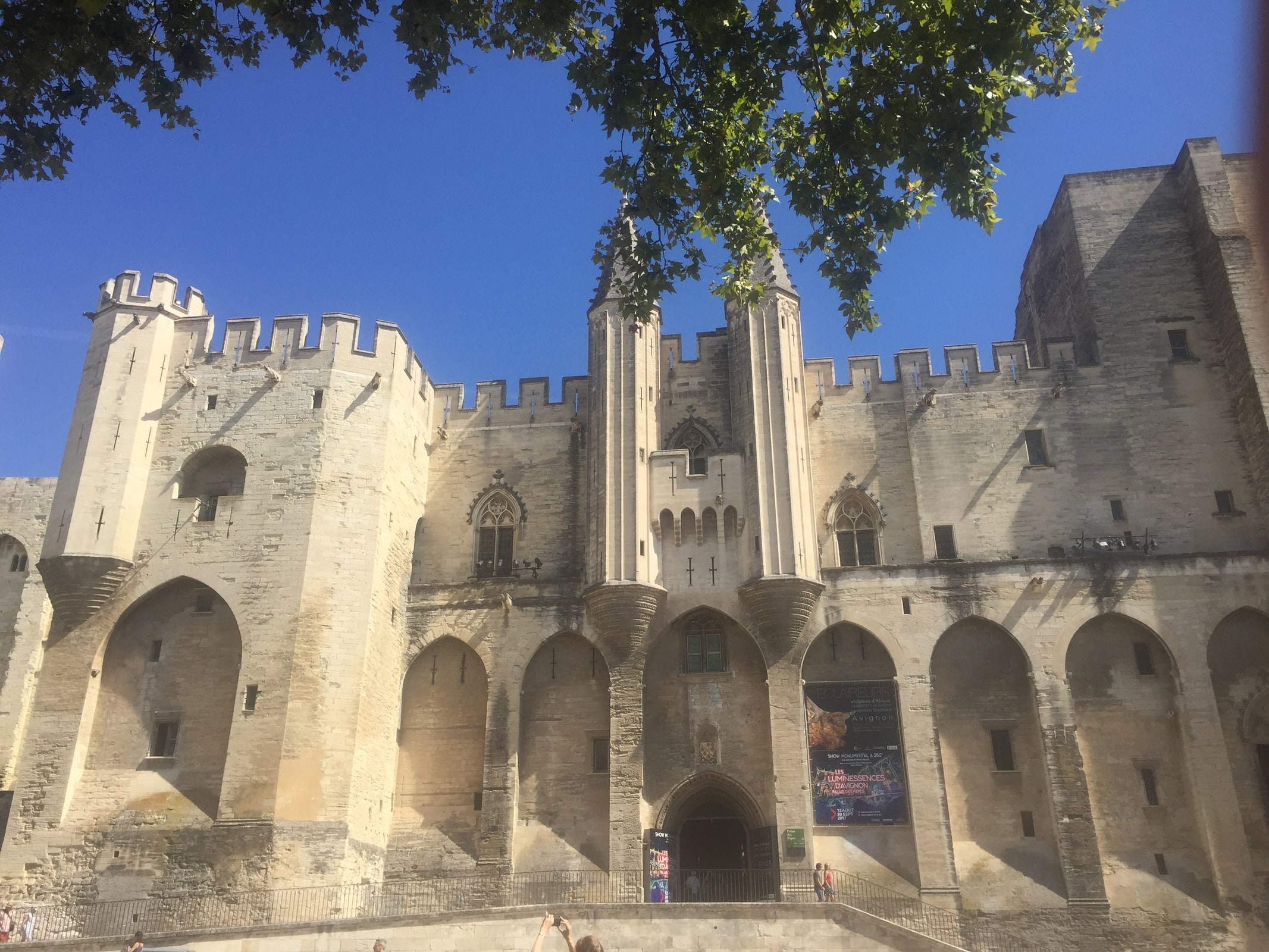
For nearly seven decades, from 1309 until Gregory XI returned the papal court to Rome in 1377, seven recognized popes governed the Western Church from Avignon. The Palais des Papes is the monumental witness to that unusual chapter: part fortress, part residence, part administrative capital, and part sacred setting for the life of the papal court.
Precision matters because the popular statement that “nine popes ruled from Avignon” mixes two different histories. Seven recognized popes belong to the Avignon Papacy: Clement V, John XXII, Benedict XII, Clement VI, Innocent VI, Urban V, and Gregory XI. After the return to Rome and the outbreak of the Western Schism, two rival Avignon claimants—Clement VII and Benedict XIII—also occupied the palace. The official palace history therefore speaks of nine pontiffs present in Avignon while distinguishing the seven popes from the two later schismatic claimants.
Clement V established the papal court at Avignon in 1309 but did not build the palace visitors see today. John XXII adapted the former episcopal residence beside Notre-Dame des Doms. Benedict XII then created the austere Old Palace, and Clement VI expanded it into the more ceremonial New Palace. Most of the surviving complex took shape between 1335 and 1352, giving medieval Avignon a fortified center for worship, diplomacy, law, finance, and artistic patronage.
The building rewards more than a quick exterior photograph. Its courtyards, towers, consistories, ceremonial halls, chapels, kitchens, papal apartments, and gardens reveal the scale of the medieval curia. The Saint-Martial and Saint-Jean chapels preserve celebrated frescoes associated with Matteo Giovannetti and the papal workshop. These painted rooms are fragile; current visitor rules prohibit photography in several of them.
UNESCO includes the palace within Avignon’s historic-center World Heritage ensemble together with Notre-Dame des Doms, the Petit Palais, the ramparts, and the Saint-Bénézet bridge. The designation recognizes both the exceptional Gothic architecture and the city’s role as a major religious and political capital of medieval Europe.
The palace is no longer a papal residence or an ordinary parish church. It is a historic monument and museum, with cultural programming in the Cour d’honneur. A Catholic pilgrimage should therefore read the rooms honestly: they preserve the institutional power, spiritual ambition, artistic brilliance, courtly culture, and eventual division of a consequential period in Church history.
Plan for stairs, stone floors, seasonal heat or cold, and a substantial visit. The monument is open daily, but hours and room access change with exhibitions and ongoing conservation. The official site advises that the palace is not heated or air-conditioned and offers a reduced-comfort route by advance arrangement for visitors with limited mobility.
Complete the Papal Avignon route by walking to the Chapel of the Grey Penitents. The palace tells the story of the papal court; the smaller chapel carries the city’s lay Eucharistic devotion and its received account of the 1433 Miracle of the Waters. Together they prevent Avignon from becoming either only a political cautionary tale or only an architectural backdrop.
Read the palace as both a masterpiece and a difficult chapter of Church history: seven recognized popes in Avignon, followed by two rival claimants during the Western Schism.
What to notice
Look closely at the place and its story
Seven popes, then two rival claimants
Use the building to understand the Avignon Papacy without confusing it with the later Western Schism.
Old Palace and New Palace
See how Benedict XII’s fortress-like residence and Clement VI’s ceremonial expansion formed one monumental complex.
The painted chapels
Seek the Saint-Martial and Saint-Jean fresco cycles associated with Matteo Giovannetti and respect their no-photography rules.
A UNESCO sacred cityscape
Read the palace together with Notre-Dame des Doms, the Petit Palais, the ramparts, and the Saint-Bénézet bridge.
Papal Avignon beyond the palace
Walk to the Grey Penitents chapel to encounter the city’s continuing Eucharistic memory and lay Catholic life.
How to read this page
Sources, tradition, and what is verified
The destination record was last checked on 9/30/2026.
This page records the site’s tradition as “Historic Roman Catholic papal residence; present-day heritage monument and museum.” That wording describes the nature of the claim and keeps devotional tradition distinct from independently verified history.
Continue nearby