Why pilgrims come
Discover what makes Primatial Cathedral Basilica of the Americas a place of pilgrimage
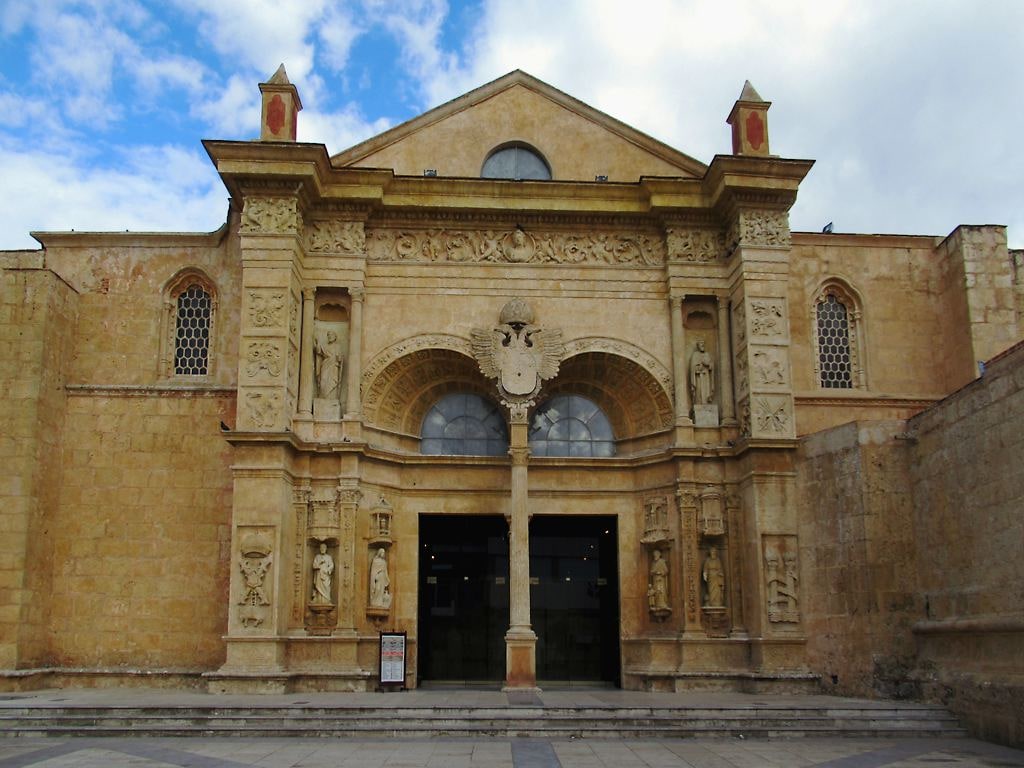
The Primatial Cathedral Basilica of the Americas—officially dedicated to Our Lady of the Incarnation or Annunciation—stands at the center of Santo Domingo’s Colonial City. It is widely described by the Archdiocese, the cathedral museum, Dominican tourism authorities, and UNESCO as the first cathedral built in the Americas. That title belongs to this church in Santo Domingo, not to San Juan Cathedral. San Juan preserves the second-oldest cathedral foundation and a church founded in 1521; Santo Domingo’s cathedral is the earlier monumental cathedral construction.
Building began in the early sixteenth century and proceeded through several campaigns. The major structure was completed around 1540 and solemnly dedicated in 1541. As in San Juan, “oldest” does not mean frozen in time: chapels, roofs, furnishings, restorations, and urban surroundings changed across five centuries. The church remains a living Catholic cathedral, not a preserved shell.
The building’s coral-limestone walls and ribbed vaulting create an austere Gothic space, while the celebrated west front brings Renaissance and Plateresque language into the Caribbean. The mixture reflects a frontier church built while European architectural forms were being adapted to new materials, climate, labor, and colonial institutions. Its beauty should be read alongside the difficult history of conquest, forced labor, and evangelization that shaped the first Spanish city in the Americas.
UNESCO includes the cathedral within the Colonial City of Santo Domingo, where institutions such as the first hospital, university, and customs house in the Americas also took shape. For a Catholic pilgrim, this setting invites both gratitude and examination of conscience. The cathedral bears witness to sacramental life and enduring faith, but it also belongs to an imperial city whose history affected Indigenous and African peoples profoundly.
The cathedral’s chapels, tombs, memorials, sacred art, and treasury reward slow attention. The museum offers additional interpretation of the building and its religious patrimony. Historical burial claims in the colonial city can be complicated, so this page does not turn disputed identifications into devotional certainty. Use the cathedral and museum’s current labels as the controlling interpretation on site.
The Marian dedication is central: Santa María de la Encarnación recalls the mystery of the Word made flesh. Begin at the main altar with the Annunciation and Incarnation rather than with a race for architectural superlatives. The cathedral’s primatial title points to the early organization of the Church in the Americas, but its deepest purpose remains the praise of God and the celebration of the sacraments.
Pair the cathedral with the Basilica and National Shrine of Our Lady of Altagracia in Higüey to see two complementary Dominican pilgrimage traditions: the first cathedral of the colonial capital and the nation’s principal living Marian sanctuary. Check the cathedral and museum for current hours, liturgy, admission arrangements, dress requirements, and closures before travel.
Pray in the first cathedral built in the Americas, encounter its Marian dedication and five-century sacred fabric, and place the achievement within the full moral complexity of the colonial city.
What to notice
Look closely at the place and its story
The first cathedral built in the Americas
Understand the documented primacy without confusing it with San Juan’s later cathedral foundation.
Our Lady of the Incarnation
Let the mystery of the Word made flesh—not an architectural superlative—center the pilgrimage.
Gothic and Plateresque Caribbean
See European forms adapted in coral limestone within the first permanent Spanish city in the Americas.
Faith and colonial conscience
Hold Christian inheritance together with honest remembrance of conquest, coercion, and the peoples affected.
Cathedral museum and treasury
Use the museum’s current interpretation to deepen the history of sacred art, worship, and the building.
How to read this page
Sources, tradition, and what is verified
The destination record was last checked on 10/5/2026.
This page records the site’s tradition as “Roman Catholic — Archdiocese of Santo Domingo.” That wording describes the nature of the claim and keeps devotional tradition distinct from independently verified history.
Continue nearby