Why pilgrims come
Encounter the Eucharistic tradition and its surviving evidence
The Sanctuary of Santa Maria outside Ivorra marks the place associated with the Sant Dubte—the “Holy Doubt”—of 1010. The relics connected with the tradition, however, are kept at the parish church of Sant Cugat inside the village. A useful pilgrimage must preserve both locations: the sanctuary for the reported event and Sant Cugat for the surviving reliquary.
According to the history published by Ivorra’s municipal government, the priest Bernat Oliver was celebrating Mass when he doubted the mystery of the Eucharist. At the consecration, the chalice was said to overflow with blood, staining the altar cloths and floor while the bells rang without human hands. Bishop Ermengol of Urgell recognized the event in the received account.
The tradition also attributes papal confirmation and a gift of relics to Pope Sergius IV. Catholic Tourist presents that claim carefully. Sergius IV’s pontificate fits the traditional date, but the public sources reviewed do not provide a modern archival edition of the alleged bull. The claim belongs to the sanctuary’s inherited history and should not be upgraded into documentary certainty without the text and provenance of the instrument.
The municipality says the blood-marked cloth, papal relics, and bull were placed at nearby Sant Cugat, consecrated in 1055, and rediscovered during work in the early fifteenth century. A Gothic reliquary dated 1462 now holds a portion of the stained cloth along with a collection of other relics. The municipal page also reports scientific findings concerning blood and the age of the textile, but no underlying laboratory report was available in the reviewed source stack. Catholic Tourist therefore reports that as a municipal claim, not an independently verified conclusion.
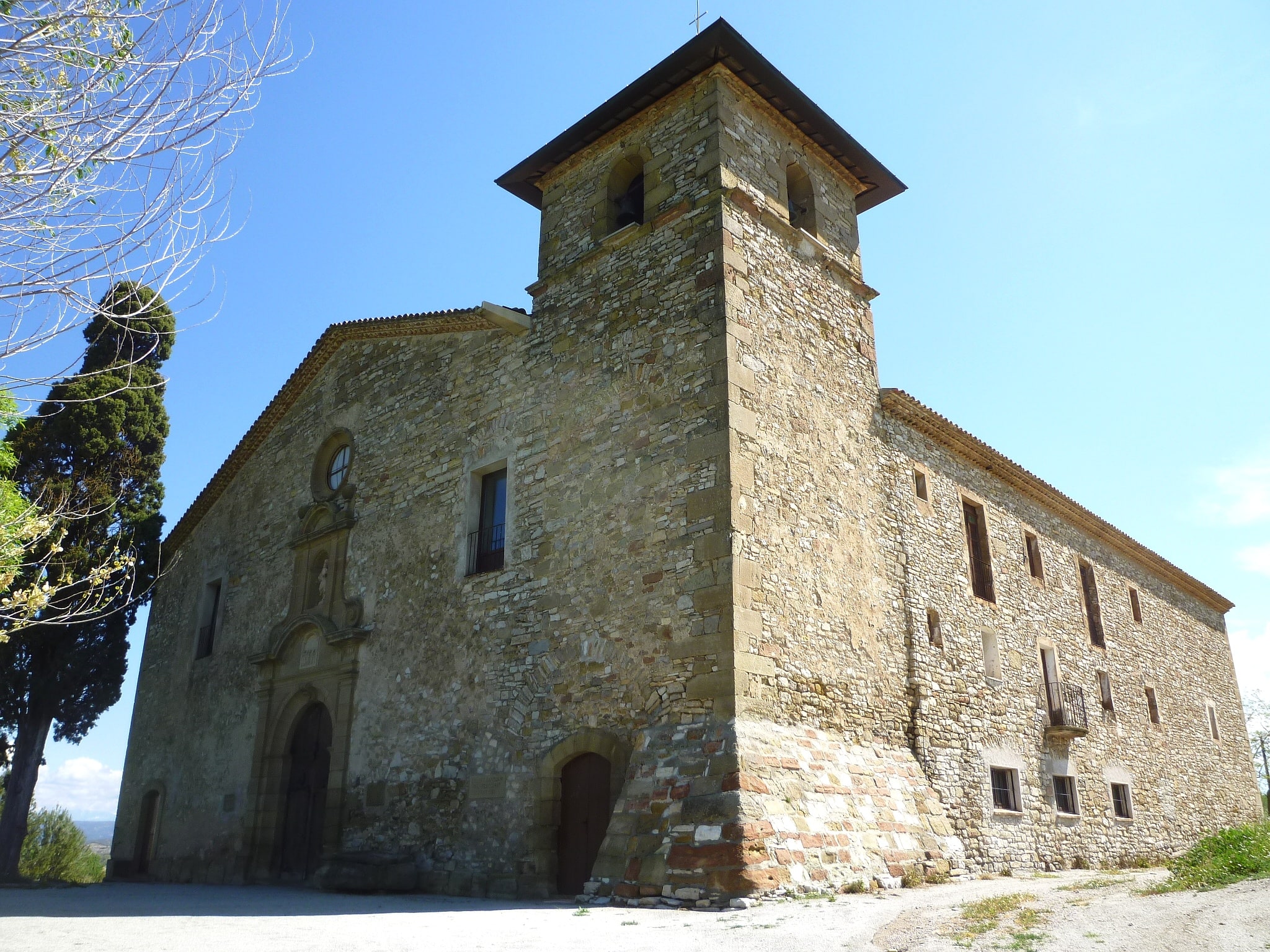
The present sanctuary was built centuries later to receive pilgrims. Its first stone was laid on January 28, 1663. The rectangular church has side chapels, a restrained Baroque entrance completed in 1762, a bell tower, and imagery of the miracle above the doorway. An attached former hostelry recalls the numbers of pilgrims who once came to venerate the Holy Doubt.
That old hostelry should not be advertised as current accommodation. No present overnight programme or dependable daily opening timetable was found. Visitors should contact the municipality, parish, or sanctuary before making a special journey, and should confirm whether both Santa Maria and Sant Cugat can be opened.
The wider Segarra landscape rewards the two-stop structure. Begin at the sanctuary to encounter the place and architecture shaped by the event’s memory. Continue into Ivorra to Sant Cugat if arrangements allow, because that is where the reliquary is reported to remain. Confusing the two can leave a pilgrim at the correct sanctuary but unable to see the object they expected.
The Holy Doubt is best understood as a tradition about faith seeking understanding rather than a rebuke aimed at every question. The narrative moves from uncertainty to worship, and the surviving landscape joins a rural sanctuary, a village parish, a Gothic reliquary, and centuries of Catalan pilgrimage. Those elements can be presented responsibly even while papal-document and scientific claims remain carefully bounded.
Make this a two-stop pilgrimage: the Santa Maria sanctuary marks the event, while Sant Cugat in the village safeguards the reported relics.
The story & the place today
What happened here—and what a pilgrim can find now
Each record separates the devotional tradition from the present-day visitor evidence. A mapped locality remains visible even when an exact shrine or surviving object has not yet been verified.
The Holy Doubt of Ivorra
The received tradition says the chalice overflowed during Mass when Bernat Oliver doubted the Eucharistic mystery, staining altar cloths later placed in a reliquary.
Site of the present Sanctuary of Santa Maria outside Ivorra
A portion of the traditionally blood-stained altar cloth and associated relics
Gothic reliquary at Sant Cugat parish church in Ivorra, according to the municipality
Continuing local pilgrimage tradition; verify current celebrations
Visitor note: Arrange access to both sanctuary and parish church
Church wording: Centuries-old diocesan and local Eucharistic tradition — Local Catholic community and the received tradition of the Diocese of Urgell
The sanctuary developed centuries after the reported event; the present building began in 1663.
The sacred connection
People and objects remembered here
These relationships are part of the destination record, with feast days and catalog qualifications shown where available.
Eucharistic contact relic and associated reliquary collection · Preserved by the parish within the received 1010 tradition
The relic is not at the outlying sanctuary; arrange access to Sant Cugat in advance.What to notice
Look closely at the place and its story
Sanctuary of the event
Visit Santa Maria at the traditional site of Bernat Oliver’s Holy Doubt.
Sant Cugat reliquary
Arrange a second stop in the village for the Gothic reliquary and reported cloth fragment.
Baroque pilgrim church
Read the 1663 sanctuary and 1762 portal as evidence of the tradition’s later growth.
Former pilgrim hostelry
Recognize the historical hospitality building without advertising it as current lodging.
Attributed claims
Keep the papal-bull and scientific-testing assertions tied to their public sources.
How to read this page
Sources, tradition, and what is verified
The destination record was last checked on 9/30/2026.
This page records the site’s tradition as “Roman Catholic Catalan Eucharistic pilgrimage of the Sant Dubte.” That wording describes the nature of the claim and keeps devotional tradition distinct from independently verified history.