Why pilgrims come
Encounter the Eucharistic tradition and its surviving evidence
At the center of Lanciano stands the Church of San Francesco, an active Franciscan sanctuary preserving the objects venerated as the flesh and blood of an early Eucharistic miracle. The received tradition tells of a Basilian monk who, while celebrating Mass and struggling with doubt about Christ's Real Presence, saw the consecrated host become flesh and the wine become blood.
The oldest form of the story is not a contemporary chronicle. BeWeB, the cultural-heritage portal of the Italian bishops' conference, states plainly that the tradition was gathered in written sources from the sixteenth century and places the reported event between the seventh and eighth centuries. That distinction matters: pilgrims can honor a centuries-old Catholic devotion without turning a later documentary record into eyewitness evidence.
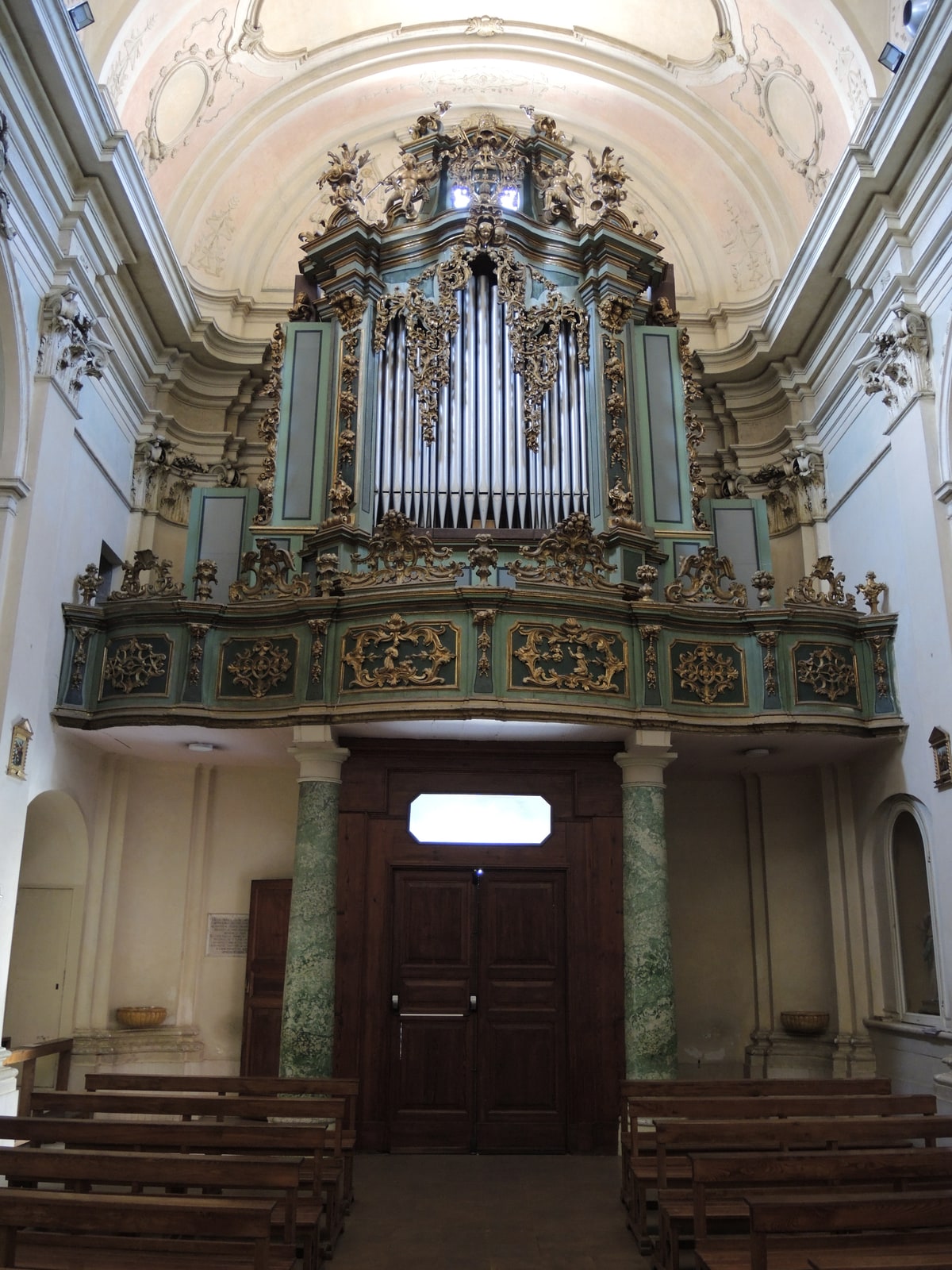
The present sanctuary occupies the area of the earlier church associated with the tradition. Franciscans built San Francesco in the thirteenth century; the church was extensively reshaped in the eighteenth. The lower archaeological route preserves remains of the older religious complex, while the present sanctuary leads upward to the monumental high altar where the objects are displayed.
The flesh is held in a silver monstrance made in 1713, and the blood is kept in a rock-crystal chalice. BeWeB documents the history of their custody: the relics were placed in the so-called Dark Chapel by the thirteenth century, moved to the Valsecca chapel in 1636, and installed at the present monumental altar in 1902.
Scientific examinations are frequently invoked in popular accounts. The best-known modern study was conducted in 1970–1971 under Professor Odoardo Linoli. Catholic Tourist records that study as part of the shrine's modern history and reports the sanctuary's conclusions as claims made by the investigators and custodians. We do not inflate one examination into a claim of universal scientific consensus or treat laboratory language as a substitute for the Church's theological understanding of the Eucharist.
This is a living sanctuary rather than a display case. The Franciscan community asks visitors to enter in silence and let the visible objects lead toward faith in Christ present in every Mass. Check the sanctuary's current schedule before traveling, especially with a group; the official site specifically asks First Communion pilgrimages to avoid concentrating only in April and May so the friars can receive them well.
Begin with Mass or quiet prayer, then read the event tradition, the later documentary history, and the modern examinations as three distinct layers. Visit the lower archaeological spaces if open.
The story & the place today
What happened here—and what a pilgrim can find now
Each record separates the devotional tradition from the present-day visitor evidence. A mapped locality remains visible even when an exact shrine or surviving object has not yet been verified.
The ancient Eucharistic tradition of Lanciano
According to the tradition preserved at Lanciano, a Basilian monk who doubted the Real Presence saw the consecrated host become flesh and the wine become blood during Mass. The received written sources are many centuries later than the reported event, a limitation the page states directly.
Earlier church on the site of the present Church of San Francesco, Lanciano
A disc-shaped piece of tissue and five coagulated portions kept in a silver monstrance and rock-crystal vessel
Monumental high altar of the Sanctuary of the Eucharistic Miracle, Church of San Francesco
Continuing public veneration
Visitor note: Public sanctuary; current liturgical and visitor access should be confirmed on the official site
Church wording: Longstanding public Catholic veneration at an active Eucharistic sanctuary — Archdiocese of Lanciano-Ortona and the sanctuary’s Franciscan custodians
The tradition is documented in written sources from the sixteenth century. BeWeB traces the later custody of the objects and the 1970 examination; Catholic Tourist separates those documented facts from the much earlier reported event.
The sacred connection
People and objects remembered here
These relationships are part of the destination record, with feast days and catalog qualifications shown where available.
Eucharistic relics · Publicly preserved and venerated by the sanctuary; the historical and scientific claims are documented with explicit evidence boundaries
Visibility may be affected by liturgies and group pilgrimages. Confirm current opening and celebration times with the sanctuary.What to notice
Look closely at the place and its story
The monumental Eucharistic altar
Pray before the objects publicly preserved and venerated by the sanctuary.
The historical evidence boundary
Distinguish the early event tradition from the much later surviving written record.
San Legonziano below
Explore the older religious and archaeological layers beneath the Franciscan church when access is available.
A living Franciscan sanctuary
Let the relics point toward the Eucharist celebrated at the altar rather than treating them as an isolated curiosity.
How to read this page
Sources, tradition, and what is verified
The destination record was last checked on 9/22/2026.
This page records the site’s tradition as “Roman Catholic; Franciscan Eucharistic sanctuary.” That wording describes the nature of the claim and keeps devotional tradition distinct from independently verified history.