Why pilgrims come
Discover what makes Shrine of Our Lady of Refuge at Aljmaš a place of pilgrimage
In 1704, a small statue of the Virgin Mary was carried out of the Baranja village of Lug for safekeeping during a time of unrest. It found refuge beside the Danube in Aljmaš. The village kept the image, and in time the title given to Mary there—Our Lady of Refuge—became inseparable from the place itself. Three centuries later, war would force the people of Aljmaš to seek the same refuge their statue once had.
This is not an apparition story. The shrine did not begin with a claim that Mary appeared in Aljmaš. Its center is a sacred image, a community’s long devotion, and a history in which the word “refuge” became painfully literal more than once. That distinction does not diminish the shrine. It makes the story more human: people received an image in danger, built a place of prayer around it, lost nearly everything, and returned.
The first shelter for the statue was modest, built from branches and mud. Devotion grew, and churches followed. In 1846, fire destroyed the village church and the original statue. A painting preserving its appearance remained, and Bishop Josip Juraj Strossmayer later commissioned a new statue in Vienna. The shrine continued as a Marian center for eastern Croatia, with the Assumption pilgrimage on August 15 drawing the faithful to the Danube village.
Then came 1991. During the Croatian War of Independence, Aljmaš was attacked and its church heavily shelled and demolished. Residents were displaced. The shrine that had gathered families for generations became rubble, and the statue of Our Lady of Refuge was believed lost inside it. A Marian title that had once described protection during unrest now accompanied a community driven from home.
The story did not end in the ruins. The statue was found damaged but recoverable after a dangerous search of the destroyed church. It was removed, restored, and kept with the displaced people until return became possible. The image did not function as a talisman that prevented suffering; the village still knew bombardment, exile, death, and grief. Its importance was different. It gave a scattered community a visible continuity—something received before the war that could be carried through it.
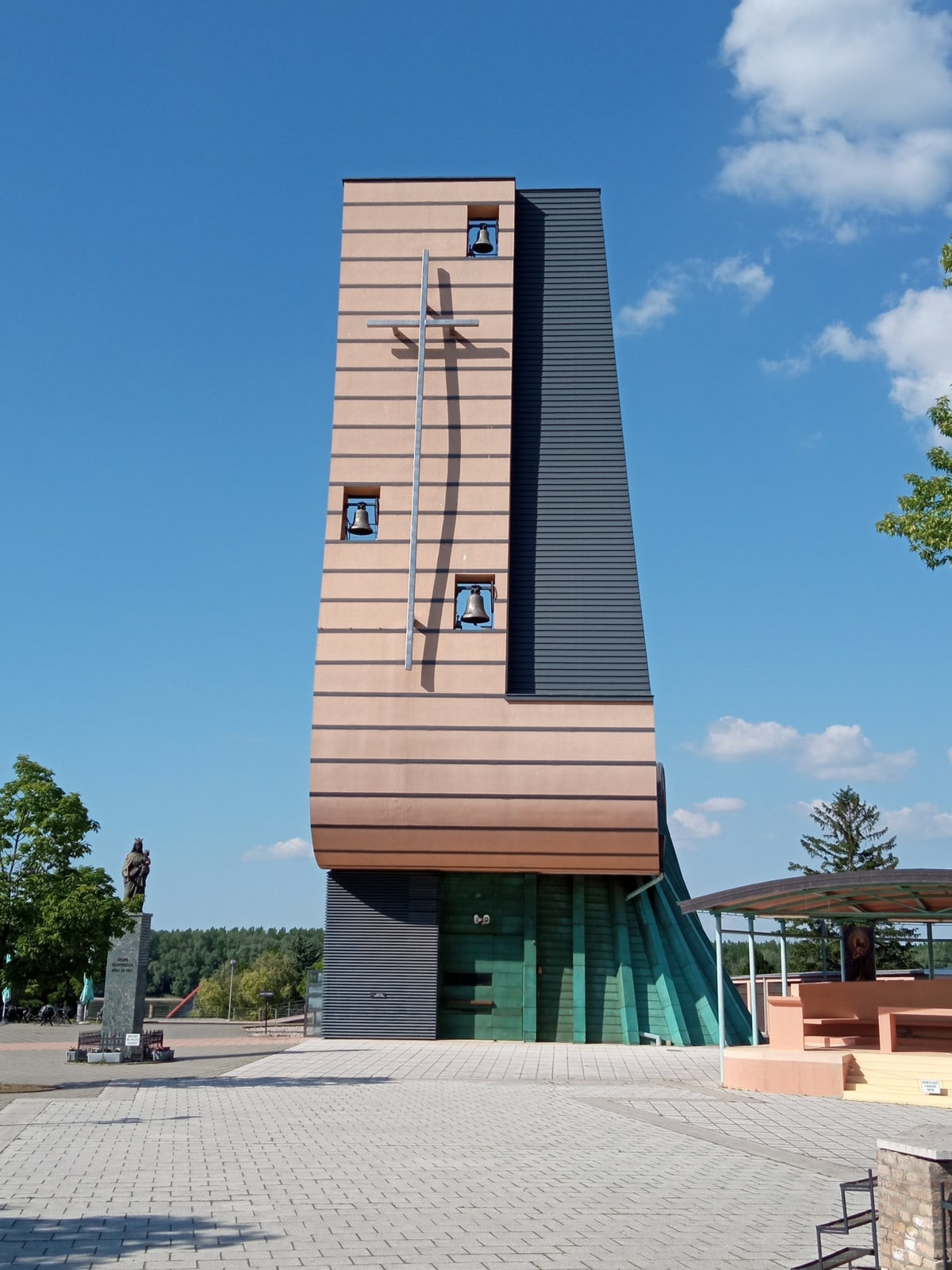
The present shrine was consecrated in the early twenty-first century. Its unusual white form has been compared to a swan or a ship beside the Danube. That modern architecture does not imitate the destroyed church. It acknowledges rupture and return. The building rises where the old shrine was lost, while the restored statue remains the devotional center.
A memorial center preserves documents and art connected with the wartime destruction and the shrine’s rebuilding. This part of the visit matters because sacred places can be distorted when suffering is turned into a dramatic backdrop. Aljmaš should not be used to romanticize war or flatten a complicated regional history into slogans. The shrine’s witness is the endurance of prayer, the dignity of the displaced, and the difficult work of rebuilding community after violence.
Our Lady of Refuge is a deeply biblical title even when attached to a particular image. Mary’s life was not protected from sorrow. She fled with Joseph and the Christ Child, stood beneath the Cross, and remained with the disciples in hope. Calling her a refuge does not mean that devotion guarantees a life without danger. It means asking a mother who knew displacement and grief to accompany people toward her Son.
The Danube landscape deepens the pilgrimage. Aljmaš stands in a border region marked by movement, encounter, conflict, and exchange. The river can appear peaceful, but it has also carried the weight of history. Take time outside the church. Let the geography prevent the story from becoming abstract. The shrine belongs to a real village whose residents suffered and returned.
There is a temptation, when a church has such a dramatic history, to search for one miraculous object that explains everything. Aljmaš resists that shortcut. The statue matters because a community prayed before it, carried it, searched for it, restored it, and returned it to a rebuilt sanctuary. Its meaning is inseparable from those acts of fidelity. The most important question is not whether the image escaped every mark of violence, but whether the people allowed violence to have the final word over their faith.
Inside, begin with the statue. Do not rush to photograph the architecture before recognizing why the building exists. Pray for refugees and displaced families, for civilians living through war, for those trying to rebuild homes and parishes, and for communities carrying memories that outsiders may not understand. If Mass or a public devotion is taking place, allow the local congregation to set the rhythm of the visit.
The major pilgrimage is the Assumption on August 15, when crowds, liturgies, and practical access differ from an ordinary day. Travelers should verify the current program, transport arrangements, and church access directly before coming. At other times, the shrine can offer a quieter encounter, but it remains a living Catholic place rather than an architectural attraction.
Aljmaš is significant because its title became a history. An image arrived seeking safety in 1704. A later statue survived fire’s aftermath and then war’s destruction. A people were forced away and came back. A church was rebuilt without pretending nothing had happened. The sequence is not tidy, and that is why it matters. Christian hope is not the denial of ruins. It is fidelity that begins again among them.
That lesson reaches beyond Croatia. Many shrines are loved because they seem untouched by time. Aljmaš is loved because it bears witness to time’s wounds and to the choice to rebuild. Pilgrims should learn enough of the local history to avoid using the site as a generic symbol. Ask what was lost, who was displaced, what return required, and how the parish now holds memory alongside ordinary sacramental life. Respectful attention is part of the prayer.
For anyone carrying fear, exile, family displacement, or the slow work of rebuilding, Aljmaš offers a prayer rather than an easy answer. Mary does not replace Christ; she directs the pilgrim to him. Stand before Our Lady of Refuge and ask for the courage to shelter someone else—to make room, remember the displaced, resist hatred, and help rebuild what violence has broken.
Read Aljmaš through refuge twice over: the 1704 arrival of the image and the modern return of a shrine rebuilt after war.
The sacred connection
People and objects remembered here
These relationships are part of the destination record, with feast days and catalog qualifications shown where available.
Marian sacred image · Publicly venerated under Catholic custody; brought to Aljmaš in 1704
What to notice
Look closely at the place and its story
Our Lady of Refuge
Pray before the image that gave the shrine its enduring name.
Destruction and return
Remember displacement and rebuilding without romanticizing war.
The Danube landscape
Let river and border history deepen the pilgrimage.
Feasts, anniversaries & celebrations
How to read this page
Sources, tradition, and what is verified
The destination record was last checked on 11/2/2026.
This page records the site’s tradition as “Catholic.” That wording describes the nature of the claim and keeps devotional tradition distinct from independently verified history.
Continue nearby