Why pilgrims come
Visit the resting place and legacy of St. Mark the Evangelist
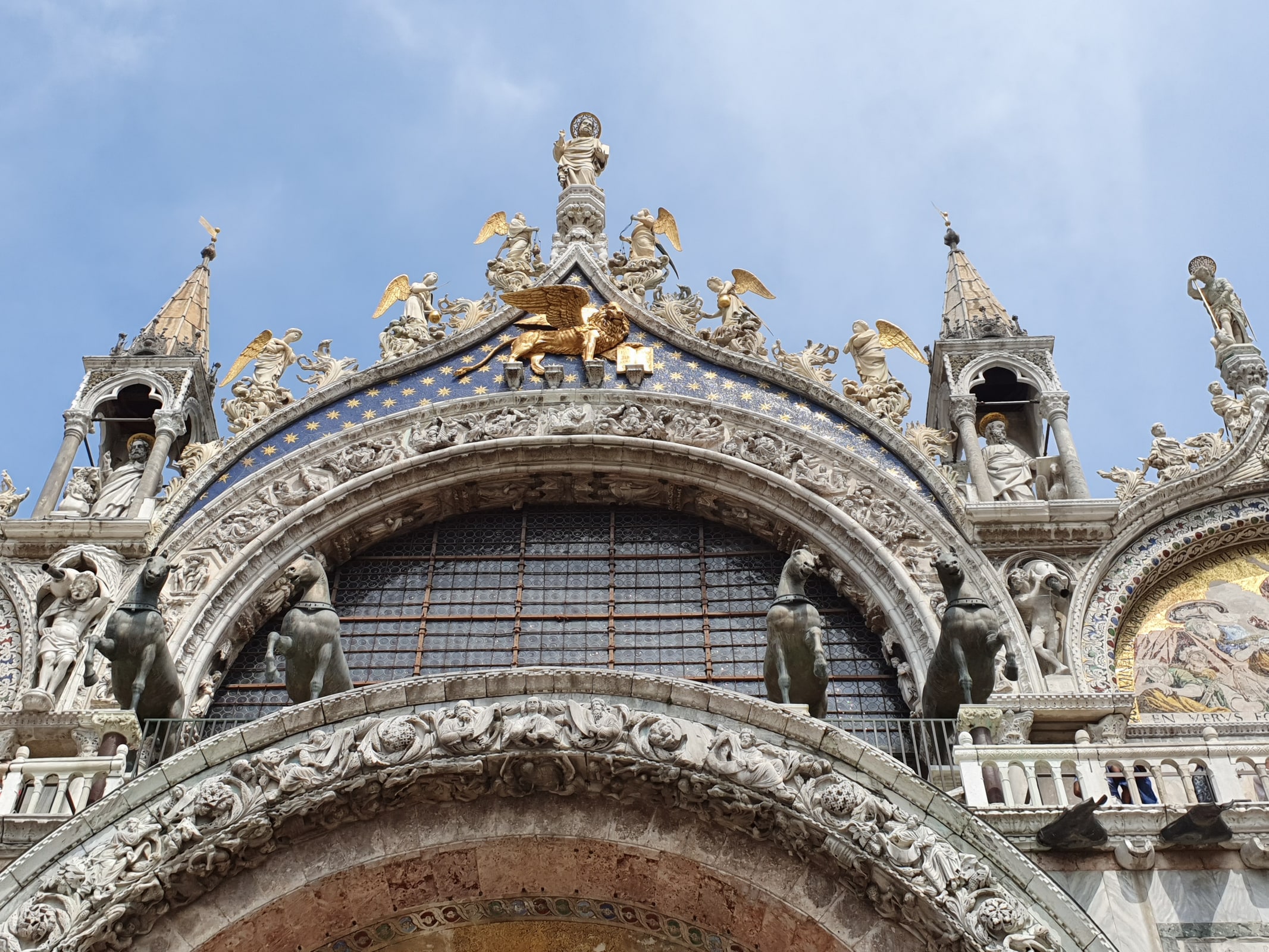
St. Mark’s is not only Venice’s great mosaic church; it is the city’s apostolic shrine. Venetian tradition holds that merchants brought the Evangelist’s body from Alexandria in 828. The relics were placed in the ducal chapel that became the present basilica, and Mark’s winged lion became the emblem of Venice.
The official basilica identifies the marble sarcophagus beneath the high altar as the resting place of St. Mark. The ciborium above it is carried by four carved alabaster columns, and the Pala d’Oro rises behind the altar in a field of gold and enamel. On the saint’s feast, the shrine is marked by a special display of roses, making the tomb the liturgical center of Venice rather than an incidental relic inside a museum-like monument.
The present building was begun in 1063 and shaped by Venice’s encounter with the Christian East. Its domes, mosaics, marble revetments, and Greek treasures should be read within that complicated history, including objects brought west after the Fourth Crusade. Pray at Mark’s tomb, read the opening of his Gospel, and let the basilica’s splendor lead toward the crucified and risen Christ proclaimed in its images. Entry rules, reservations, and access to the high altar can change; use the basilica’s official site before travel.
Go beyond the façade and mosaics: pray at the high altar over St. Mark’s traditional tomb and encounter Venice as an apostolic city.
The sacred connection
People and objects remembered here
These relationships are part of the destination record, with feast days and catalog qualifications shown where available.
traditional bodily tomb beneath the high altar
Feast: April 25Tomb and bodily remains · Longstanding ecclesial tradition
Access to the presbytery is governed by liturgy and current basilica rules.What to notice
Look closely at the place and its story
The Evangelist beneath the high altar
Pray at the marble sarcophagus officially identified as St. Mark’s tomb.
The Pala d’Oro
Read the golden enamel altarpiece as a liturgical proclamation, not merely a treasure.
A Gospel in mosaic
Let the domes and narrative mosaics unfold the Christian story around the apostolic shrine.
Feasts, anniversaries & celebrations
How to read this page
Sources, tradition, and what is verified
The destination record was last checked on 9/27/2026.
This page records the site’s tradition as “Roman Catholic cathedral basilica and traditional tomb of an Evangelist.” That wording describes the nature of the claim and keeps devotional tradition distinct from independently verified history.