Why pilgrims come
Enter a place shaped by prayer, community, and pilgrimage
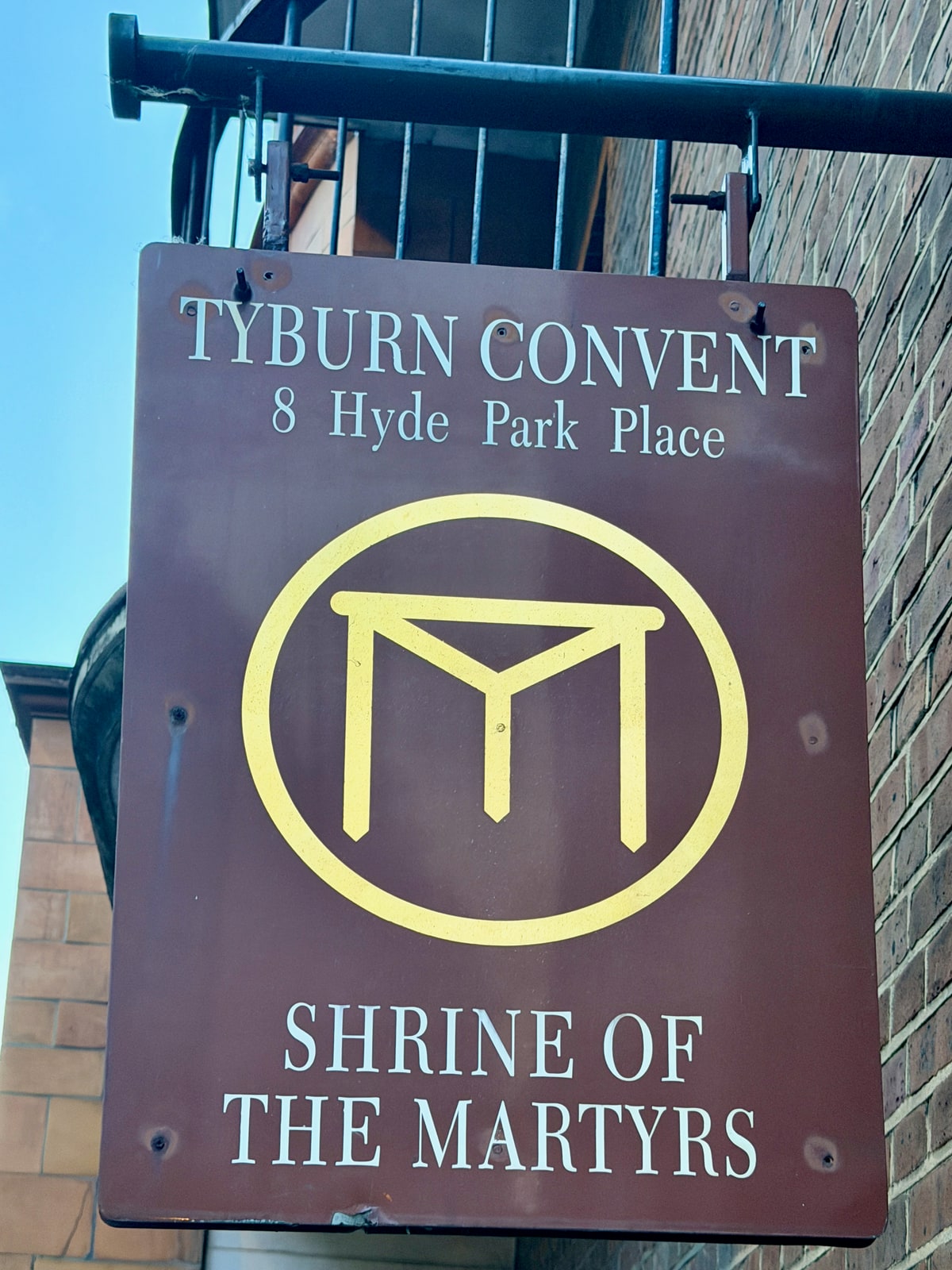
Tyburn Convent stands near the former Tyburn gallows, where Catholic priests and laypeople were executed during the Reformation era. The Benedictine community's Martyrs Shrine honors more than 350 Catholic martyrs and preserves relics associated with many of them, including figures connected directly to Tyburn. The convent remains a living house of monastic prayer and Eucharistic adoration, turning a place once identified with public execution into one of London's most concentrated sites of Catholic memory, witness, and intercession.
Tyburn turns one of London’s places of execution into a place of Eucharistic prayer and Catholic memory. Visit the shrine of the English and Welsh martyrs, join the Benedictine community’s liturgical rhythm, and walk to the small pavement marker near Marble Arch that identifies the historic gallows site.
The sacred connection
People and objects remembered here
These relationships are part of the destination record, with feast days and catalog qualifications shown where available.
first Tyburn martyr honored at the shrine
Feast: May 4Tyburn martyr honored at the shrine
Feast: December 1last Tyburn martyr honored at the shrine
Feast: July 1Relic collection · Ecclesiastically curated
The convent confirmed that the relics are not currently on view and crypt tours cannot be conducted; the martyrs’ altar and replica gallows remain visible from the laity section.First-class relic · Ecclesiastically documented
The convent confirmed that the relics are not currently on view and crypt tours cannot be conducted; the martyrs’ altar and replica gallows remain visible from the laity section.What to notice
Look closely at the place and its story
Shrine of the Tyburn Martyrs
During renovation, pray before the martyrs’ altar and replica Tyburn gallows visible from the laity section of the Crypt; the relic collection has been removed temporarily.
Historic Tyburn Tree site
Walk to the stone roundel near Marble Arch marking the place where the Reformation martyrs were executed.
Perpetual Eucharistic adoration
Holy Mass and perpetual Eucharistic adoration continue in the Martyrs’ Crypt while the public church is closed for renovation.
Retreat with the community
Individual pilgrims may arrange a simple residential retreat in the monastery’s outer enclosure.
Feasts, anniversaries & celebrations
The convent offers simple single rooms for individual retreatants in the outer enclosure; arrangements must be made directly with the community.
Accommodation details ↗How to read this page
Sources, tradition, and what is verified
The destination record was last checked on 9/29/2026.
This page records the site’s tradition as “Catholic.” That wording describes the nature of the claim and keeps devotional tradition distinct from independently verified history.
Continue nearby