Why pilgrims come
Encounter the Eucharistic tradition and its surviving evidence
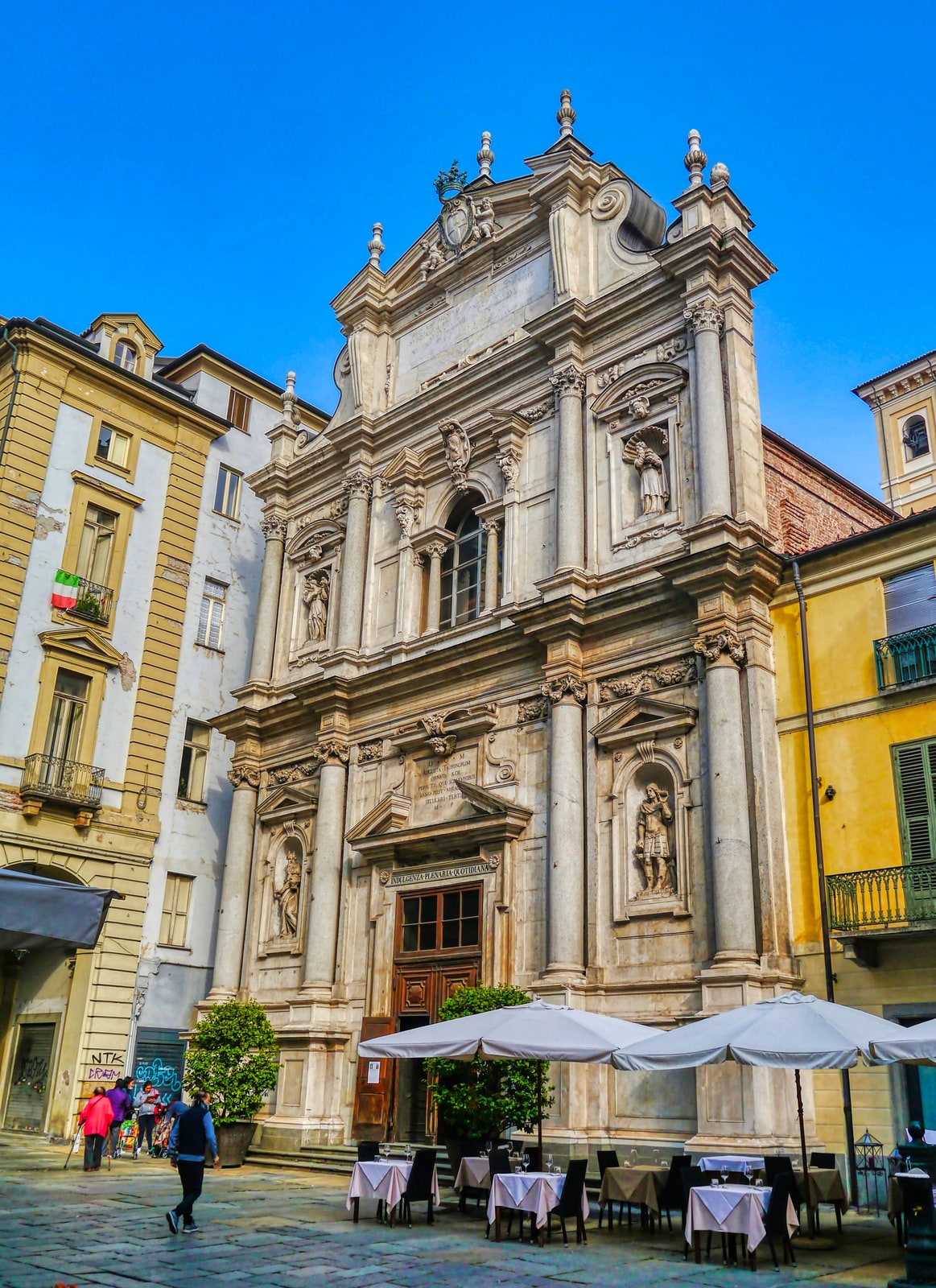
A few steps from Turin Cathedral, the Basilica del Corpus Domini stands on the place where the city remembers the recovery of a consecrated Host on June 6, 1453. The basilica is not simply a church later associated with the story: Turin’s civic authorities began the present building in 1604 specifically to monumentalize the event, replacing an earlier votive shrine. The site became one of the principal ways Turin understood itself as the “City of the Most Holy Sacrament.”
The received account begins at Exilles in the upper Susa Valley during armed conflict between forces connected to the Dauphiné and the Duchy of Savoy. According to the tradition repeated by the Archdiocese of Turin, soldiers looted the local church and carried away sacred vessels, including a monstrance or vessel containing the Blessed Sacrament. The goods were loaded on a mule and brought to Turin for sale.
When the animal reached the area near the former church of San Silvestro on June 6, the feast of Corpus Christi that year, it reportedly stopped and fell. The Host rose above the load and remained suspended until Bishop Ludovico of Romagnano arrived with clergy and people. The tradition says the Host descended after the invocation of the Emmaus disciples: “Stay with us, Lord.” The present basilica marks the remembered location; an interior railing and inscription identify the devotional spot.
The Archdiocese’s own liturgical text supplies an essential evidence boundary. It calls the secure historical core an extraordinary recovery of Eucharistic bread taken from a church at Exilles and says contemporaries regarded the recovery as miraculous and worthy of cult. It also states that the oral tradition—written down much later—acquired marvelous and spectacular details according to the mentality of the period. Catholic Tourist therefore does not present every narrative detail as a contemporary eyewitness record.
No surviving Host is promised to visitors. The pilgrimage object today is the memorial place, the basilica, and the Church’s Eucharistic observance—not an incorrupt Eucharistic relic on display. That distinction prevents the page from sending pilgrims in search of an object the cited current sources do not identify as publicly preserved.
The architecture carries the memory forward. MuseoTorino dates construction from 1604, the façade to 1656–1675, and the high altar to 1663–1665. The City of Turin continued investing in marble and carved decoration through the seventeenth century. The building suffered bombing damage in 1943, but its monumental Baroque interior still makes the city’s Eucharistic identity visible.
The basilica also belongs to Turin’s network of social saints. St. Giuseppe Benedetto Cottolengo served here as a canon, and official tourism material connects his ministry at Corpus Domini with the nearby rooms where his organized care for the abandoned sick began. A visit can therefore move naturally from Eucharistic worship to the city’s history of concrete charity.
The Archdiocese continues to keep June 6 as the local memory of the “Miracle of Turin.” Its liturgical text deliberately shifts attention away from fascination with an exterior prodigy toward the greater mystery of Christ’s presence in the Eucharist and the charity and peace that celebration should produce. That is the soundest way to visit: pray at the marked place, attend Mass or adoration if available, study the historical layers honestly, and let the memorial lead back to the Eucharist celebrated at the altar.
Turismo Torino publishes current visitor and Sunday-Mass information, but schedules change. Confirm directly before travel and defer to liturgies. The basilica is an active place of worship in a compact historic piazza, not a museum display.
Pray where Turin preserves the 1453 Eucharistic memory, while keeping the archdiocese’s distinction between the historical recovery and spectacular details recorded later. Let the memorial lead toward Eucharistic worship and charity.
The story & the place today
What happened here—and what a pilgrim can find now
Each record separates the devotional tradition from the present-day visitor evidence. A mapped locality remains visible even when an exact shrine or surviving object has not yet been verified.
The Eucharistic recovery remembered at Corpus Domini
The Archdiocese of Turin remembers an extraordinary recovery of consecrated Eucharistic bread stolen from a church at Exilles. Contemporaries regarded it as miraculous; spectacular details in the familiar narrative derive from oral tradition committed to writing much later.
Site of the present Basilica del Corpus Domini, Turin
No surviving Host is promised; the basilica and marked location preserve the Eucharistic memory
Basilica del Corpus Domini and its marked memorial place
Annual diocesan memory
Visitor note: Active basilica; confirm current opening, Mass, and adoration arrangements
Church wording: Annual diocesan liturgical memory of an event contemporaries judged miraculous and worthy of cult — Archdiocese of Turin
The archdiocesan liturgical text distinguishes an extraordinary Eucharistic recovery in 1453 from marvelous details added in later oral and written tradition.
The sacred connection
People and objects remembered here
These relationships are part of the destination record, with feast days and catalog qualifications shown where available.
served as a canon of Corpus Domini before beginning his nearby work of charity
Feast: April 30What to notice
Look closely at the place and its story
The marked location
Pray at the railing and inscription that preserve the city’s memory of the 1453 event.
History and later tradition
Keep the extraordinary Eucharistic recovery distinct from spectacular details written down much later.
A city-built basilica
See how Turin’s civic authorities turned the remembered site into a monumental Baroque church.
June 6 diocesan memory
Understand the annual observance as a call to Eucharistic faith, charity, and peace.
St. Cottolengo’s service
Connect his ministry as canon here with the charitable work he began nearby.
Feasts, anniversaries & celebrations
How to read this page
Sources, tradition, and what is verified
The destination record was last checked on 9/29/2026.
This page records the site’s tradition as “Roman Catholic minor basilica and local Eucharistic memorial.” That wording describes the nature of the claim and keeps devotional tradition distinct from independently verified history.
Continue nearby