Why pilgrims come
Encounter the Eucharistic tradition and its surviving evidence
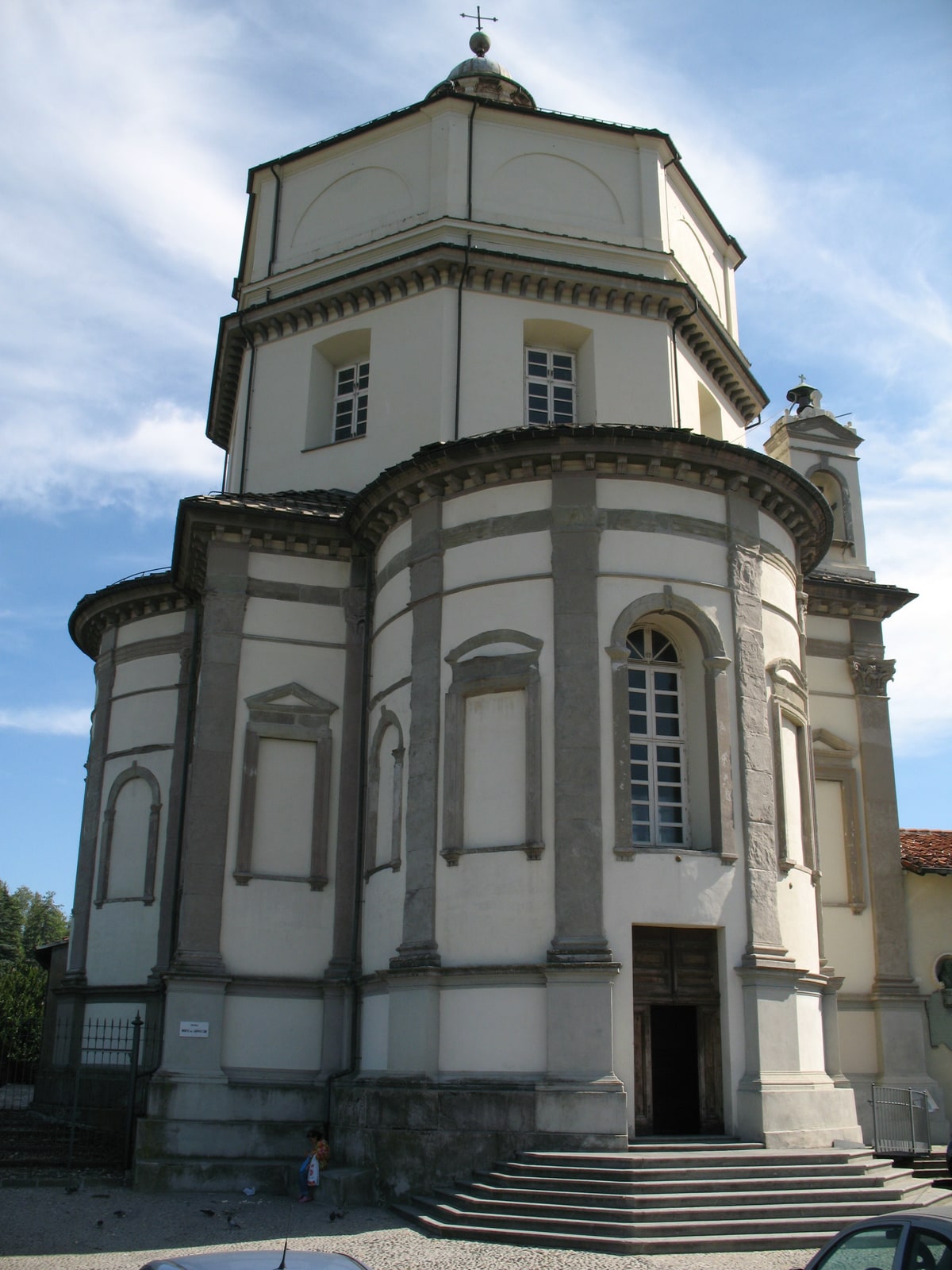
Santa Maria del Monte rises above the Po on Turin’s Monte dei Cappuccini, joining a late-Renaissance church, a former Capuchin convent, and a panoramic approach overlooking the city and Alps. Catholic tradition connects the church with a violent episode during the siege of 1640 and with a reported intervention that stopped the profanation of the Eucharist.
The political background matters. Piedmont was divided by civil war, and French forces under the Count of Harcourt advanced on Turin. The hill and its religious complex occupied a strategic position. Historical material published through MuseoTorino records that troops attacked the church during the campaign and that a soldier attempted to seize the sacred ciborium during the sack.
The received Capuchin account, attributed to Fra Pier Maria da Cambiano, describes soldiers entering the church, killing civilians who had sought refuge there, and plundering sacred objects. One soldier reportedly forced the tabernacle in order to take the ciborium containing consecrated Hosts. A flame then came from the tabernacle, burned his clothing and face, and brought the desecration to a halt. The St. Carlo Acutis exhibition says the tabernacle door, decorated with agate and blue stone, retained marks associated with the attempt.
This page does not collapse historical context, a near-contemporary religious memory, and formal Church recognition into one claim. The assault and the church are historically grounded; the flame belongs to the received Capuchin and Eucharistic tradition. Catholic Tourist did not locate a formal diocesan decree judging the supernatural character of the 1640 report, nor a current fixed annual liturgical observance dedicated to it. The event is therefore labeled as a local tradition recorded in historical sources—not as a scientifically verified phenomenon or a universally approved miracle.
The church is significant even apart from that account. MuseoTorino traces construction to the late sixteenth century on the foundations of an older fortress, with Ascanio Vitozzi reshaping the project and Carlo di Castellamonte completing major work. The high altar was erected in 1634–1637, only a few years before the siege, and the church was solemnly consecrated in 1656. Its centralized Greek-cross plan and octagonal drum make the hilltop silhouette one of Turin’s most recognizable sacred landmarks.
The Order of Friars Minor Capuchin remains the proper spiritual frame for the place. Their provincial directory identifies the Turin community at Piazzale Monte dei Cappuccini, while the diocesan directory lists Santa Maria del Monte within the local pastoral structure. Official tourism information currently presents the church as open daily, but that listing should be rechecked before travel and does not establish when the historic tabernacle can be closely viewed.
Pilgrims should approach with two kinds of reverence. First, remember the civilians killed and the terror of worshippers seeking sanctuary during war; do not turn their suffering into a dramatic backdrop. Second, let the Eucharistic tradition lead toward reparation and prayer rather than sensationalism. The alleged scorch mark and the flame narrative should be attributed to their sources exactly as such.
Allow time for the church interior, the high altar, and the setting above Turin. The adjacent mountain museum is a separate institution with its own ticket and hours; a museum visit does not guarantee church or tabernacle access. Confirm current church arrangements with the Capuchins or diocesan contact before making the 1640 tradition the purpose of a special journey.
Remember those who suffered during the 1640 assault, pray in reparation before the Eucharist, and keep the documented wartime setting distinct from the attributed Capuchin flame tradition.
The story & the place today
What happened here—and what a pilgrim can find now
Each record separates the devotional tradition from the present-day visitor evidence. A mapped locality remains visible even when an exact shrine or surviving object has not yet been verified.
The Eucharistic tradition of the 1640 assault on Monte dei Cappuccini
During a military assault on Santa Maria del Monte, a soldier reportedly forced the tabernacle to seize a ciborium containing consecrated Hosts. The received Capuchin account says a flame issued from the tabernacle and stopped the profanation.
Church of Santa Maria del Monte dei Cappuccini, Turin
Historic tabernacle and the church’s Eucharistic memory; no surviving Eucharistic species are cataloged as an object on display
Santa Maria del Monte dei Cappuccini, Turin
Local historical devotion
Visitor note: Active church; confirm current opening and access to the historic tabernacle before travel
Church wording: Local Capuchin tradition recorded in historical sources; no formal supernatural judgment located — Capuchin custodial tradition; this catalog does not infer a formal judgment from continued memory
The tradition is set within the French assault on a strategically placed church during Piedmont’s civil war. The historical violence and the religious report are presented as related but distinct evidence layers.
What to notice
Look closely at the place and its story
The 1640 wartime setting
Begin with the documented assault and the civilians whose suffering forms the human context of the tradition.
The historic tabernacle
Ask locally about current visibility of the tabernacle associated with the received Capuchin account.
Tradition with an evidence boundary
Distinguish the attributed flame account from a formal supernatural judgment, which this pass did not locate.
The high altar of 1634–1637
See the altar created just before the conflict transformed the church into a place of wartime memory.
Capuchin presence above Turin
Let the friars’ continuing spiritual setting and the hilltop view frame prayer rather than tourism alone.
How to read this page
Sources, tradition, and what is verified
The destination record was last checked on 9/29/2026.
This page records the site’s tradition as “Roman Catholic; Order of Friars Minor Capuchin.” That wording describes the nature of the claim and keeps devotional tradition distinct from independently verified history.
Continue nearby