Why pilgrims come
Encounter a place shaped by the memory of Christ’s Passion
Santa Croce in Gerusalemme is one of Rome’s great pilgrimage basilicas because it was conceived not merely to remember Jerusalem but to make devotion to Christ’s Passion present within the city. The church’s official history connects its earliest sacred space with the imperial residence of St. Helena, mother of Constantine, and with relics traditionally brought from the Holy Land. The current Chapel of the Relics gathers this tradition into a single place of prayer.
The official basilica inventory identifies fragments venerated as wood of the True Cross, one of the nails of the Crucifixion, two thorns traditionally associated with Christ’s crown, part of the cross of the Good Thief, and fragments associated with the Grotto of the Nativity and the Holy Sepulchre. The chapel also preserves a finger bone of St. Thomas the Apostle. These objects belong to longstanding Catholic custody and devotion; custody and veneration do not by themselves constitute scientific proof of first-century identity.
The best-known and most debated object is the Titulus Crucis, the wooden title-board tradition associated with the inscription placed above Jesus on the Cross. Its surviving text evokes John 19:20 through traces of Hebrew, Greek, and Latin. Yet a published radiocarbon study dated the wood to AD 980–1146 at 95.4 percent probability. Catholic Tourist therefore describes it as a long-venerated medieval relic or copy, not as archaeologically authenticated wood from the Crucifixion.
That distinction does not empty the chapel of meaning. Christian relic devotion is ordered toward the persons and saving events remembered, not toward sensational claims. Here the Cross fragments, nail, thorns, tomb and Nativity stones, Good Thief tradition, apostolic relic, and Titulus form a concentrated meditation on the Incarnation, Passion, death, and Resurrection of Christ. The responsible pilgrim can pray within the tradition while being candid about the limits and, in the Titulus’s case, the contrary scientific evidence.
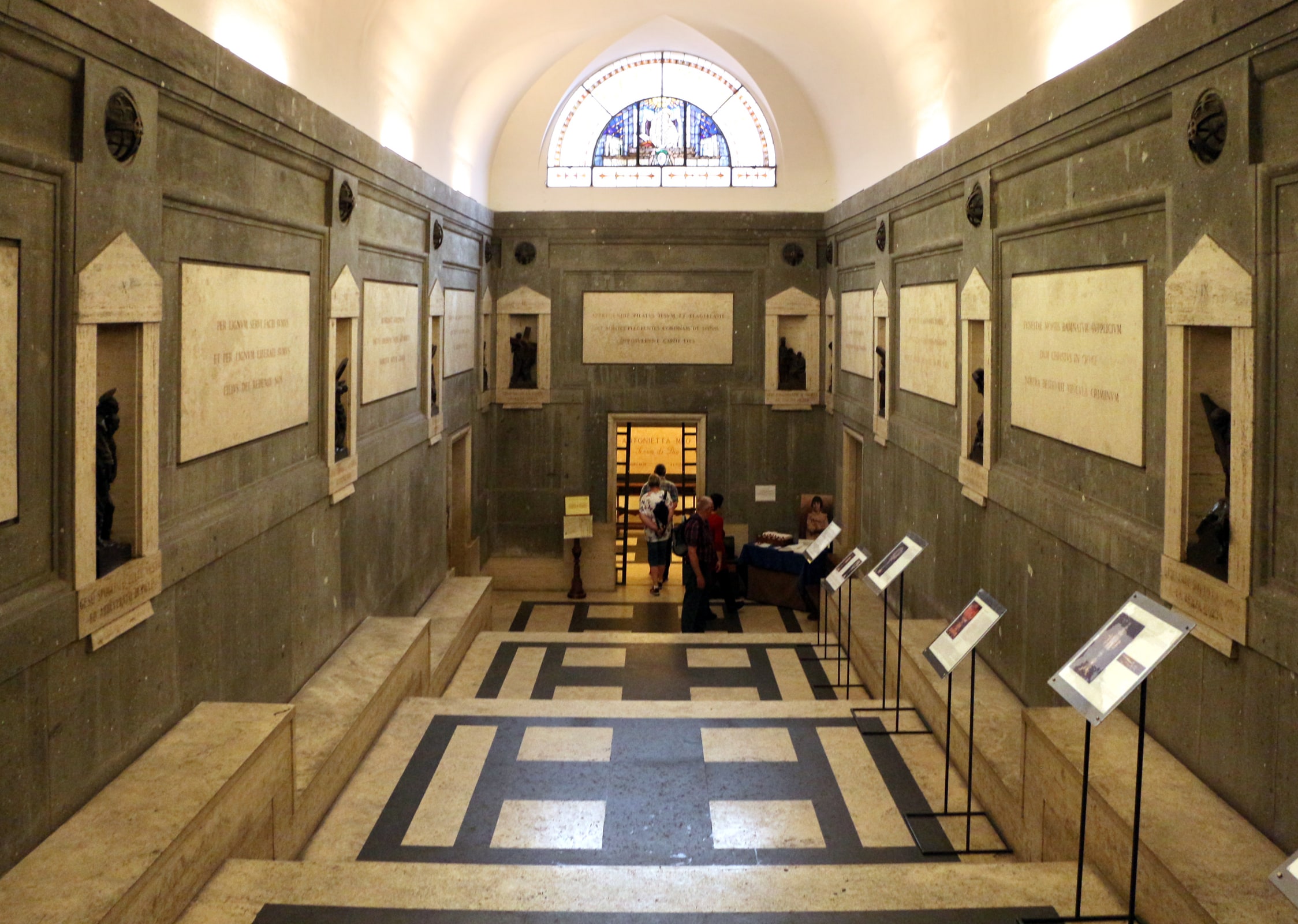
The relics were first kept in a fourth-century chapel traditionally associated with Helena. The basilica says they were moved to a higher chapel in the sixteenth century and transferred to the present purpose-built chapel in 1931. That history matters: today’s arrangement is a modern devotional presentation of a much older Roman pilgrimage tradition, not an untouched fourth-century display.
Access currently requires special caution. On April 16, 2026, the basilica announced that the Chapel of the Relics had closed temporarily for urgent work undertaken with the Vicariate of Rome and Italy’s Ministry of Culture. The basilica says reopening will be announced on its homepage. Do not promise that a visitor can enter the chapel or see the relics until the custodian publishes that notice.
When access resumes, begin with the Gospel Passion narratives, move slowly through the individual objects, and end with the empty-tomb hope toward which Christian veneration points. Until then, the basilica itself remains a major Roman station, but a Passion-relic itinerary must clearly label the chapel as closed and direct pilgrims to verify conditions immediately before travel.
Enter a Roman basilica shaped by Jerusalem and the Passion. Pray through the full relic tradition—Cross, nail, thorns, Good Thief, holy-place fragments, St. Thomas, and Titulus—while keeping veneration, historical custody, and scientific authentication carefully distinct.
The sacred connection
People and objects remembered here
These relationships are part of the destination record, with feast days and catalog qualifications shown where available.
traditional founder and bearer of Jerusalem relics to the imperial residence
Feast: August 18finger-bone relic preserved in the Chapel of the Relics
Feast: July 3Passion relics · Longstanding Catholic tradition and custody; not scientifically authenticated as wood of Christ’s Cross
The chapel has been temporarily closed since April 16, 2026; verify official reopening.Passion relic · Longstanding Catholic tradition and custody; not scientifically authenticated as a Crucifixion nail
The chapel has been temporarily closed since April 16, 2026; verify official reopening.Passion relics · Longstanding Catholic tradition and custody; not scientifically authenticated as Christ’s thorns
The chapel has been temporarily closed since April 16, 2026; verify official reopening.Passion relic tradition · Longstanding devotional tradition; not scientifically authenticated
The chapel has been temporarily closed since April 16, 2026; verify official reopening.Holy Land contact relics · Custodial tradition; exact ancient provenance not independently authenticated
The chapel has been temporarily closed since April 16, 2026; verify official reopening.First-class apostolic relic · Longstanding ecclesial custody; no modern scientific identification claimed
The chapel has been temporarily closed since April 16, 2026; verify official reopening.Venerated Passion relic or medieval copy · Radiocarbon dated to AD 980–1146 at 95.4% probability; not authenticated as the first-century placard from the Cross
The chapel has been temporarily closed since April 16, 2026; verify official reopening.What to notice
Look closely at the place and its story
A Roman Jerusalem
Understand the basilica as an imperial and devotional attempt to bring the memory of the Holy Land into Rome.
Fragments venerated from the True Cross
Pray within the Church’s Passion tradition without claiming scientific authentication that the sources do not establish.
Nail, thorns, and the Good Thief
Let the smaller objects draw attention to the bodily and scriptural details of the Crucifixion.
Titulus Crucis and its carbon date
Read the Hebrew, Greek, and Latin memory of John 19 alongside the medieval radiocarbon result.
St. Thomas and the Holy Land fragments
See how apostolic memory, Bethlehem, Calvary, and the tomb were assembled into one Roman pilgrimage chapel.
Closure before certainty
Treat the April 2026 closure as a hard visitor warning until the basilica itself announces reopening.
Feasts, anniversaries & celebrations
How to read this page
Sources, tradition, and what is verified
The destination record was last checked on 9/29/2026.
This page records the site’s tradition as “Roman Catholic basilica; Passion-relic pilgrimage associated with St. Helena.” That wording describes the nature of the claim and keeps devotional tradition distinct from independently verified history.
Continue nearby