Why pilgrims come
Meet the Catholic history preserved at this place
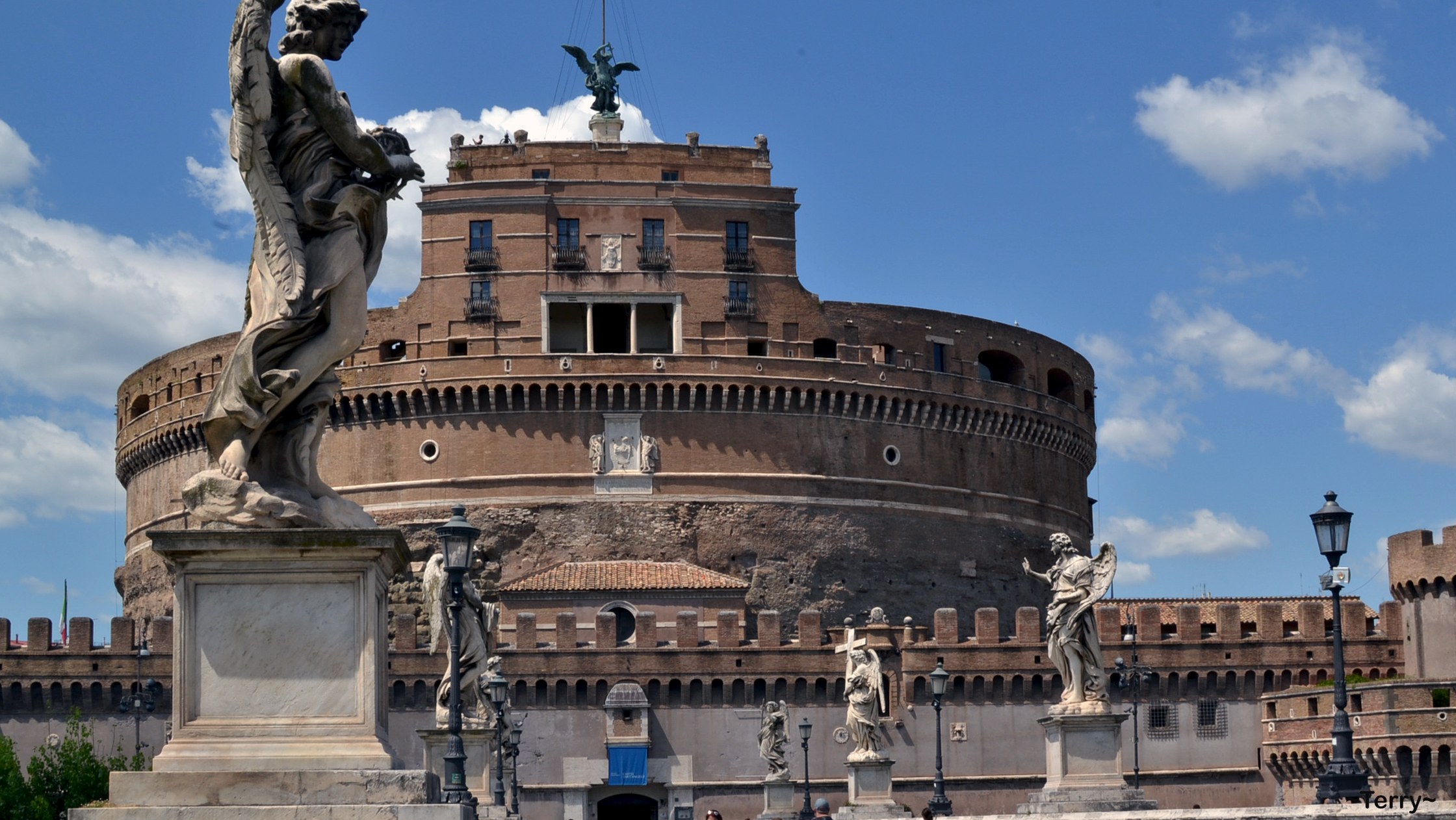
An emperor built it to preserve his memory. Rome later remembered an angel above it. Castel Sant’Angelo rises beside the Tiber, close to the Vatican, with a massive Roman core beneath centuries of defensive walls, papal rooms, and Christian imagery. For a Catholic pilgrim, its interest lies in those layers: imperial burial, a city praying through plague, and the troubled history of the papacy.
The tomb is the Mausoleum of Emperor Hadrian, not the tomb of St. Gregory the Great or St. Michael. Hadrian commissioned it for himself and his family in the second century. Antoninus Pius completed the monument in AD 139, after Hadrian’s death. Its Roman name, the Mole Adriana, survives alongside the Christian name by which the building is now known.
The devotion associated with the castle reaches back to the plague of 590. According to Roman Catholic tradition, Pope St. Gregory the Great led a penitential procession through the afflicted city and saw the Archangel Michael above Hadrian’s mausoleum. Michael was sheathing his sword, a sign understood to announce the end of the pestilence. The angel gave the monument a new identity in Rome’s religious memory.
The museum itself presents this as a legend or traditional account. That wording need not erase its spiritual meaning, but it does set a boundary for the historical claim. A visitor can understand why Romans prayed for mercy and why an angel putting away a weapon became a powerful image of hope without presenting the apparition or an immediate end to every death as independently established facts.
A related devotional story says that angels sang the first lines of the Regina Caeli and that Gregory answered with its final petition asking Mary to pray for us. The prayer rejoices in Christ’s Resurrection. Vatican News distinguishes a pious tradition of sixth-century origins from documentary evidence in the first half of the thirteenth century. The exact story of the heavenly choir and Gregory’s reply should therefore be introduced as tradition, rather than as a surviving contemporary transcript from 590.
The Regina Caeli remains part of the Church’s living prayer during Eastertide, when it takes the place of the Angelus. That is a useful way to receive the castle’s story: let the image of Michael lead toward prayer for a suffering city, and let the Marian antiphon lead toward the Resurrection. Neither depends on treating every later narrative detail as a required belief.
The castle’s later papal history is more directly visible. The fortified Passetto di Borgo linked the Vatican with this refuge. During the Sack of Rome in 1527, Pope Clement VII used it to escape the imperial troops of Charles V. The rooms, bastions, and corridor recall a Church living amid political violence, with both the beauty and the burdens of temporal power. They invite honest attention rather than either triumphalism or dismissal.
Today Castel Sant’Angelo is an Italian state museum, not a functioning parish or a saint’s burial shrine. Plan the interior visit through the official museum and Musei Italiani booking information. The Passetto has its own guided-visit arrangements and entrance information; do not assume that an ordinary castle ticket includes it. Historic stairs, ramps, terraces, and different routes also make advance accessibility enquiries worthwhile.
Begin outside by reading the building as Hadrian’s mausoleum, then follow the museum route through its later layers. Where access permits, look toward the angel above the roof and the Vatican beyond the fortified passage. Continue the pilgrimage at St. Peter’s Basilica or a nearby active church for Mass, confession, and prayer. The castle offers the historical setting; the living churches nearby offer the sacramental life that a museum cannot replace.
Discover Hadrian’s mausoleum, the tradition of St. Michael above plague-stricken Rome, and the papal refuge linked to the Vatican by the Passetto.
The sacred connection
People and objects remembered here
These relationships are part of the destination record, with feast days and catalog qualifications shown where available.
pope associated with the plague procession and traditional vision of St. Michael
angel whose traditional appearance and imagery gave the castle its Christian name
What to notice
Look closely at the place and its story
Hadrian’s mausoleum
Read the massive Roman core as the emperor’s family monument, completed in AD 139.
St. Michael and the plague tradition
Understand the angel sheathing his sword as Rome’s traditional image of mercy and the end of the 590 pestilence.
The Regina Caeli
Discover the Easter prayer while distinguishing its later documentary history from the traditional account of angels singing it to Gregory.
A papal refuge
Explore the castle’s transformation into a fortified residence and reflect on the papacy’s turbulent Roman history.
Passetto di Borgo
If separately booked, follow the fortified route used by Clement VII during the Sack of Rome in 1527.
Continue at a living church
Join the historical visit to prayer and the sacraments at St. Peter’s or San Salvatore in Lauro.
Apparition timeline
1 recorded apparition dates
Traditional vision of St. Michael during Rome’s plague
How to read this page
Sources, tradition, and what is verified
The destination record was last checked on 11/28/2026.
This page records the site’s tradition as “Catholic historical and devotional heritage; presently an Italian state museum.” That wording describes the nature of the claim and keeps devotional tradition distinct from independently verified history.
Continue nearby