Why pilgrims come
Understand the Marian devotion rooted in Zaragoza
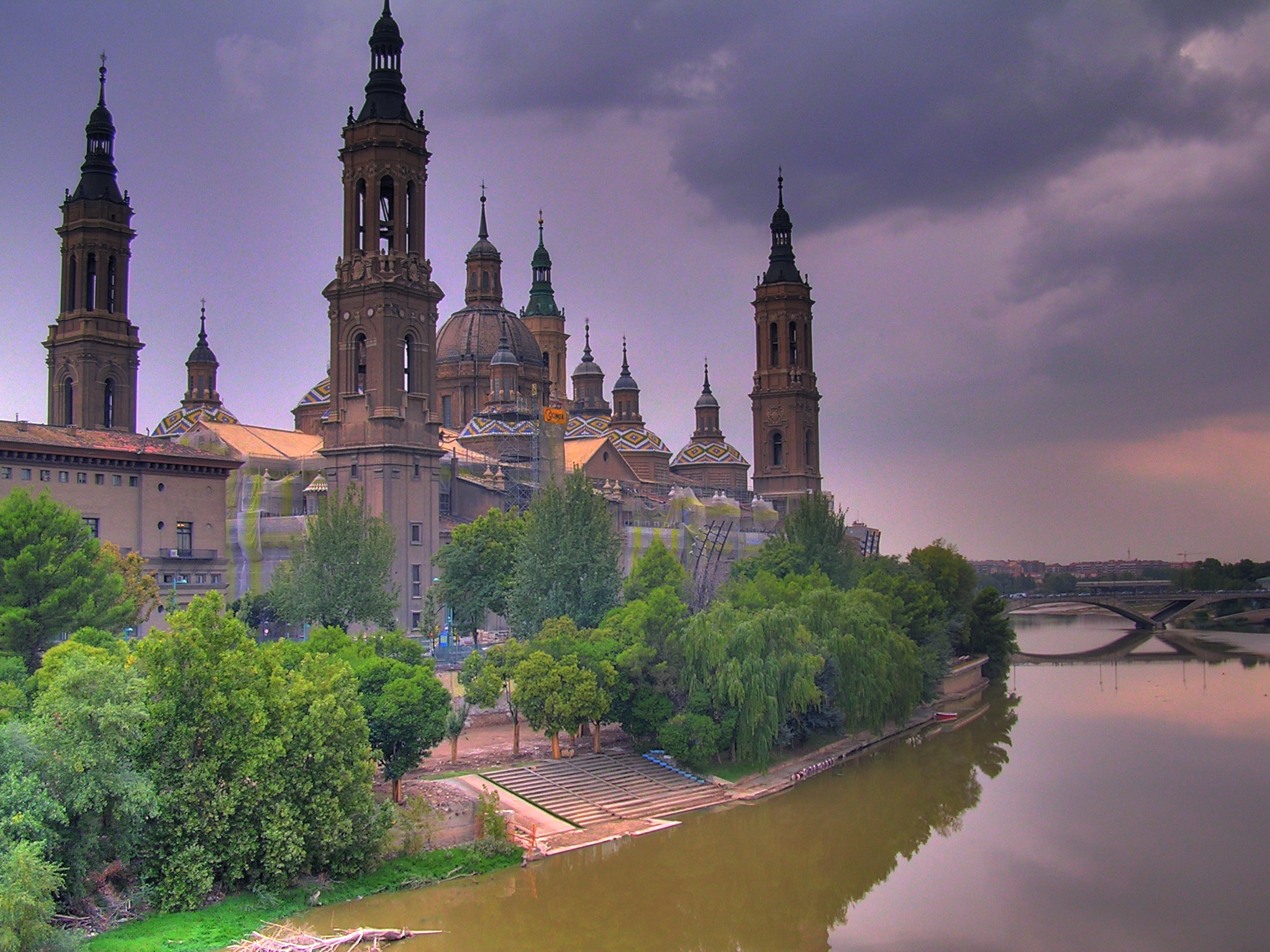
The Cathedral-Basilica of Our Lady of the Pillar rises beside the Ebro at the devotional heart of Zaragoza. Its name comes not merely from an architectural column but from the jasper pillar venerated in the Santa Capilla beneath the small Gothic image of the Virgin. The shrine is simultaneously a cathedral of the Archdiocese of Zaragoza, a minor basilica, a major Spanish Marian pilgrimage destination, and an active church with Mass and reconciliation throughout the day.
The shrine’s central story is an ancient Catholic tradition rather than an event Catholic Tourist can establish through first-century documentation. It holds that in the early hours of January 2, AD 40, the Virgin Mary came “in mortal flesh” from Jerusalem—before her Assumption—to encourage St. James the Greater while he preached in Caesaraugusta with a small group of converts. Accompanied by angels, she entrusted to him a jasper column as a sign of steadfast faith and asked that a church be raised at that place. Because Mary was believed still to be living in the Holy Land, Zaragoza usually calls this the Venida, or Coming, of the Virgin; it is often described devotionally as the earliest Marian apparition, but more precisely belongs to a tradition of miraculous presence or bilocation.
The official cathedral’s own historical presentation draws an important boundary. It states that there is no archaeological or documentary confirmation of a first-century chapel and that the surviving written form of the tradition appears in late-thirteenth-century sources. Documented history is nevertheless very old: a ninth-century account attests a Mozarabic church dedicated to St. Mary at this location, and the title Santa María del Pilar appears in records of 1297 and 1299. Catholic Tourist therefore presents the AD 40 encounter as the cathedral’s received devotional tradition, not as an archaeological conclusion.
Successive churches grew around the sacred place. Following Zaragoza’s Christian conquest in 1118, a Romanesque church was built; it was later replaced by a Gothic-Mudéjar collegiate church whose high altarpiece survives. After a destructive fire in 1434–1435, reconstruction continued into the sixteenth century. Work on today’s vast Baroque basilica began in 1681. Ventura Rodríguez reshaped the project in the eighteenth century and designed the present Santa Capilla, whose open architecture gathers the pillar, the Virgin’s image, the sculpted Coming of Mary, and St. James with the seven converts into one devotional narrative. The main dome was completed in 1872 and the final towers in 1961.
The image now venerated above the pillar is not claimed to be the first-century object. The cathedral identifies it as a 36-centimeter wooden Gothic carving from the first half of the fifteenth century, traditionally attributed by scholarship to Juan de la Huerta. It stands on a jasper column about 1.70 meters high, sheathed in bronze and silver. Pilgrims see the image from the front of the Santa Capilla and can approach the exposed portion of the pillar from behind. On the 2nd, 12th, and 20th of every month the image is shown without its usual mantle, recalling respectively the January Coming, the October feast, and the May 1905 canonical coronation.
The basilica also rewards sustained attention as sacred art. Francisco de Goya painted The Adoration of the Name of God in 1772 and the Regina Martyrum cupola in 1781. Two bombs dropped into the basilica during the Spanish Civil War in August 1936 failed to explode and are displayed on a pier; the cathedral interprets their survival devotionally, while Catholic Tourist records the objects and custodian’s account without asserting a scientific explanation. The Museo Pilarista preserves mantles, crowns, jewelry, and other offerings accumulated around the devotion.
October 12, the Feast of Our Lady of the Pillar, is the principal annual celebration and one of Zaragoza’s largest public religious festivals. The Virgin of the Pillar is patroness of Zaragoza and Aragon and is honored as patroness of the Hispanic peoples. January 2 separately commemorates the traditional Coming to St. James. Those celebrations can transform access and transport; pilgrims should consult the cathedral’s current program rather than assume ordinary schedules.
A good pilgrimage begins with Mass or quiet prayer before the Holy Chapel, continues behind the shrine to venerate the pillar, and then looks upward to Goya’s frescoes rather than treating the basilica only as a riverside landmark. Allow additional time for the museum or panoramic tower, but remember that those ticketed cultural spaces keep schedules distinct from the worshipping church.
Enter El Pilar as a living Marian cathedral rather than only Zaragoza’s great skyline. Attend Mass or pause for prayer in the Santa Capilla, approach the exposed portion of the venerated jasper pillar from behind, distinguish the fifteenth-century image from the AD 40 tradition, and then look upward for Goya’s two fresco cycles.
The sacred connection
People and objects remembered here
These relationships are part of the destination record, with feast days and catalog qualifications shown where available.
apostle encouraged in the cathedral’s received tradition of Mary’s Coming
Feast: July 25venerated jasper column associated with Marian tradition · publicly venerated within an ancient Catholic devotional tradition
Follow cathedral instructions and preserve the prayerful movement of the line. The image is shown without its mantle on the 2nd, 12th, and 20th of each month.venerated Marian image · fifteenth-century devotional sculpture identified by the cathedral
The image normally wears one of the shrine’s mantles and is shown without it on designated monthly dates.What to notice
Look closely at the place and its story
The Santa Capilla
See Ventura Rodríguez’s eighteenth-century chapel unite the pillar, Marian image, sculpted Coming, St. James, and seven converts in one devotional setting.
The exposed jasper pillar
Approach the rear of the shrine where part of the venerated column remains visible and accessible to pilgrims.
Tradition and documented history
Hold the AD 40 Coming as the cathedral’s received tradition while recognizing the documented ninth-century church and late-thirteenth-century written sources.
Goya’s sacred frescoes
Look for The Adoration of the Name of God and the innovative Regina Martirum cupola painted by Zaragoza’s most celebrated artist.
The Virgin without her mantle
On the 2nd, 12th, and 20th of each month, see the Gothic image without its usual mantle and connect each date with the shrine’s devotional calendar.
The unexploded 1936 bombs
View the two bombs displayed in the basilica and understand the cathedral’s devotional interpretation without overstating what the surviving objects alone can prove.
Feasts, anniversaries & celebrations
Apparition timeline
1 recorded apparition dates
Traditional Coming of the Virgin Mary to St. James
How to read this page
Sources, tradition, and what is verified
The destination record was last checked on 10/12/2026.
This page records the site’s tradition as “Roman Catholic — Archdiocese of Zaragoza.” That wording describes the nature of the claim and keeps devotional tradition distinct from independently verified history.
Continue nearby