Why pilgrims come
Enter a place shaped by prayer, community, and pilgrimage
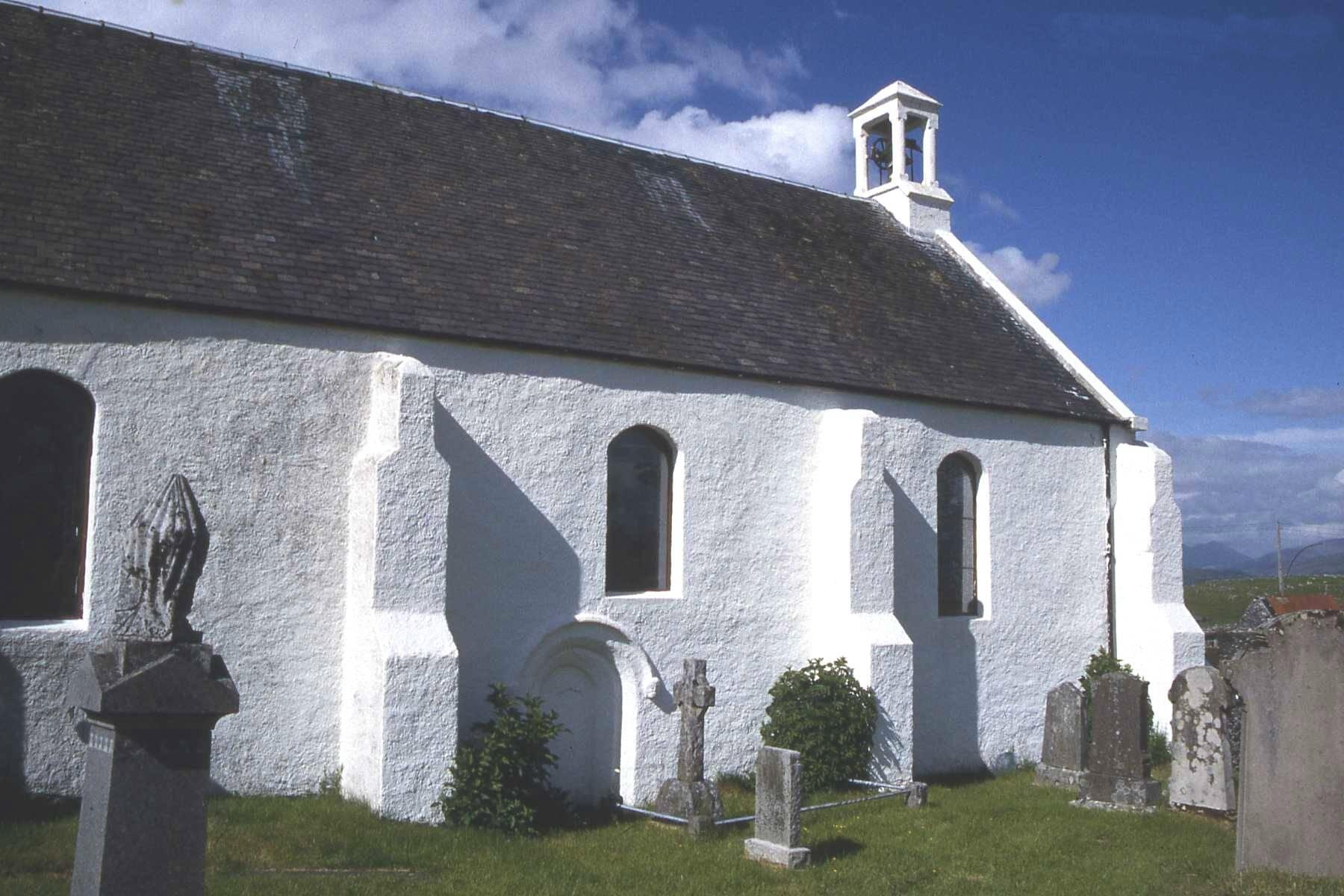
On the Isle of Lismore, the present Cathedral Church of St. Moluag stands inside a sacred landscape with more than a thousand years of Christian history. The building used for worship today is the surviving chancel of the medieval Cathedral of Argyll. Around it lie the footings of the lost nave, an ancient burial ground, West Highland grave slabs, and archaeological evidence for a much earlier monastery. The experience is therefore not one intact sixth-century building, but a layered pilgrimage through early monastic life, the medieval cathedral, Reformation-era change, and a living Christian community.
Local tradition and early records associate the foundation with St. Moluag—also written Mo Luóc or Moluog—an Irish missionary and abbot who worked among the peoples of western and northern Scotland. The Irish annals record his death in 592, and later lists preserve the names of abbots connected with Lismore. Tradition places his arrival on the island around 560 or 562, close to the period in which St. Columba established Iona. Lismore should not be treated merely as an obscure satellite of Iona: recent research argues that its monastery may itself have been a high-ranking ecclesiastical center in the early medieval northwest.
Community excavations around the church uncovered a cemetery, early structures, and a sophisticated craft-working zone. Radiocarbon dating places the sampled burials broadly between the seventh and early eleventh centuries. Archaeologists also found molds, crucibles, and other traces of precious-metal working. Those discoveries suggest a community capable of producing elite ecclesiastical objects and participating in wider networks of learning, worship, patronage, and exchange. They do not prove every later story about Moluag, but they give physical weight to the long memory of Lismore as a major monastery.
The findings were published in the peer-reviewed journal Antiquity in 2026. The researchers describe Lismore as a monastic center of international importance and ask that its place in the ecclesiastical landscape of Britain and Ireland be reconsidered. This is precisely where archaeology strengthens pilgrimage: the island's Christian importance no longer rests only on inherited tradition, yet responsible interpretation still distinguishes excavated evidence from the personal biography of the saint.
In the Middle Ages, Lismore became the seat of the bishops of Argyll. The surviving church preserves the chancel of the thirteenth-century cathedral, including a sedilia for clergy and a piscina associated with the preparation of the Eucharistic vessels. The nave fell into ruin after the Reformation, and the remaining chancel was adapted for parish worship. Grave slabs and architectural fragments around the church preserve the memory of clergy, patrons, and island families who continued to bury their dead in this sacred ground.
The church is not now a Roman Catholic parish. After centuries within the Church of Scotland, the building passed into local community ownership on June 25, 2026—St. Moluag's feast day—with the intention of preserving Christian worship and the heritage of the site. Catholic pilgrims may visit respectfully, pray with the shared pre-Reformation history, and honor Moluag's missionary witness, while observing the sacramental discipline and current arrangements of the community that cares for the church.
A pilgrimage here is shaped by the sea crossing. Lismore's relative isolation helps recover the scale of early Christian mission: monasteries were places of prayer, burial, study, hospitality, artistic production, and communication across water rather than simply remote retreats. Read the archaeological discoveries alongside the wider story of Iona, but allow Lismore to speak in its own right. A fitting intention is prayer for missionaries, teachers, craftsmen, and small Christian communities whose quiet work sustains faith across generations.
The church is reported open daily, but worship, conservation work, island events, and weather can change access. Foot passengers can use the Port Appin–Point ferry, while the longer CalMac service from Oban can carry vehicles and is best reserved when applicable. Check the current sailing status before departure, allow time for the island's limited transport and services, and do not enter excavated or protected areas beyond marked access. The Lismore Gaelic Heritage Centre adds essential local context and is worth including when open.
Cross to Lismore to pray within the surviving medieval cathedral chancel and the archaeologically documented landscape of a major early Christian monastery associated with St. Moluag.
The sacred connection
People and objects remembered here
These relationships are part of the destination record, with feast days and catalog qualifications shown where available.
What to notice
Look closely at the place and its story
A monastery reconsidered
Read the cemetery, early buildings, and peer-reviewed excavation as evidence that Lismore ranked among the important monasteries of the early medieval northwest.
Workshops of sacred craft
Understand molds and crucibles as traces of precious-metal working connected with worship, learning, and elite ecclesiastical networks.
The surviving cathedral chancel
Enter the part of the medieval Cathedral of Argyll that remains in use and notice its sedilia, piscina, and exposed nave footings.
St. Moluag and the mission age
Honor the traditional founder while distinguishing written memory, later devotion, and archaeological proof.
An island pilgrimage by water
Let the ferry crossing reveal how seas connected rather than isolated the monasteries of early Christian Scotland.
Feasts, anniversaries & celebrations
How to read this page
Sources, tradition, and what is verified
The destination record was last checked on 10/5/2026.
This page records the site’s tradition as “Early medieval Celtic Christian monastery; medieval Catholic Cathedral of Argyll; present community-owned Christian worship and heritage church.” That wording describes the nature of the claim and keeps devotional tradition distinct from independently verified history.
Continue nearby