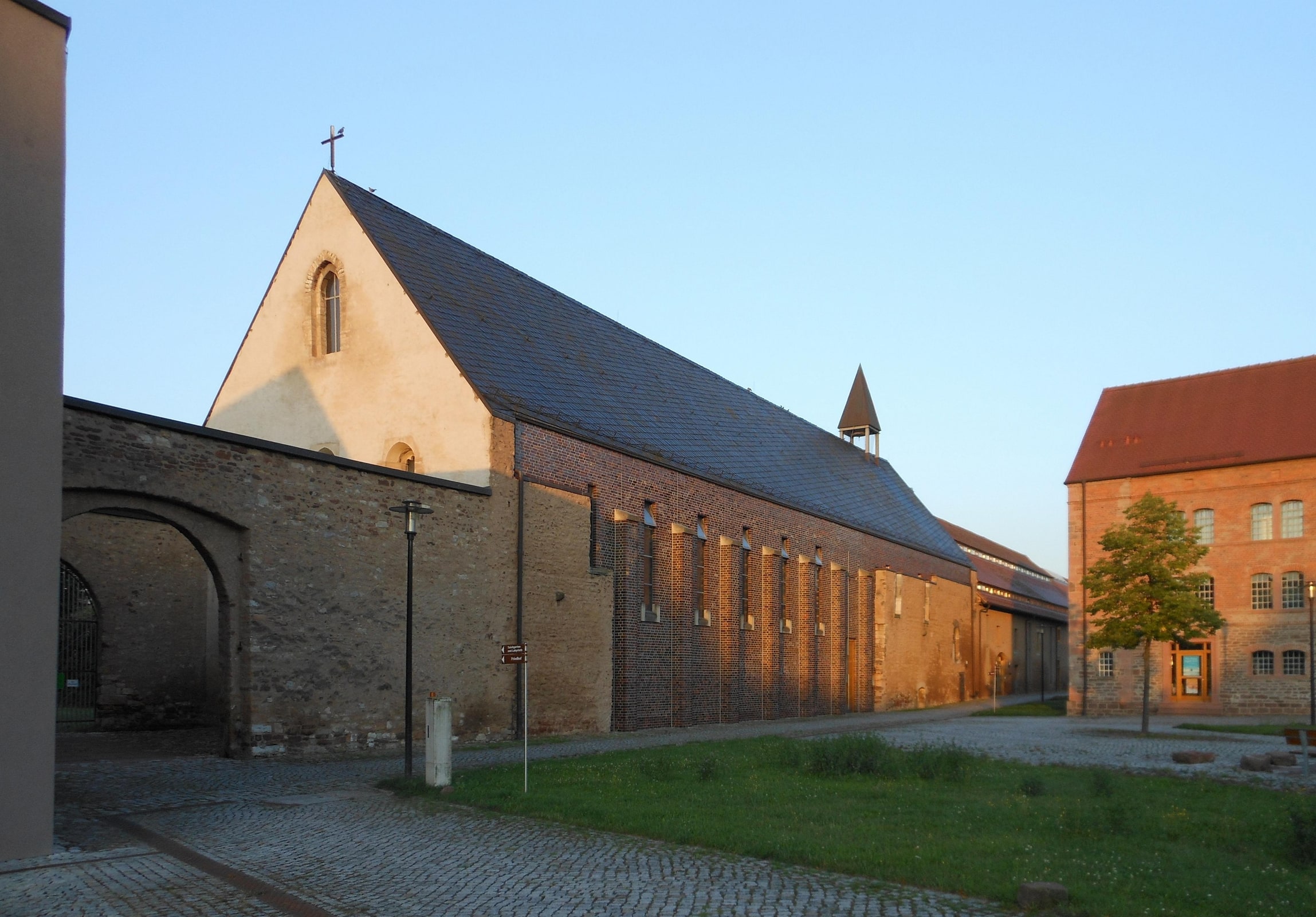
Why pilgrims come
Enter a place shaped by prayer, community, and pilgrimage
The present church and convent at Helfta stand on ground remembered as one of medieval Europe’s great centers of women’s theology and prayer. In the thirteenth century, the Cistercian community gathered here became home to St. Mechtilde of Hackeborn, St. Gertrude the Great, and Mechthild of Magdeburg. Their names sound similar, but they are three distinct women whose writings emerged from the same remarkable spiritual culture.
Mechtilde of Hackeborn was born in 1241 into a noble family near Helfta. At seven she entered the monastery then located at Rodersdorf, where her older sister Gertrude later became abbess. When the community moved to Helfta in 1258, Mechtilde came with it and became a gifted teacher, novice mistress, cantor, and spiritual counselor. The monastery’s official history remembers the beauty of her voice and the care with which she formed younger sisters.
One of those younger sisters was Gertrude of Helfta, later called Gertrude the Great. Entrusted to the monastery school at five, Gertrude was educated under Mechtilde’s guidance. Their friendship linked two of the most important voices in the spirituality of Helfta, but their writings and identities should not be collapsed into one another.
During the final years of Mechtilde’s life, Gertrude and another sister recorded the spiritual experiences that became the Liber specialis gratiae, or Book of Special Grace. The work draws deeply on Scripture and the Church’s liturgy. Its language of Christ’s divine Heart, the Eucharist, praise, and the loving response of creation helped shape later Catholic devotion to the Sacred Heart.
Mechtilde died at Helfta on November 19, 1299, and her feast is kept on November 19. Helfta is the principal place connected with her mature religious life, teaching, prayer, and death. The monastery does not present an identifiable tomb or authenticated bodily relics of Mechtilde for veneration today, so pilgrims should come for the living monastic prayer and historical memory rather than expect a surviving grave.
The medieval community did not survive uninterrupted. The monastery was suppressed in the sixteenth century, and the buildings suffered long decline. After German reunification, the Catholic Church recovered the property, and Cistercian nuns re-established monastic life here in 1999. The rebuilt St. Mary’s church incorporates the surviving medieval fabric and gives the old spiritual center a living Catholic future.
Visitors are invited into the sisters’ daily prayer. The official monastery schedule currently lists Vigils at 5:15 a.m., Lauds at 6:45 a.m. (7 a.m. Sunday), Mass at 8 a.m. (9 a.m. Sunday), midday prayer at 11:45 a.m., Vespers at 5:30 p.m., and Compline with the Salve Regina at 7:45 p.m. These times can change, especially around solemnities and community needs, so verify them before travel.
The first Friday of each month has a special resonance at Helfta: the community currently celebrates a Sacred Heart Mass at 7:15 p.m., followed by Eucharistic adoration and an opportunity for spiritual conversation or the sacrament of Reconciliation. The practice connects the monastery’s present prayer with the Christ-centered spirituality of its medieval mystics.
The monastery guesthouse welcomes individual guests and groups regardless of denomination. Pilgrims may spend quiet days, join a course or retreat, walk the grounds, participate in the sisters’ prayer, or arrange spiritual accompaniment. Rooms have private bathrooms, shared self-catering kitchens are available, and simple breakfast may be requested. Reservations must be confirmed directly with the guesthouse.
A good pilgrimage begins in the church with the Divine Office or Mass. Then visit the Gertrude Chapel, spend time in silence, and walk the living labyrinth and monastery grounds. Read a short passage from the Book of Special Grace before arriving so that Helfta becomes more than a historical name.
Keep the evidence honest. The monastery is unquestionably the historic home of Mechtilde’s mature vocation and the place where she died, but no visible modern tomb should be promised. Likewise, her recorded revelations belong to Catholic mystical literature and private revelation; they do not add to the deposit of faith. Their value is measured by how they return the reader to Christ, Scripture, the Eucharist, the liturgy, and charity.
Helfta deserves to be visited as a living monastery rather than a museum of medieval women. The sisters’ prayer, hospitality, scholarship, and service continue the deeper inheritance of the place. On November 19, especially, pilgrims can remember the teacher whose hidden life helped generations discover the love of the Heart of Christ.
Pray with the restored Cistercian community where St. Mechtilde of Hackeborn taught, sang, guided St. Gertrude the Great, and helped give the Church an early language of devotion to the Heart of Christ.
The sacred connection
People and objects remembered here
These relationships are part of the destination record, with feast days and catalog qualifications shown where available.
Cistercian nun, teacher, cantor, mystic, and spiritual counselor who lived and died at Helfta
Feast: November 19student and close spiritual companion of St. Mechtilde; later one of Helfta’s principal mystics
Feast: November 16What to notice
Look closely at the place and its story
St. Mechtilde’s feast and legacy
Remember the November 19 saint whose teaching, music, counsel, and mystical writings grew from Helfta’s community.
Living Cistercian prayer
Join the sisters for Mass or the Divine Office in the rebuilt church rather than treating Helfta as an archaeological monument.
The women of Helfta
Distinguish and encounter St. Mechtilde of Hackeborn, St. Gertrude the Great, and Mechthild of Magdeburg as three different voices formed in one spiritual culture.
Sacred Heart spirituality
Trace early Catholic language about the Heart of Christ, Eucharistic love, Scripture, and the liturgy in Mechtilde’s Book of Special Grace.
Gertrude Chapel and labyrinth
Make room for silence in the chapel and on the monastery grounds before returning to the historical narrative.
Pilgrim guesthouse
Stay with the rhythm of the monastery through simple rooms, retreats, courses, prayer, and spiritual accompaniment by arrangement.
Feasts, anniversaries & celebrations
How to read this page
Sources, tradition, and what is verified
The destination record was last checked on 11/19/2026.
This page records the site’s tradition as “Roman Catholic — Cistercian Order, Diocese of Magdeburg.” That wording describes the nature of the claim and keeps devotional tradition distinct from independently verified history.
Continue nearby