Why pilgrims come
Remember the witness that made this place sacred
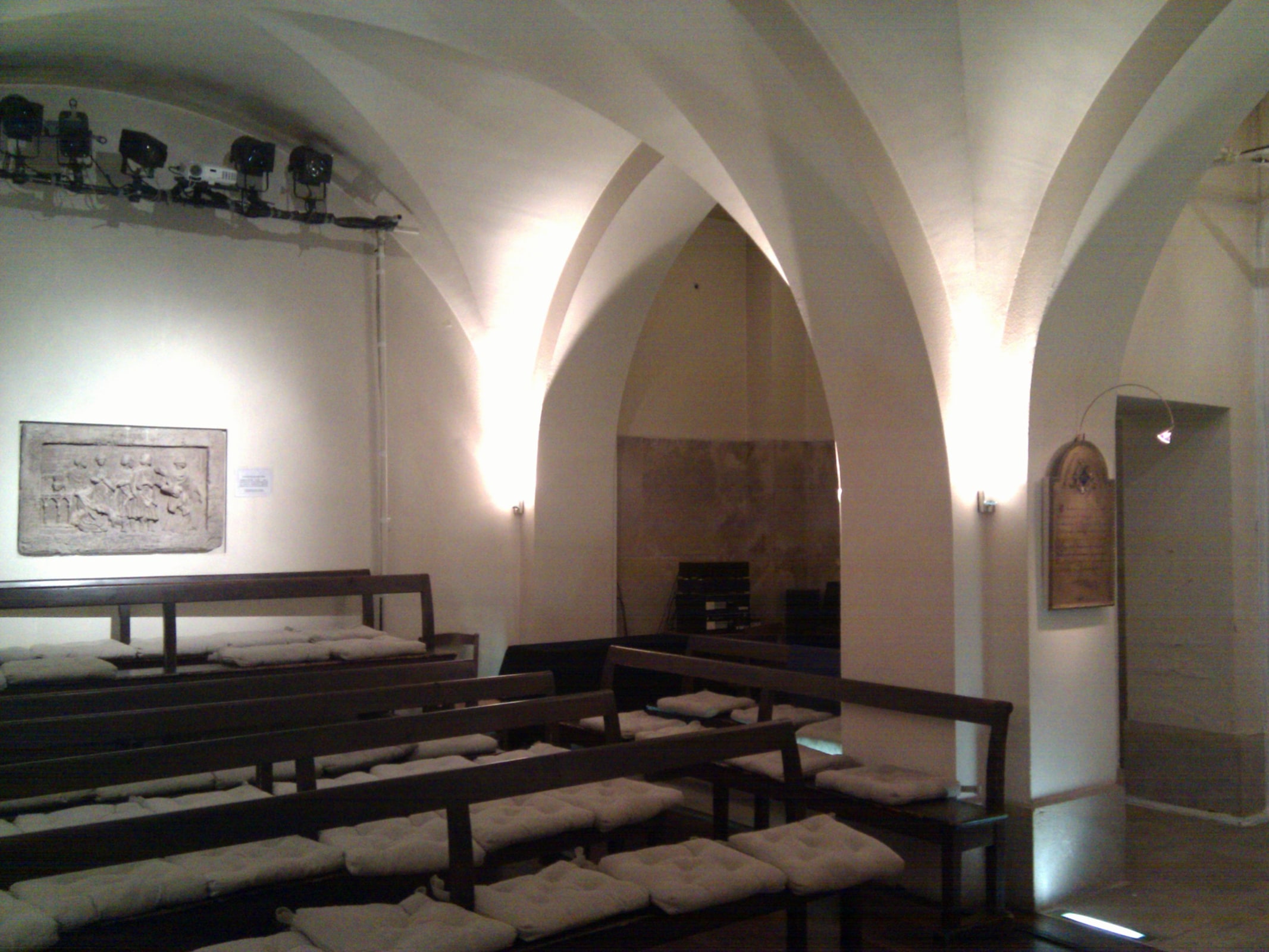
Hidden behind an ordinary doorway below the summit of Montmartre, the Martyrium preserves two of the hill’s most consequential Christian memories: the traditional place associated with the martyrdom of St. Denis, first bishop of Paris, and the chapel where Ignatius of Loyola and six companions made the vows remembered as a decisive beginning of the Society of Jesus.
The Archdiocese of Paris describes this as the presumed place of St. Denis’s beheading and an early-Christian cemetery. The martyr tradition is ancient and gave Montmartre its enduring Christian interpretation as the “mount of martyrs,” but the precise execution site cannot be established with modern archaeological certainty. The saint’s wider Paris story also includes Notre-Dame and the Basilica Cathedral of Saint-Denis, where his tomb is venerated; the Martyrium should not be confused with either destination.
On August 15, 1534, Ignatius of Loyola climbed Montmartre with Peter Faber, Francis Xavier, Diego Laínez, Alfonso Salmerón, Nicolás Bobadilla, and Simão Rodrigues. Faber, the only priest among them, celebrated Mass. The companions vowed poverty and chastity and committed themselves to pilgrimage and apostolic service. They did not formally create the Society of Jesus in the legal sense that day—the order received papal approval from Paul III in 1540—but the Montmartre Vow is rightly remembered as a foundational spiritual act.
The present crypt is not the unchanged sixteenth-century room. It was constructed between 1884 and 1887 beneath a chapel of the Society of the Helpers of the Holy Souls on the footprint associated with the earlier “Abbey Below.” The Archbishop of Paris blessed it on August 15, 1887. Its stones, altar, inscriptions, and compressed underground space preserve memory rather than offering a scientifically untouched archaeological chamber.
Access is intentionally limited. The association responsible for the crypt currently announces Friday afternoon opening, ordinarily 15:00–18:00 outside August, but relies on volunteers and warns that last-minute changes occur. Four annual Masses are normally connected with St. Ignatius, the Assumption and anniversary of the Vow, St. Denis, and St. Francis Xavier. Every visit should be checked against the current program.
Begin the Sacred Montmartre route here. Pray for courage with St. Denis, then for apostolic availability with Ignatius and his companions. The climb that follows is not merely geographic: it moves from martyr witness and vowed mission toward the medieval church at the summit and finally toward Eucharistic adoration at Sacré-Cœur.
Begin Sacred Montmartre underground: honor the martyr tradition of St. Denis, remember the Eucharist and vows shared by the first Jesuit companions, and carry their willingness into the climb toward Saint-Pierre and Sacré-Cœur.
The sacred connection
People and objects remembered here
These relationships are part of the destination record, with feast days and catalog qualifications shown where available.
traditional place of martyrdom
Feast: October 9made the Montmartre Vow here in 1534
Feast: July 31companion in the Montmartre Vow
Feast: December 3celebrated Mass for the companions at the Montmartre Vow
Feast: August 2What to notice
Look closely at the place and its story
The traditional martyrdom site of St. Denis
Receive the crypt as the place where Paris has long remembered its first bishop’s witness, while respecting the historical boundary around the exact location.
The Montmartre Vow of 1534
Stand where Ignatius, Francis Xavier, Peter Faber, and four companions bound themselves to poverty, chastity, pilgrimage, and apostolic service.
A Mass at the beginning of the Jesuit story
Remember Peter Faber celebrating the Eucharist before the companions made their vows on the Assumption.
The nineteenth-century memorial crypt
Understand that today’s structure was built and blessed in the 1880s on the remembered site of an older chapel.
Feasts, anniversaries & celebrations
How to read this page
Sources, tradition, and what is verified
The destination record was last checked on 9/23/2026.
This page records the site’s tradition as “Roman Catholic martyr memory and Ignatian pilgrimage.” That wording describes the nature of the claim and keeps devotional tradition distinct from independently verified history.
Continue nearby