Why pilgrims come
Discover what makes Saint-Pierre de Montmartre and Our Lady of Montmartre a place of pilgrimage
Almost hidden beside the much larger Sacré-Cœur, Saint-Pierre de Montmartre is the summit’s older Christian heart. Begun in 1133 and completed in 1147, it is among the oldest surviving churches in Paris and the principal remnant of the royal Benedictine abbey that shaped Montmartre for more than six centuries.
Pope Eugene III consecrated the church in 1147 in the presence of St. Bernard of Clairvaux, Peter the Venerable of Cluny, King Louis VII, and Queen Adelaide of Savoy. The building served two communities at once: the eastern portion belonged to the Benedictine nuns under the dedication of Our Lady and St. Denis, while the western portion served the local parish under St. Peter. That double identity—abbey and parish, Marian and Petrine—explains why the church is more than an architectural survivor.
The abbey’s estates extended across the hill and down toward the lower Martyrium. Its nuns sustained prayer, property, pilgrimage, and local memory until the French Revolution suppressed the community. The last abbess, Marie-Louise de Montmorency-Laval, was executed in 1794. Most of the abbey disappeared; Saint-Pierre survived as the parish church, though it endured closure, damage, and repeated threats of demolition before restoration.
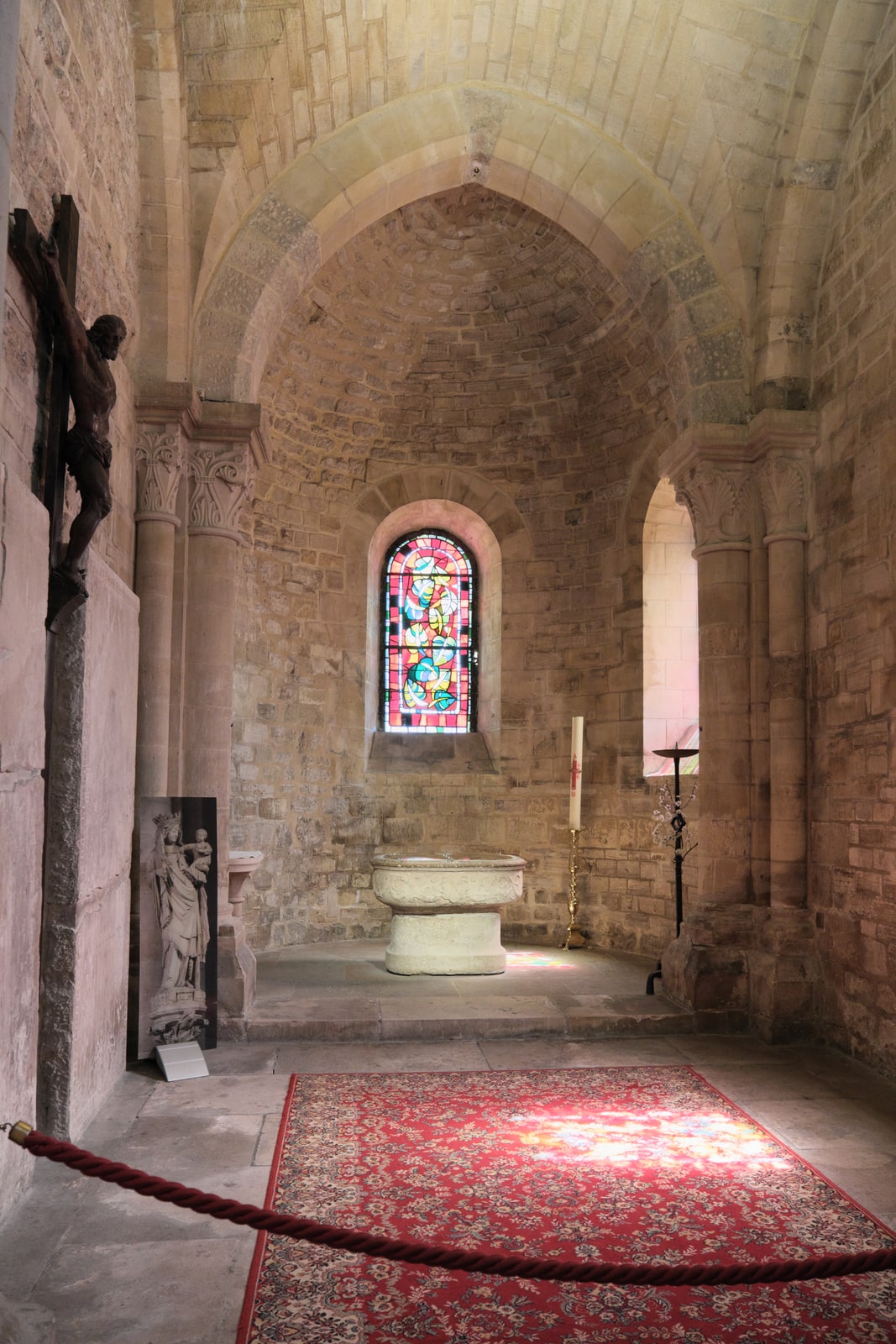
Inside, Romanesque columns, early Gothic structure, later restorations, and modern works coexist. The relative quiet can be startling after the crowds outside. This is also where the current parish celebrates baptisms, marriages, funerals, and ordinary Sunday worship—sacraments not normally celebrated at the neighboring pilgrimage basilica.
The church preserves the restored devotion to Notre-Dame de Montmartre, also honored as Our Lady of Beauty and Queen of Peace. The parish traces that devotion back through the abbey and says Ignatius and his companions first entrusted their project to Mary here before descending to the Martyrium for the 1534 vows. After Revolutionary destruction, the Marian cult was formally restored in the twentieth century; artists became especially connected with Our Lady of Beauty.
Saint-Pierre therefore supplies the missing middle chapter of Sacred Montmartre. The Martyrium remembers martyrdom and apostolic vows below; Saint-Pierre preserves medieval Benedictine and Marian continuity at the summit; Sacré-Cœur carries the hill into modern devotion to the Sacred Heart and perpetual Eucharistic adoration.
Pause here before entering the basilica next door. Pray for Montmartre’s parishioners, for artists under the title Our Lady of Beauty, and for the courage to preserve faithful ordinary life beside spectacular monuments.
Receive Saint-Pierre as the medieval and parochial heart between the Martyrium and Sacré-Cœur. Pray with the Benedictine memory of the hill, honor Our Lady of Montmartre, and remember the ordinary sacramental community that still worships here.
The sacred connection
People and objects remembered here
These relationships are part of the destination record, with feast days and catalog qualifications shown where available.
co-dedication of the former abbey portion and foundational martyr memory of Montmartre
Feast: October 9present for the church’s solemn consecration in 1147
Feast: August 20What to notice
Look closely at the place and its story
The surviving abbey church
Enter the principal remnant of the royal Benedictine abbey founded on Montmartre in the twelfth century.
Consecration in 1147
Remember Pope Eugene III, St. Bernard of Clairvaux, Peter the Venerable, and the royal founders gathered here.
Our Lady of Montmartre
Pray before the restored Marian devotion also associated with beauty, artists, and peace.
A living Paris parish
Notice the ordinary sacramental life that distinguishes Saint-Pierre from the neighboring pilgrimage basilica.
Feasts, anniversaries & celebrations
How to read this page
Sources, tradition, and what is verified
The destination record was last checked on 9/23/2026.
This page records the site’s tradition as “Roman Catholic parish, surviving Benedictine abbey church, and Marian sanctuary.” That wording describes the nature of the claim and keeps devotional tradition distinct from independently verified history.
Continue nearby