Why pilgrims come
Visit the resting place and legacy of St. Charles Borromeo
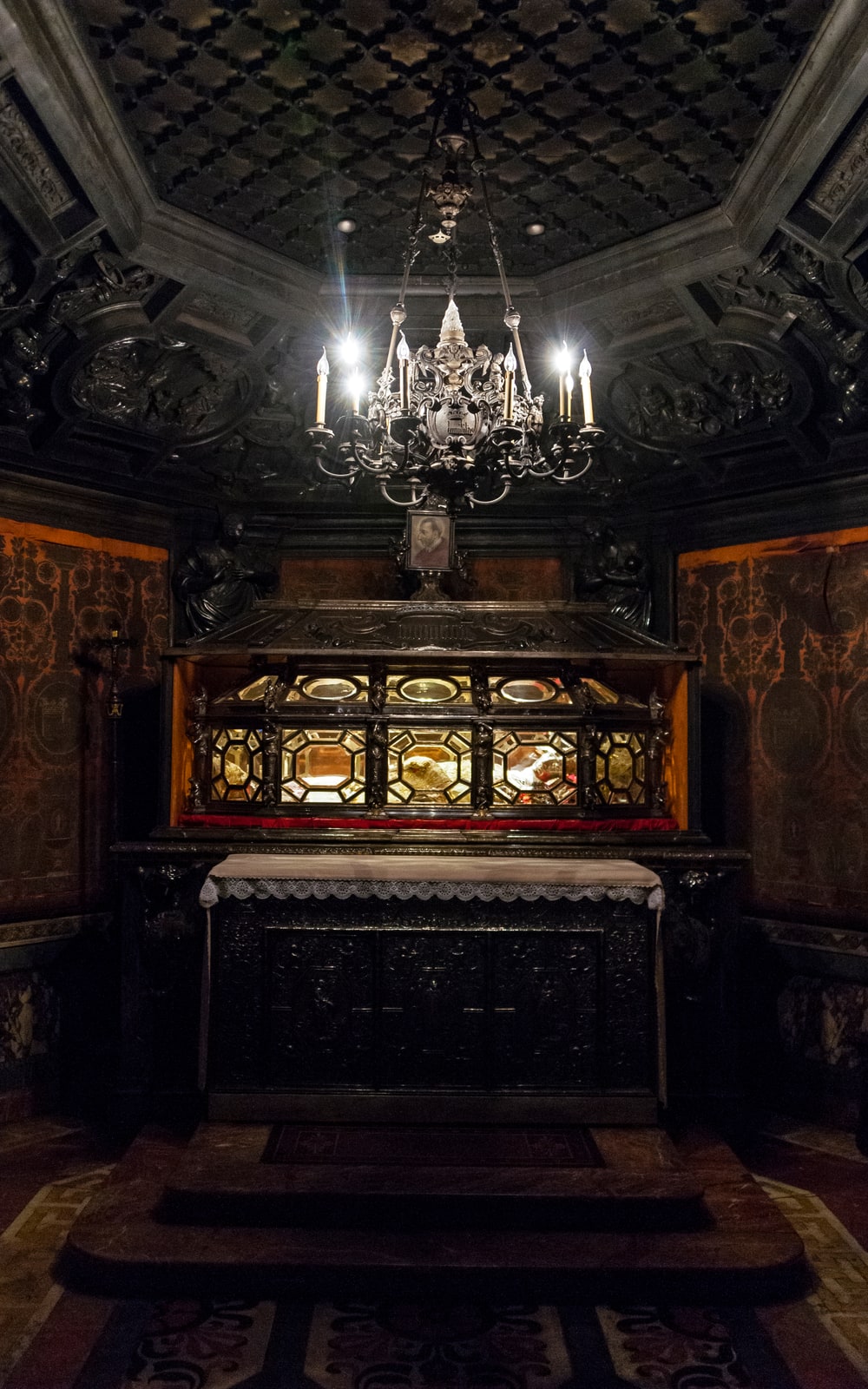
Beneath Milan Cathedral’s presbytery, the Scurolo di San Carlo preserves the body of St. Charles Borromeo in a crystal-and-silver urn. The official Duomo foundation describes the octagonal underground chapel as a work begun in 1606 under Cardinal Federico Borromeo and completed around Charles’s canonization in 1610.
Charles served as archbishop of Milan from 1564 until his death in 1584. He applied the Council of Trent through seminaries, diocesan visitations, catechesis, liturgical reform, discipline, and sustained care for the poor and sick. During the plague of 1576–1577 he remained in Milan, organized relief, and led public penance while taking measures intended to protect the population. His memory is inseparable from the Ambrosian Church he labored to renew.
The Scurolo’s silver decoration, embroidered panels, Eucharistic imagery, and Borromeo motto Humilitas make the crypt a theological portrait rather than a neutral burial chamber. The saint’s body is vested pontifically and the face is covered by a silver mask commissioned during Giovanni Battista Montini’s years as archbishop before he became Pope St. Paul VI.
Access to the crypt is controlled separately from general cathedral worship and can close on Sundays or religious festivals. Pray in the cathedral first, visit the Scurolo only within the current rules, and pair this stop with Sant’Ambrogio to encounter two very different archbishops who shaped Milan’s Catholic identity.
Enter Milan’s cathedral as a church first, then descend to the silver-lined crypt where its great reforming archbishop rests.
The sacred connection
People and objects remembered here
These relationships are part of the destination record, with feast days and catalog qualifications shown where available.
body preserved in the Scurolo beneath the cathedral presbytery
Feast: November 4Tomb and bodily remains · Historically and ecclesiastically documented
The crypt has separate access rules and may close for Sundays, festivals, or liturgies.What to notice
Look closely at the place and its story
The crystal-and-silver urn
Venerate the body of Milan’s reforming archbishop in the Scurolo.
Humilitas in silver
Read the crypt’s decoration through Charles’s motto and Eucharistic spirituality.
A cathedral reshaped by reform
See how Charles and Federico Borromeo transformed the Duomo’s sacred interior.
Feasts, anniversaries & celebrations
How to read this page
Sources, tradition, and what is verified
The destination record was last checked on 9/27/2026.
This page records the site’s tradition as “Roman Catholic cathedral, archbishop’s tomb, and shrine of the Catholic Reform.” That wording describes the nature of the claim and keeps devotional tradition distinct from independently verified history.
Continue nearby