Why pilgrims come
Encounter the Eucharistic tradition and its surviving evidence
Silla’s Eucharistic story is not attached to an unidentified point on a map. Its pilgrimage destination is the eighteenth-century Parish Church of Our Lady of the Angels, or Nuestra Señora de los Ángeles, in the town center south of Valencia. This is the church from which consecrated Hosts were stolen in 1907 and the church in which the recovered Hosts—known locally as the Sagradas Formas—are still preserved.
The event began on March 25, 1907. That year the Annunciation fell on Monday of Holy Week. According to the diocesan tradition gathered by the St. Carlo Acutis exhibition and later Archdiocese of Valencia reporting, the parish tabernacle was forced open and a silver ciborium or pyx containing consecrated Hosts was taken. The theft caused public grief in a community for whom Holy Week had already begun.
Rain fell during the search. On March 27, Holy Wednesday, agricultural workers noticed disturbed, wet ground beneath a stone in an orchard outside the compact town. There they found the consecrated Hosts. A temporary altar was prepared at a nearby house before the Hosts were carried back to the parish in a public procession. A formal act of reparation followed on April 7.
The received account emphasizes that the Hosts had lain in wet soil yet did not appear dissolved or corrupted. They were preserved rather than consumed, and the parish came to regard their continued condition as an enduring Eucharistic sign. Unlike several older miracle traditions in which the original object no longer survives, Silla identifies the recovered Hosts themselves as remaining in the custody of the parish.
The parish’s distinctive reliquary-like monstrance is called the taronxeret, Valencian for “little orange tree.” Parishioners contributed jewels and resources for its creation, and its branching form recalls the orange groves of the Valencian landscape. The Sagradas Formas are exposed in this custody for announced celebrations; the object should not be assumed to be on continuous public display.
The documentary chronology needs to be stated honestly because the available Catholic summaries do not agree on every date. A detailed account derived from the Archdiocese of Valencia newspaper Paraula reports a curial decree dated May 4, 1930, acknowledging the preservation of the Hosts and directing Eucharistic cult. The St. Carlo Acutis exhibition and AVAN-derived summaries instead place an initial diocesan inquiry in 1934. The underlying file was then lost when the archiepiscopal palace burned during the violence of 1936, so Catholic Tourist does not silently choose one date over the other.
The Hosts themselves were also hidden during the religious persecution of the Spanish Civil War. The parish tradition says they were placed in a hollow in a street door and remained concealed for roughly three years before returning to the church. The first documented journey outside Silla described by the later account took them to nearby Torrent in 1949, the year a confraternity was organized around the devotion.
A new canonical dossier began under Archbishop Miguel Roca Cabanellas in 1982. The decree associated with that process was signed in 1983. It records the consideration of expert, documentary, and testimonial evidence, states that the consecrated species were found in good condition, and regulates their public cult in keeping with the Church’s Eucharistic law. That is substantial diocesan recognition of the object and devotion; it should not be inflated into a modern laboratory proof of every miraculous interpretation.
The page therefore makes three distinctions. The theft, recovery, preservation, diocesan processes, and continuing parish custody are historical and ecclesial claims supported by Catholic archival and diocesan reporting. The judgment that the physical preservation is miraculous belongs to the received devotional interpretation. Claims about scientific impossibility require evidence beyond what the accessible records provide and are not made here.
Silla commemorates the event each year near the recovery anniversary. Older and newer notices describe exposition of the Sagradas Formas, a Eucharistic vigil, solemn Mass, and procession or other public devotion. March 27 is the durable anniversary date, but the principal public liturgy may be transferred to a nearby weekend. Pilgrims should confirm the current program with the parish rather than relying on a previous year’s schedule.
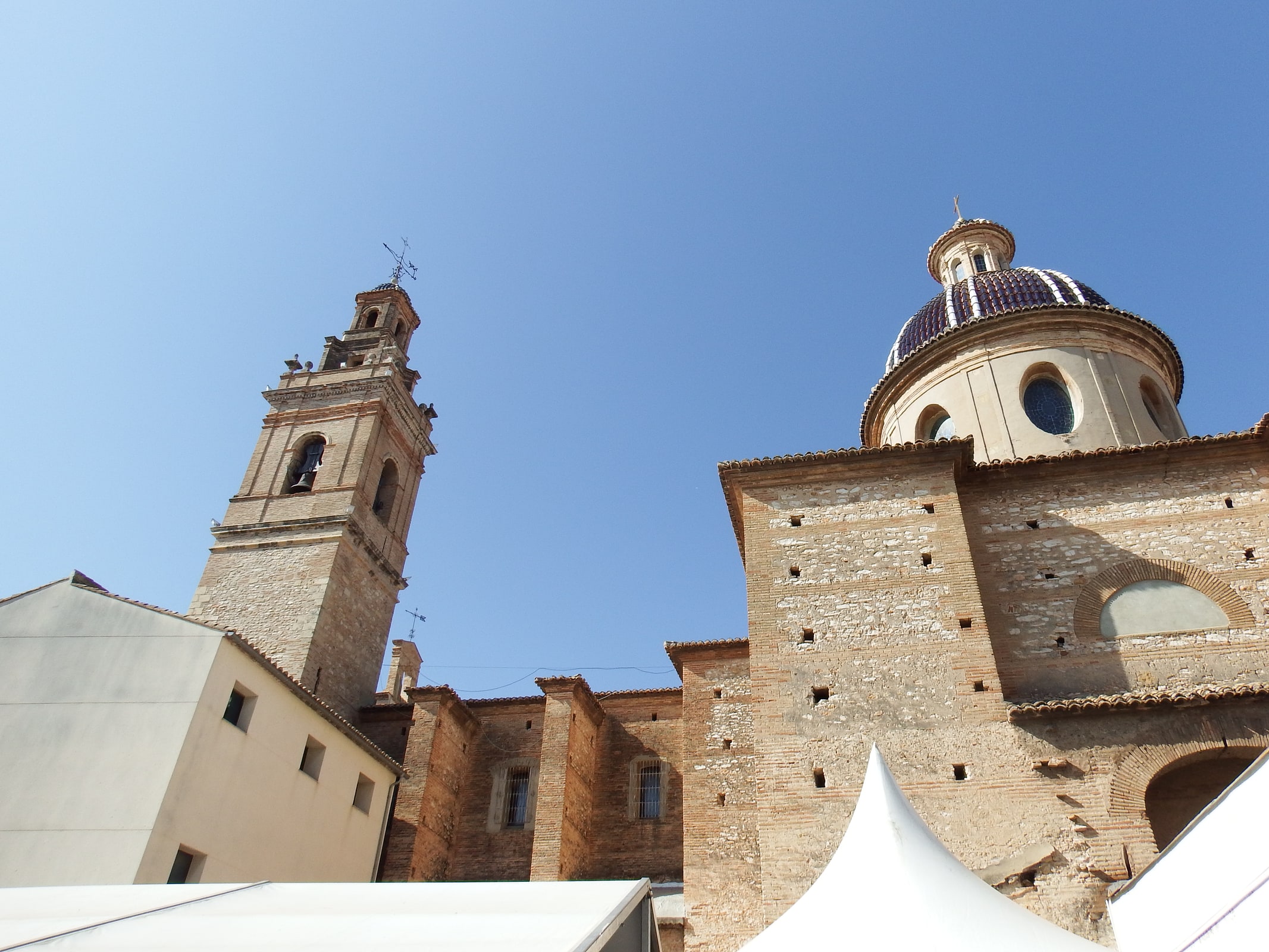
The church deserves attention apart from the 1907 event. Construction of the present Our Lady of the Angels church began around 1751. Its brick-and-stone exterior, bell tower, and tiled domes place it within the religious and architectural landscape of the Valencian plain near the Albufera. The building remains an active parish, not a museum organized around a single episode.
For a prayerful visit, begin with the parish church rather than searching for the former orchard. Ask whether the Sagradas Formas or the taronxeret will be exposed, attend Mass if the current parish timetable permits, and leave time for quiet Eucharistic prayer. The recovery landscape has changed, and no dependable public visitor route to the exact orchard site was located.
The official parish website is the best starting point for contact, but a dependable current Mass schedule was not available during this review. Times, church access, exposition, photography, and accessibility should all be confirmed directly. The annual late-March observance is the most likely occasion for the fuller public expression of the devotion.
The photograph on this page shows the actual Church of Our Lady of the Angels in Silla. It was made available through Wikimedia Commons by 19Tarrestnom65 under the Creative Commons Attribution-ShareAlike 4.0 license and has been resized and letterboxed for Catholic Tourist without generative alteration.
Silla is best understood not as a sensational claim detached from place but as a century-long Catholic practice of custody. The parish remembers sacrilege, a rain-soaked recovery, public reparation, wartime concealment, diocesan examination, and the continuing veneration of the consecrated Hosts. St. Carlo Acutis included the event in his exhibition; the living parish gives the story its present sacramental context.
Visit the living parish that preserves the consecrated Hosts recovered in Silla in 1907, pray before the Eucharist, and understand the taronxeret and annual commemoration without overstating the evidence.
The story & the place today
What happened here—and what a pilgrim can find now
Each record separates the devotional tradition from the present-day visitor evidence. A mapped locality remains visible even when an exact shrine or surviving object has not yet been verified.
Theft, recovery, and preservation of the Sagradas Formas of Silla
Consecrated Hosts stolen from the parish tabernacle on March 25, 1907, were recovered beneath a stone in a rain-soaked orchard on March 27 and returned to the parish in procession. The Hosts remain in parish custody and are exposed in the taronxeret for announced celebrations.
Parish Church of Our Lady of the Angels (theft) and an orchard at Silla (recovery)
The consecrated Hosts recovered on March 27, 1907, known as the Sagradas Formas of Silla
Parish Church of Our Lady of the Angels, Silla
Annual parish commemoration around the March 27 recovery anniversary, with the schedule set each year
Visitor note: The Hosts are preserved by the parish and exposed in the taronxeret on announced occasions; ask the parish before expecting public display.
Church wording: A renewed diocesan process begun in 1982 culminated in a 1983 archiepiscopal decree authenticating the custody and reported condition of the Hosts and regulating their public cult; it is not presented here as a modern scientific proof of supernatural causation. — Archbishop Miguel Roca Cabanellas, Archdiocese of Valencia
The initial curial record was destroyed in 1936. Accessible Catholic sources differ between 1930 and 1934 for the first formal process; the renewed process began in 1982 and its decree dates to 1983.
What to notice
Look closely at the place and its story
The parish of the 1907 theft
Stand in the same parish community from whose tabernacle the consecrated Hosts were taken during Holy Week.
The recovered Sagradas Formas
Learn how the Hosts were found in a wet orchard on March 27 and returned in procession.
The taronxeret
Ask about the orange-tree-shaped custody created through parishioners’ gifts for special exposition.
Diocesan custody and discernment
Read the 1982–1983 process as ecclesial care for the object and devotion, without turning it into a claim the decree does not make.
A hidden wartime witness
Remember the years when the Hosts were concealed during anti-religious violence and later returned to the church.
March 27 commemoration
Plan around the recovery anniversary when the parish’s Eucharistic devotion is most fully expressed, after confirming the current schedule.
Feasts, anniversaries & celebrations
How to read this page
Sources, tradition, and what is verified
The destination record was last checked on 9/29/2026.
This page records the site’s tradition as “Catholic; Archdiocese of Valencia; devotion to the Sagradas Formas of Silla.” That wording describes the nature of the claim and keeps devotional tradition distinct from independently verified history.
Continue nearby