Why pilgrims come
Discover what makes Sanctuary and Holy Cave of Covadonga a place of pilgrimage
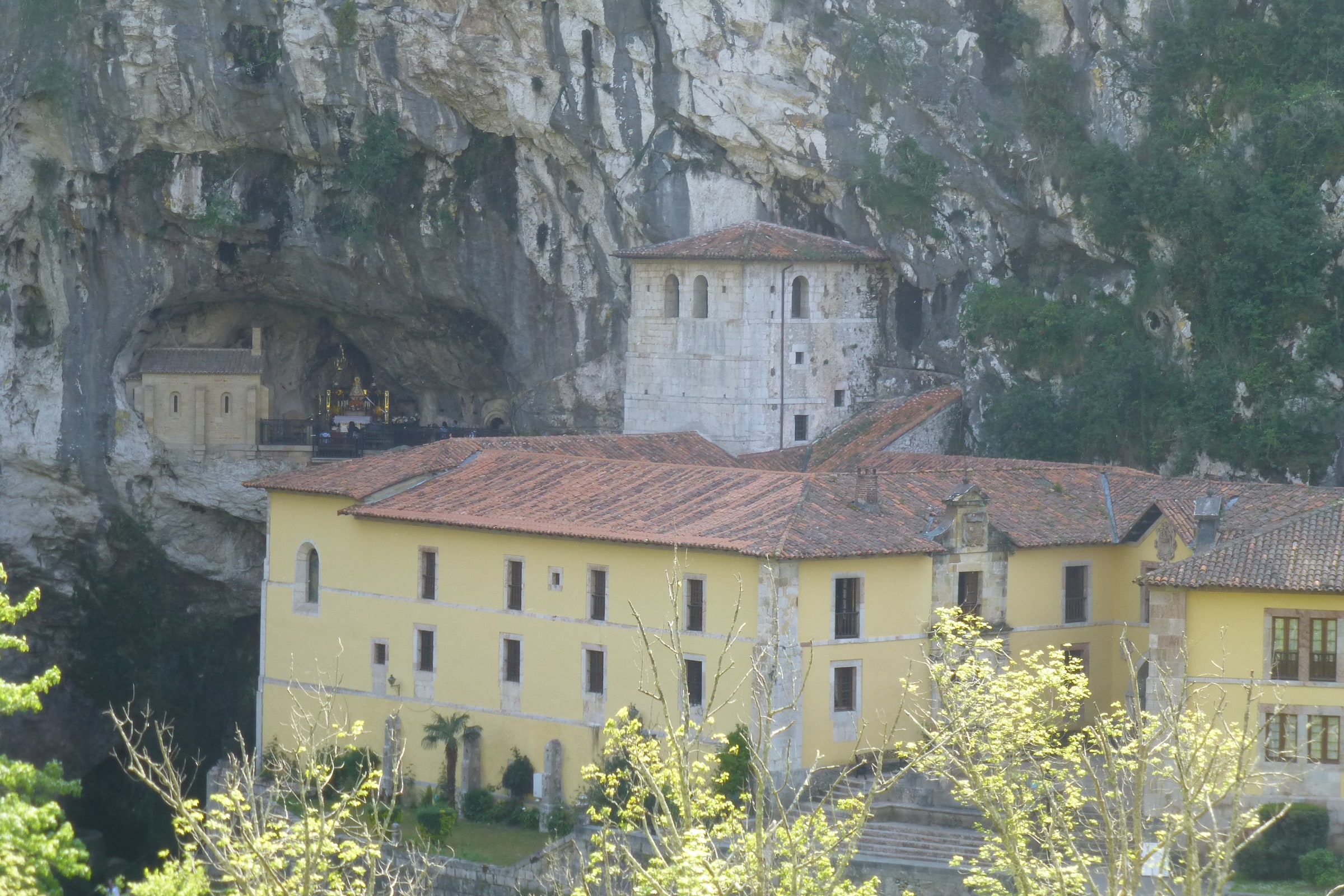
Asturias’s living Marian sanctuary joins the Santa Cueva and the Basilica of Santa María la Real in a dramatic mountain setting. The shrine’s own chronology says the beginnings of Marian devotion in the cave are not documented and must be approached through tradition; it does not present Covadonga as a Marian apparition site.
Begin at the Santa Cueva, where the Santina is venerated above the waterfall, then cross the precinct to the rose-colored basilica. Covadonga is best understood simultaneously as a living Marian sanctuary, a place of prayer and royal memory, and a landscape deeply woven into Asturian identity—without recasting its origin traditions as an apparition account.
What to notice
Look closely at the place and its story
The Santa Cueva
Pray before the Santina in the cave that has carried Asturias’s Marian devotion across centuries.
Basilica of Santa María la Real
Enter the mountain basilica completed in 1901 and raised as a minor basilica by Pope Leo XIII.
What history can—and cannot—say
Let the shrine’s own careful chronology distinguish ancient devotion, royal memory, and tradition from undocumented origin claims.
September 8: the Santina’s feast
Plan carefully for the principal annual pilgrimage, when liturgy and Asturian public life converge at the sanctuary.
Feasts, anniversaries & celebrations
How to read this page
Sources, tradition, and what is verified
The destination record was last checked on 9/15/2026.
This page records the site’s tradition as “Catholic.” That wording describes the nature of the claim and keeps devotional tradition distinct from independently verified history.
Continue nearby