Why pilgrims come
Visit the resting place and legacy of St. Edward the Confessor
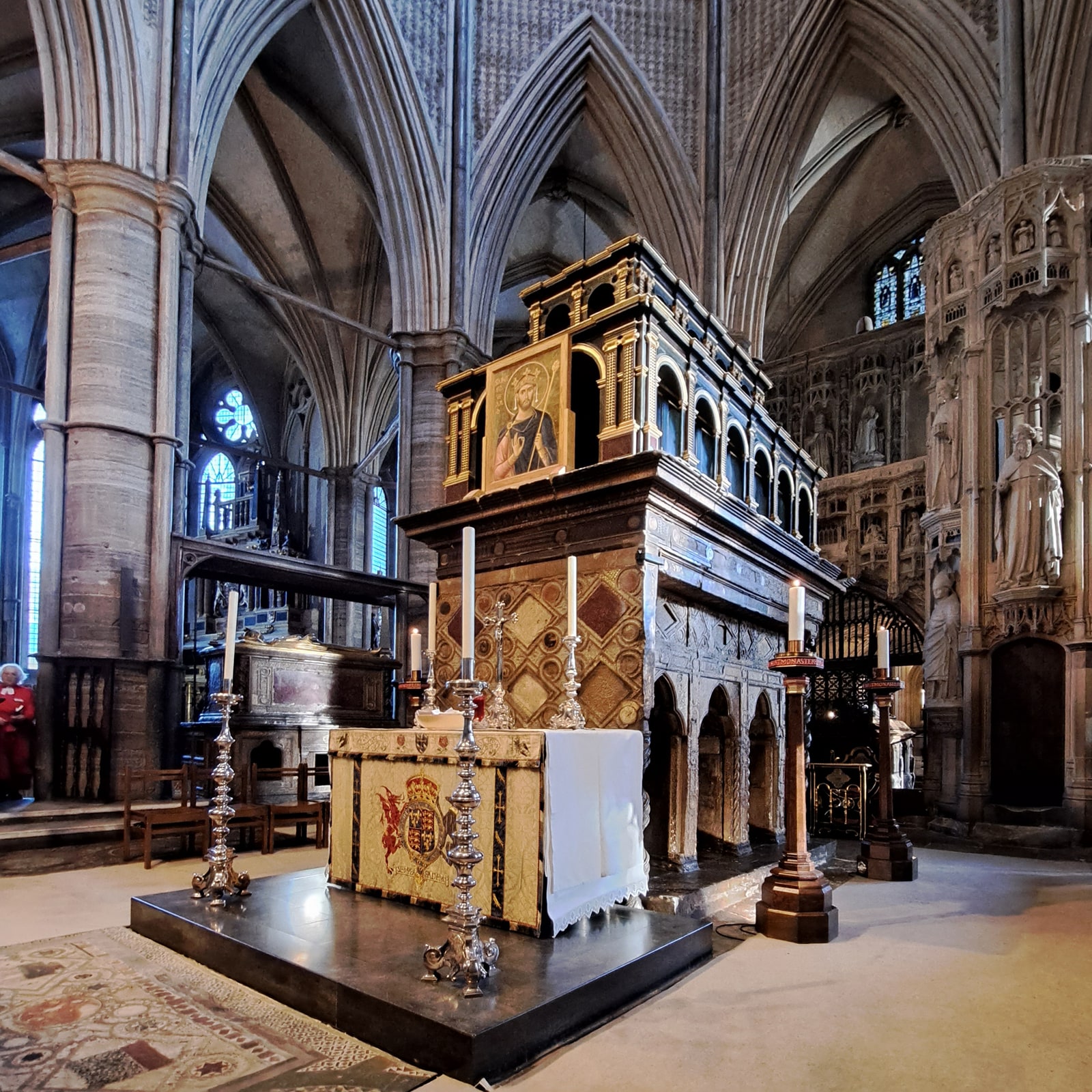
Westminster Abbey is the principal shrine and bodily resting place of St. Edward the Confessor, the eleventh-century English king who founded the great Romanesque abbey church consecrated shortly before his death in January 1066. Edward was remembered for his piety and generosity and was formally canonized by Pope Alexander III on February 7, 1161. The title ‘Confessor’ identifies him as a saint who bore witness through a holy life rather than through martyrdom.
October 13 preserves a precise sequence of pilgrimage history. Edward’s remains were first solemnly translated from their original grave to an elevated shrine on October 13, 1163, two years after his canonization. When Henry III rebuilt Westminster Abbey in the Gothic style, he deliberately returned to the same date: on October 13, 1269, the new church was consecrated and Edward’s remains were translated again into the shrine behind the High Altar where they remain. The annual observance therefore recalls both the 1163 translation that established the feast and Henry III’s 1269 translation into the present shrine.
The surviving Cosmati shrine is more than a royal monument. It was built as the spiritual center of Henry III’s abbey and became one of medieval England’s most important pilgrimage destinations. Kings were buried around Edward, coronations unfolded within the church shaped by his cult, and pilgrims came to seek his intercession. The Abbey still observes Edwardtide and welcomes pilgrims to honor the saint at his shrine, although access to the raised Confessor’s Chapel can change with services and major events.
Westminster Abbey is now a Church of England royal peculiar, but St. Edward was canonized within the Catholic Church centuries before the Reformation. Catholic visitors may therefore approach the shrine as the resting place of a Catholic saint while respecting the Abbey’s present Anglican worship and custodianship. The nearby Westminster Cathedral provides Catholic Mass and confession; the two buildings should not be confused.
Approach Westminster Abbey as the surviving shrine-church of a canonized English king. The heart of the Catholic pilgrimage is St. Edward’s Cosmati shrine behind the High Altar and the chronology embodied there: papal canonization on February 7, 1161; a first solemn translation on October 13, 1163; and Henry III’s translation of the relics into the present shrine when his rebuilt Abbey was consecrated on October 13, 1269. Edwardtide still brings Christians to pray at the saint’s resting place.
The sacred connection
People and objects remembered here
These relationships are part of the destination record, with feast days and catalog qualifications shown where available.
principal shrine and bodily remains
Feast: October 13Bodily remains · Historic shrine and continuous ecclesiastical tradition
Access to the Confessor’s Chapel can vary with services, visitor routes and special events.What to notice
Look closely at the place and its story
Cosmati shrine of St. Edward
Pray near the saint’s bodily remains in the 13th-century shrine commissioned by Henry III.
Edwardtide pilgrimage
October 13 recalls Edward’s first translation in 1163 and Henry III’s second translation into the present shrine in 1269, renewing Westminster’s ancient pilgrimage tradition.
Medieval miracle traditions
The Abbey’s surviving imagery recounts traditions including healings, visions and St. John the Evangelist returning Edward’s ring through pilgrims.
Feasts, anniversaries & celebrations
How to read this page
Sources, tradition, and what is verified
No verification date is listed, so current visitor details should be confirmed directly.
This page records the site’s tradition as “Shared Christian.” That wording describes the nature of the claim and keeps devotional tradition distinct from independently verified history.
Continue nearby