Why pilgrims come
Discover the sacred objects and Catholic memory preserved here
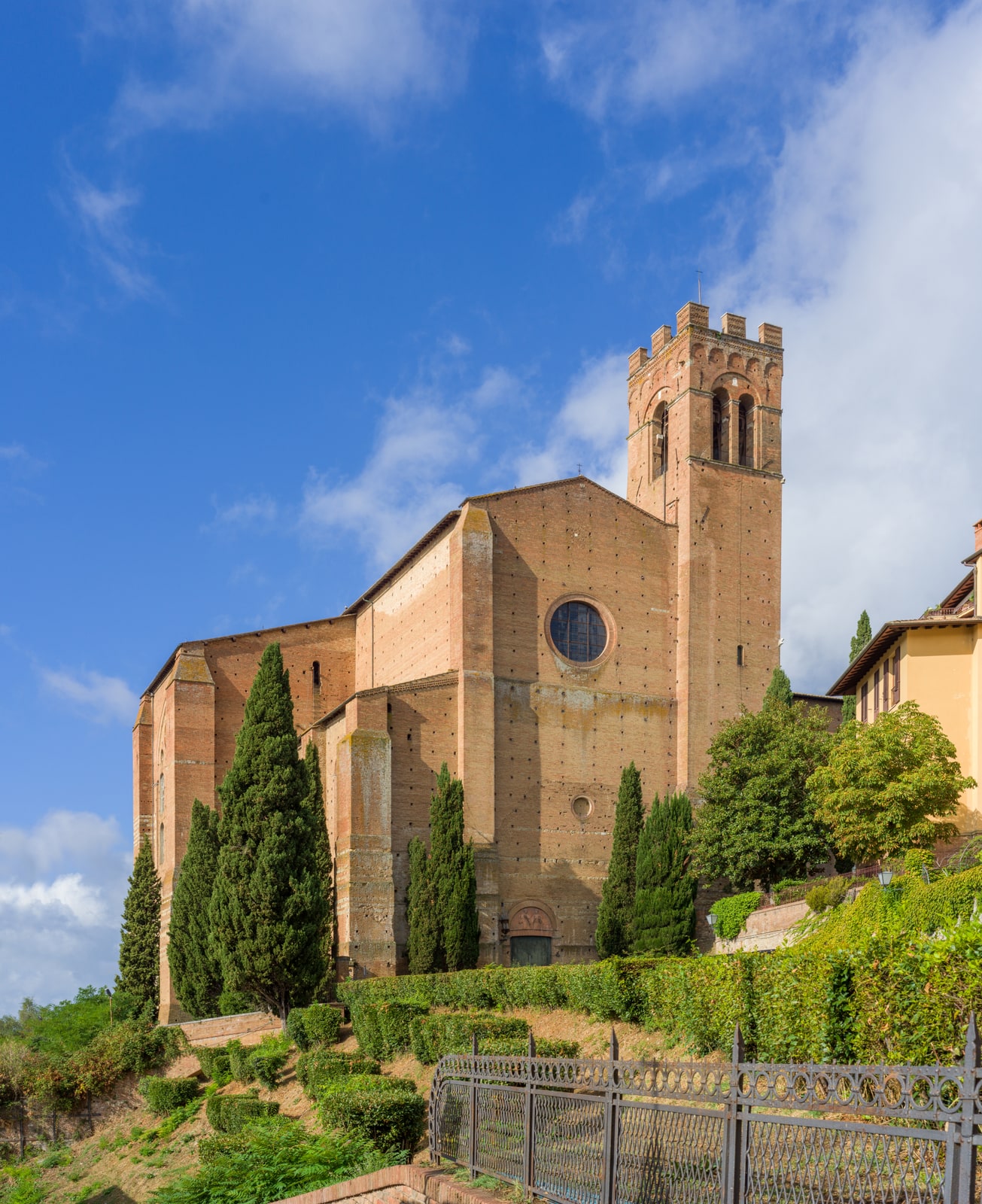
San Domenico is the principal public shrine of St. Catherine within Siena. The great brick church rises above Fontebranda and the Benincasa home, physically joining the Dominican preaching tradition to the neighborhood in which Catherine grew up. She attended Mass here, received Dominican formation, and lived many of the spiritual experiences remembered in the basilica’s chapels.
Dominican friars established themselves on Camporegio hill in the thirteenth century. The church was built between 1225 and 1265 and enlarged during the following century into a vast Gothic preaching space. Its severe exterior and broad single nave reflect the mendicant vocation: this was architecture designed to gather crowds for preaching, prayer, and the sacraments.
The Chapel of the Vaults is the best place to understand Catherine before approaching her relics. The official sanctuary associates it with the Dominican tertiaries, Catherine’s reception of the habit, prayer, ecstasies, and the teaching later gathered in her Dialogue. An especially valuable fresco by Andrea Vanni was painted while Catherine was alive and is treated as a true contemporary likeness rather than an imagined later portrait.
The Chapel of St. Catherine preserves her head, brought from Rome after her death and received solemnly by Siena. Her body remains at Santa Maria sopra Minerva in Rome, so the two destinations should never be confused. A nearby reliquary niche holds her thumb and objects associated with her life. During annual celebrations the thumb relic is carried to Piazza del Campo for the blessing of Italy and Europe.
The basilica’s significance is therefore larger than the dramatic fact of a bodily relic. It preserves the place where Catherine worshiped, learned from the Order of Preachers, became a Dominican tertiary, and matured into a theologian whose teaching led to her recognition as a Doctor of the Church. The relics are received within that complete life, not isolated from it.
Pair San Domenico with the Sanctuary-House below the hill. The house explains Catherine’s domestic and lay vocation; San Domenico explains her Dominican formation, Eucharistic spirituality, public cult, and Siena’s continuing custody of her head.
Begin in the Chapel of the Vaults, continue to Catherine’s contemporary likeness and relic niche, and only then approach the chapel of her head. This order keeps biography, Dominican formation, and relic veneration together.
The sacred connection
People and objects remembered here
These relationships are part of the destination record, with feast days and catalog qualifications shown where available.
principal Siena relic shrine, Dominican formation and places of prayer
Feast: April 29Bodily relics · Ecclesiastically preserved and publicly venerated since the late fourteenth century
Public visibility follows the basilica’s worship and visitor arrangements. Confirm during major feasts.What to notice
Look closely at the place and its story
Chapel of the Vaults
Encounter the Dominican setting of Catherine’s prayer, vocation, and teaching.
A portrait from her lifetime
See Andrea Vanni’s image, valued as a rare contemporary likeness of the saint.
Head and thumb relics
Venerate the principal relics preserved by Catherine’s native city.
A living Dominican church
Receive the relic shrine within the preaching, liturgy, and sacramental life that formed Catherine.
Feasts, anniversaries & celebrations
How to read this page
Sources, tradition, and what is verified
The destination record was last checked on 9/22/2026.
This page records the site’s tradition as “Roman Catholic; Dominican basilica and shrine of St. Catherine of Siena.” That wording describes the nature of the claim and keeps devotional tradition distinct from independently verified history.
Continue nearby