Why pilgrims come
Encounter the Eucharistic tradition and its surviving evidence
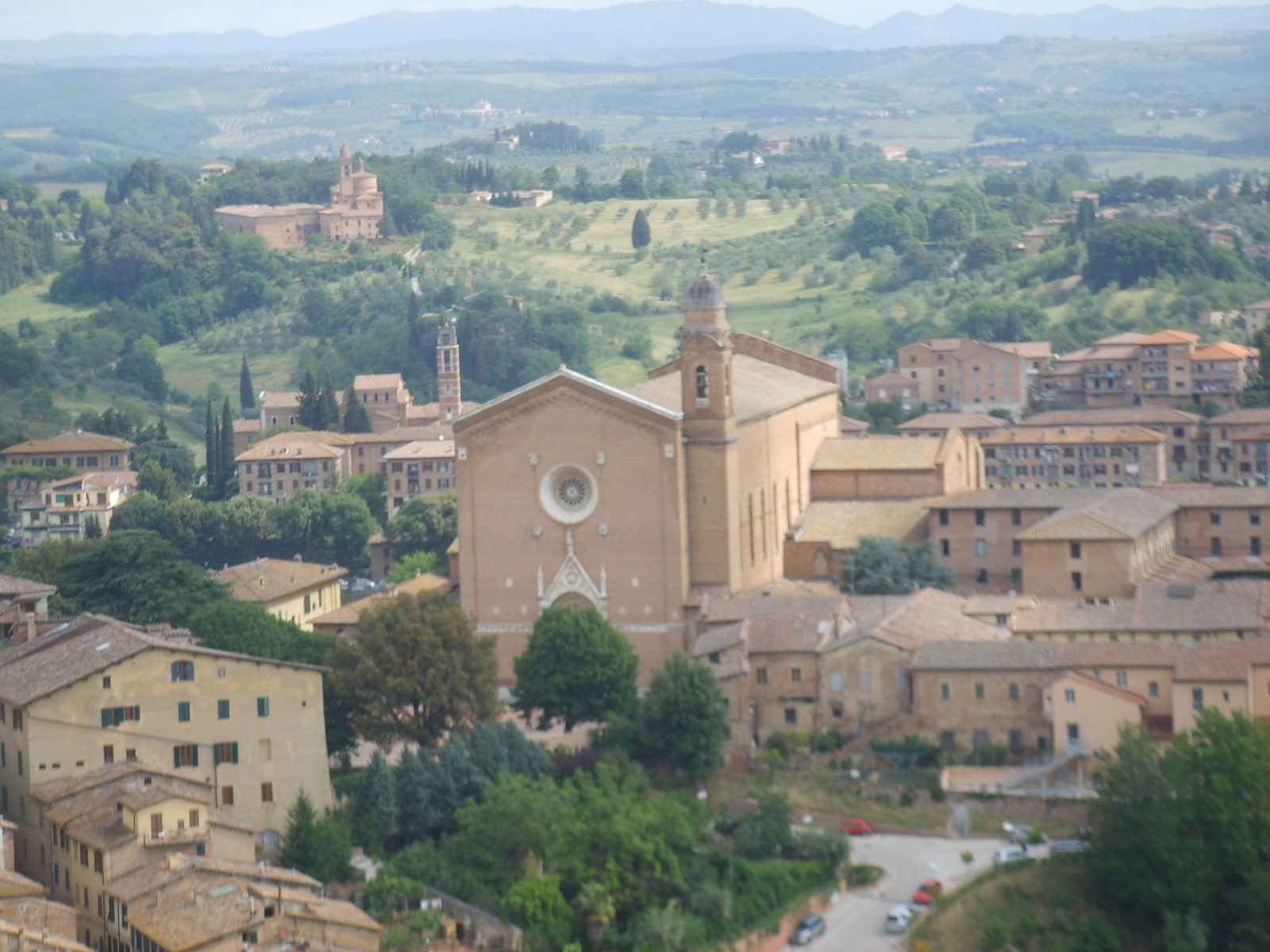
The vast brick Basilica of San Francesco preserves Siena’s most important Eucharistic devotion: consecrated hosts stolen in 1730, recovered three days later, and still venerated by the local Church. The story begins not with a scientific experiment but with sacrilege, communal grief, recovery, and almost three centuries of prayer.
On August 14, 1730, thieves entered the Franciscan basilica and stole a silver ciborium containing 351 consecrated hosts. Siena responded with public acts of reparation. On August 17 the hosts were found in an alms box at the nearby sanctuary of Santa Maria in Provenzano, amid dust and cobwebs. They were identified, reverently cleaned, and carried back to San Francesco in solemn procession.
Because the hosts had been contaminated, the friars did not distribute them in Holy Communion. Over time, however, observers reported that the remaining particles did not show the ordinary corruption expected of unleavened bread. The Archdiocese of Siena describes their continuing preservation as the Eucharistic Miracle of Siena. The number now preserved is smaller than the original 351 because particles were used in examinations and other circumstances over the centuries; the diocesan historical account records 223 remaining hosts.
Catholic Tourist presents the ecclesial facts precisely. The theft, recovery, uninterrupted custody, examinations, and public veneration are documented. The judgment that their preservation is miraculous belongs to the Catholic devotional and diocesan tradition; this page does not substitute an independent laboratory conclusion for the Church’s language or claim that every popular retelling has equal documentary value.
The devotion remains woven into Siena’s living Catholic culture. The archdiocese records an annual commemoration of the August 17 recovery, a Eucharistic day on the seventeenth of each month, the Corpus Christi procession, and a solemn Eucharistic observance in September. Siena’s contrade also pay homage to the Sacred Hosts, joining the city’s civic identity to its Eucharistic memory.
San Francesco itself deserves attention. Founded in the thirteenth century and enlarged into a great Gothic preaching church, it preserves Franciscan history, medieval art, and the memory of St. Bernardino’s preaching in Siena. Yet the right center of a pilgrimage is the Blessed Sacrament. Enter quietly, ask where the Sacred Hosts are exposed or reserved that day, and let the extraordinary story deepen—not replace—ordinary faith in the Eucharist celebrated at every Mass.
Make the Eucharist—not curiosity—the center of the visit. Read the 1730 sequence before arriving, ask where the Sacred Hosts are reserved or exposed, and leave time for silent prayer or Mass.
The story & the place today
What happened here—and what a pilgrim can find now
Each record separates the devotional tradition from the present-day visitor evidence. A mapped locality remains visible even when an exact shrine or surviving object has not yet been verified.
The Eucharistic tradition associated with Siena
Catholic Tourist maps Siena as the geographical setting of a Eucharistic tradition documented in the St. Carlo Acutis exhibition. The place-specific historical and visitor audit is still in progress; this account records a devotional tradition rather than making an independent ecclesial, historical, or scientific judgment.
Siena, Italy; precise church or event location awaiting verification
Still being researched
No present-day veneration site has yet been verified
Still being researched
Visitor note: The mapped point represents the associated locality, not confirmed church access.
Church wording: Documented in the St. Carlo Acutis exhibition; no separate Church judgment has yet been verified for this catalog record. — Recognition wording awaiting a place-specific Church-source audit
This pin preserves the geographical and devotional history while the exact event site, any surviving object, and current public commemoration are researched. It should not be read as confirmation that an active shrine exists at the pin.
What to notice
Look closely at the place and its story
The 1730 theft and recovery
Follow the documented sequence from the stolen ciborium to the discovery of the hosts at Santa Maria in Provenzano.
The Sacred Hosts
Pray before the hosts that the Church of Siena has preserved and venerated for nearly three centuries.
A city’s Eucharistic memory
Understand the homage of the contrade, the August anniversary, monthly seventeenth, and Corpus Christi procession.
Franciscan Siena
Read the Gothic preaching church and its art within the continuing ministry of the Friars Minor Conventual.
Feasts, anniversaries & celebrations
How to read this page
Sources, tradition, and what is verified
The destination record was last checked on 9/22/2026.
This page records the site’s tradition as “Roman Catholic; Franciscan and diocesan Eucharistic devotion.” That wording describes the nature of the claim and keeps devotional tradition distinct from independently verified history.
Continue nearby