Why pilgrims come
Visit the resting place and legacy of St. Agnes of Rome
Sant’Agnese fuori le Mura is the principal burial shrine of St. Agnes, the young Roman virgin martyr whose cult is attested among the ancient witnesses of the Church in Rome. The details of her Passion vary in later sources, but devotion at her grave is early and historically secure. The official catacomb record states that she was buried in a family hypogeum along the Via Nomentana and that Roman and foreign pilgrims soon came to the tomb.
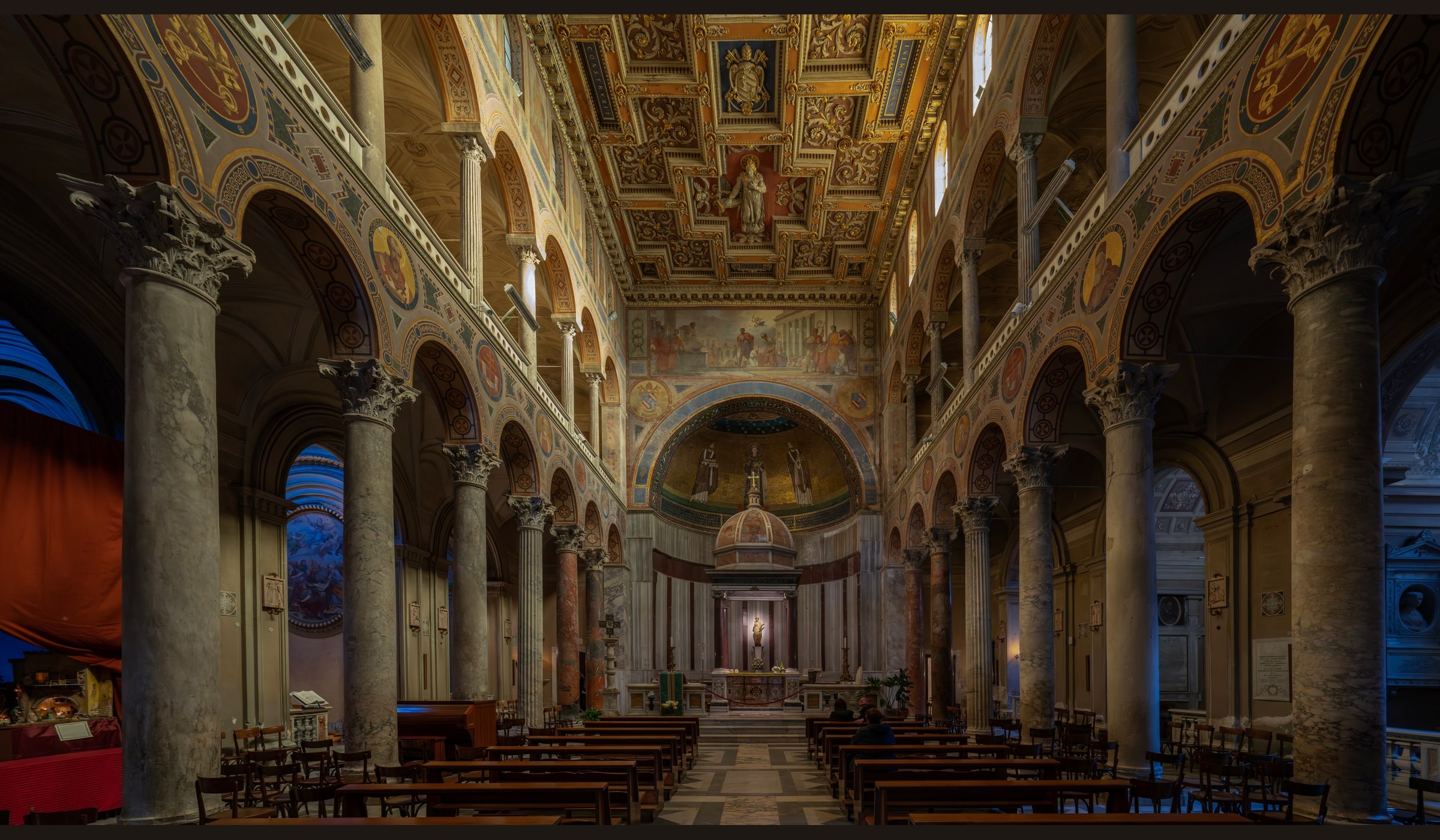
Constantina, daughter of Constantine, sponsored a great fourth-century cemetery basilica nearby and chose burial near Agnes. Pope Honorius I built the present semi-subterranean basilica directly over the martyr’s tomb between 625 and 638, replacing an earlier shrine. A broad stair descends from modern street level into a church whose reused columns and luminous apse mosaic place the pilgrim within the layered life of early Christian Rome.
Beneath the high altar, the shrine preserves Agnes’s bodily remains apart from the head later entrusted to Sant’Agnese in Agone. The adjacent catacombs keep the geography of her original burial, while the nearby Mausoleum of Santa Costanza preserves the imperial family’s devotion and extraordinary late-antique mosaics. Church, catacomb, and mausoleum have different access arrangements.
January 21 joins the martyr’s tomb to the wider Roman Church. Lambs are blessed in connection with Agnes’s feast; their wool is used for the pallia given to new metropolitan archbishops. The tradition links Agnes—the name resonates with the Latin word for lamb—to episcopal communion and the pastoral responsibility symbolized by the pallium.
This is the first Agnes stop. Pray at the tomb and visit the catacomb before continuing to Piazza Navona, where Sant’Agnese in Agone preserves the received memory of her martyrdom and the relic of her head. Keeping burial and martyrdom sites distinct turns two beautiful churches into one coherent pilgrimage.
Descend to the basilica built over Agnes’s tomb, then enter the catacomb as the documented landscape of her ancient cult. Continue later to Sant’Agnese in Agone for the martyrdom tradition and head relic.
The sacred connection
People and objects remembered here
These relationships are part of the destination record, with feast days and catalog qualifications shown where available.
original burial place and principal bodily-relic shrine
Feast: January 21Tomb and bodily remains · Ancient ecclesial burial and cult
The head is venerated separately at Sant’Agnese in Agone.What to notice
Look closely at the place and its story
The martyr’s tomb
Pray at the high altar built over the ancient burial place visited by early pilgrims.
Catacomb of St. Agnes
Enter the original cemetery landscape only with the official guided visit.
Honorius I mosaic
Read Agnes’s jeweled figure in the golden apse as a seventh-century confession of resurrection and victory.
Santa Costanza
Continue to the adjacent mausoleum and its late-antique mosaics.
Feasts, anniversaries & celebrations
How to read this page
Sources, tradition, and what is verified
The destination record was last checked on 9/29/2026.
This page records the site’s tradition as “Roman Catholic basilica, martyr tomb, and catacomb pilgrimage.” That wording describes the nature of the claim and keeps devotional tradition distinct from independently verified history.
Continue nearby