Why pilgrims come
Remember the witness that made this place sacred
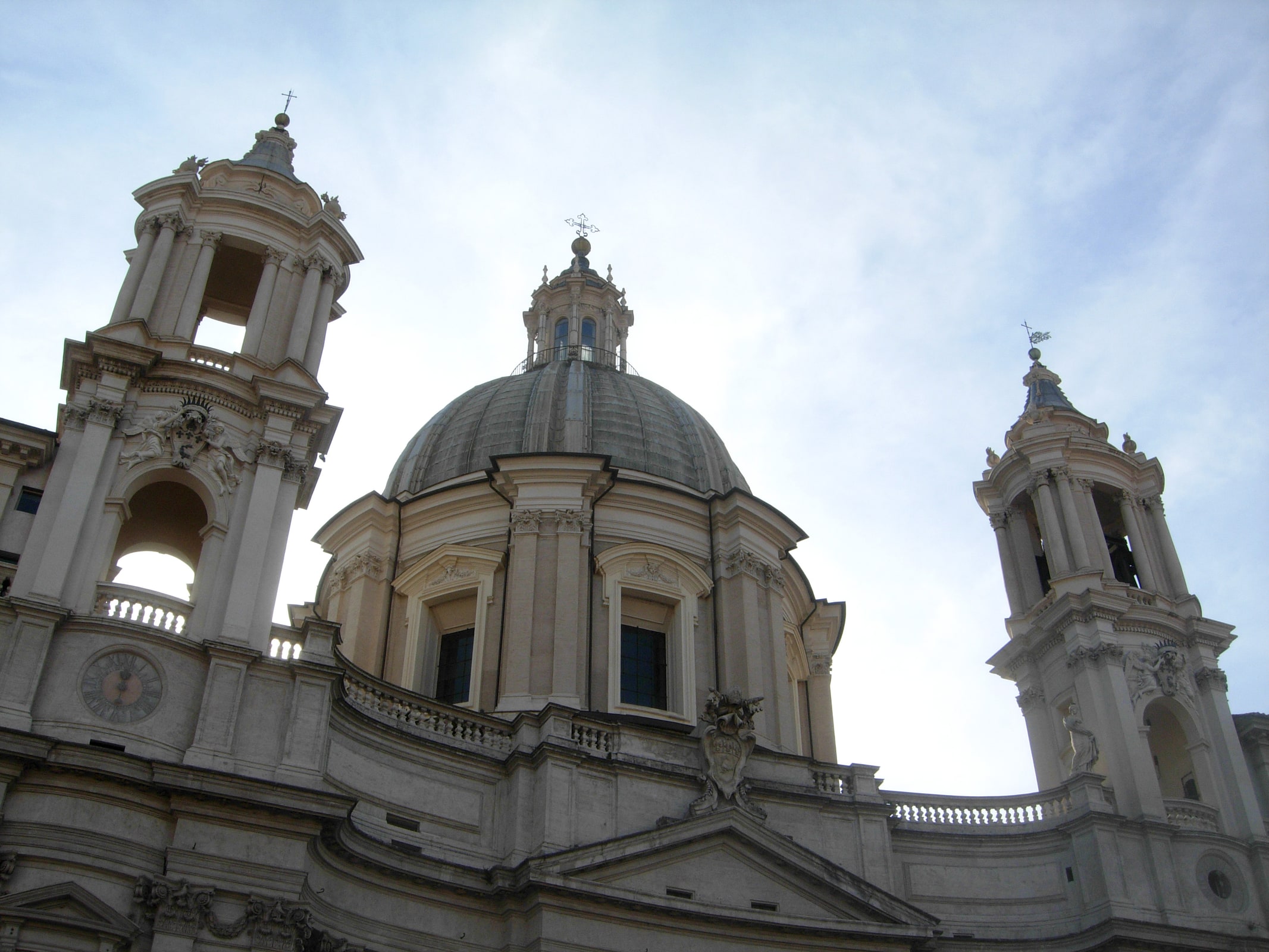
The Baroque façade of Sant’Agnese in Agone faces Piazza Navona, but its Christian meaning begins below the piazza. The long oval preserves the footprint of Domitian’s stadium. The church’s crypt occupies chambers connected with that ancient structure and has been venerated since at least the early Middle Ages as the place of St. Agnes’s humiliation and martyrdom.
Later Passion narratives differ in sequence and detail. They remember Agnes as a very young Christian who refused to renounce her consecration to Christ, was exposed in a place of prostitution, protected from violation, survived an attempted burning, and was finally killed by the sword. Catholic Tourist presents that as the Church’s received martyr tradition while distinguishing it from the earlier and more secure evidence for her cult and burial on the Via Nomentana.
The crypt is the surviving sacred core of the earlier church at the site. Moisture and repeated flooding have damaged its paintings and required continuing restoration. Current access must be confirmed through the church; a visitor should never promise unrestricted entry simply because the upper church is open.
The church also preserves the relic venerated as Agnes’s head. Its own history records that Pope Pius X entrusted the relic to Sant’Agnese in Agone in 1900, reuniting the martyr’s memory with the traditional place of death while the remainder of the body continues to be venerated at Sant’Agnese fuori le Mura.
Make the two Agnes churches one pilgrimage. Begin on Via Nomentana at the tomb and catacomb; then come to Piazza Navona for the martyrdom tradition and head relic. The route moves from death to burial, ancient Christian memory, and the living Roman Church’s January 21 devotion.
Enter beneath the Baroque church to remember Agnes’s martyrdom within Domitian’s stadium, then venerate the head relic with the evidence boundary between early cult and later Passion narrative clearly in view.
The sacred connection
People and objects remembered here
These relationships are part of the destination record, with feast days and catalog qualifications shown where available.
traditional martyrdom place and shrine of the head relic
Feast: January 21First-class relic · Longstanding ecclesial custody; transferred here by Pope Pius X in 1900 according to the church history
Veneration and visibility depend upon the church’s current arrangements.What to notice
Look closely at the place and its story
Martyrdom crypt
Descend, when access permits, into the chambers venerated as the place of Agnes’s final witness.
Chapel of the Holy Head
Honor the relic within the church’s current veneration arrangements.
Piazza Navona and Domitian’s stadium
Read the Baroque piazza through the ancient stadium whose shape and substructures remain beneath it.
Feasts, anniversaries & celebrations
How to read this page
Sources, tradition, and what is verified
The destination record was last checked on 9/29/2026.
This page records the site’s tradition as “Roman Catholic martyr shrine and Baroque church.” That wording describes the nature of the claim and keeps devotional tradition distinct from independently verified history.
Continue nearby