Why pilgrims come
Encounter the Eucharistic tradition and its surviving evidence
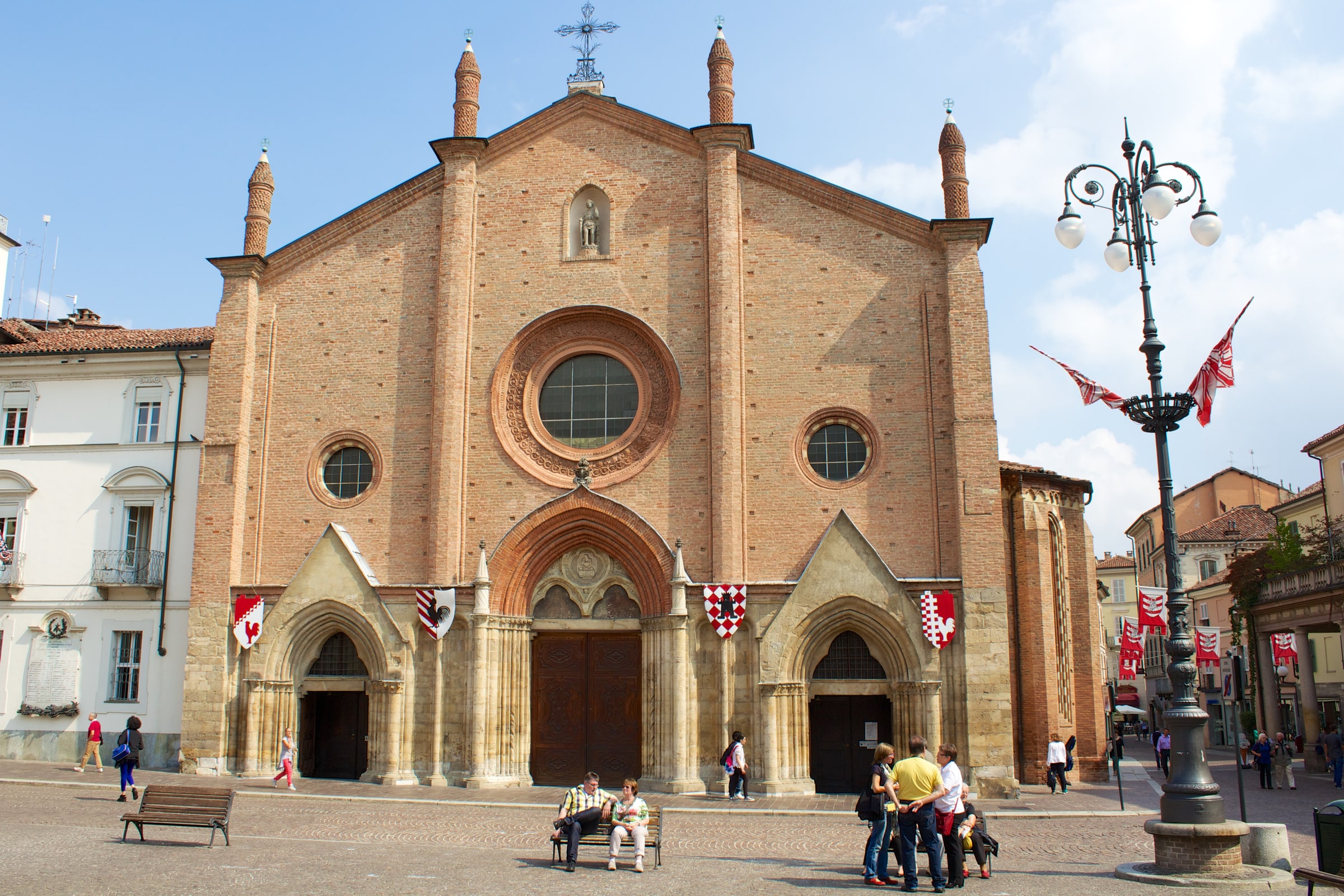
The Eucharistic destination in Asti is not an abstract point somewhere in the city. It is the Collegiata di San Secondo, the Gothic church on Asti’s principal civic square. Inside, a side chapel now known as the Chapel of the Miracle preserves the place where the diocesan art office says the “miracle of the Host” occurred on July 25, 1535.
The local diocesan account names the celebrant as Father Domenico Occelli. While he was celebrating Mass and broke the consecrated Host, he reportedly saw several drops of blood flow from it and fall into the chalice and onto the paten. The St. Carlo Acutis exhibition adds the received narrative that the Host returned to its ordinary appearance and that Bishop Scipione Roero ordered a notarial record. It also associates Pope Paul III’s apostolic brief of November 6, 1535 with an indulgence for pilgrims visiting San Secondo on the event’s anniversary.
Those layers should remain distinct. The Diocese of Asti’s current heritage site documents the chapel, date, celebrant, reported blood, and the seventeenth-century painting made to commemorate the event. The Carlo exhibition supplies the fuller devotional narrative and the claim about the papal brief. Catholic Tourist attributes each claim to its source rather than presenting every later detail as if it came from one surviving eyewitness account.
The chapel itself gives the tradition a physical setting. Its carved and gilded wooden altar was made by Giuseppe Badarello in 1682. Above it is a mid-sixteenth-century image of the Cross with the Virgin Mary and St. John. On the left wall, an anonymous Piedmontese painting from the first half of the seventeenth century recalls the 1535 Mass. An older panel of archangels and musical angels, dating to about 1470–1480, was rediscovered during twentieth-century restoration work.
The exhibition also identifies a gilded reliquary and a sacred object associated with the event. The current diocesan chapel page, however, does not promise that object will be exposed whenever the church is open. Visitors should therefore come first for the actual chapel and Eucharistic worship, and ask the parish whether the object associated with 1535 can presently be seen. The page does not promise an incorrupt Host or continuous relic display.
San Secondo is also the shrine of Asti’s patron martyr. The Diocese of Asti traces devotion on the burial site back to early sanctuaries in the Roman necropolis; a ninth- or tenth-century church preceded the collegiate church begun in 1256 and completed in the fifteenth century. The tenth-century crypt preserves the saint’s relics in a sixteenth-century silver reliquary. Annual patronal celebrations join the bishop, city authorities, Palio districts, prayer in the crypt, and the traditional “Minestra dei Poveri,” making the church a living bond between altar, city, and service to the poor.
The building deserves attention beyond the event. Official regional tourism describes a tenth-century bell tower beside the church begun in 1256, a brick façade completed in 1462, three Gothic portals, twelve clustered pillars, frescoes, a wooden choir, and the eighteenth-century Chapel of St. Secondus designed by Bernardo Antonio Vittone. The Palio banners kept in the right aisle reveal how deeply the church belongs to Asti’s civic identity.
This is also why the page must not confuse Asti’s two Eucharistic traditions. The 1535 event belongs to the Collegiata di San Secondo. A separate 1718 tradition is connected with the former Milliavacca institution, and the associated chalice is kept in Asti Cathedral. They are distinct events, destinations, and objects. This page concerns San Secondo and 1535 only.
Regional tourism currently lists the church as open daily from 7:30 a.m. to 7:00 p.m., but it explicitly advises visitors to verify information directly. Confirm hours, Masses, accessibility, chapel access, and any exposition of the event-related object before travel. Enter quietly: the Collegiate Church remains a place of worship, not a collection display.
Visit the exact chapel associated with the 1535 Mass, then descend to the crypt of St. Secondus. Keep the event’s diocesan core distinct from later devotional detail, and let both memories lead toward Eucharistic prayer and service.
The story & the place today
What happened here—and what a pilgrim can find now
Each record separates the devotional tradition from the present-day visitor evidence. A mapped locality remains visible even when an exact shrine or surviving object has not yet been verified.
The reported bleeding of the Host at San Secondo
The Diocese of Asti records that Father Domenico Occelli, while celebrating Mass in the present Chapel of the Miracle, saw drops of blood flow from the broken Host and fall into the chalice and onto the paten.
Present Chapel of the Miracle, Collegiata di San Secondo, Asti
The Chapel of the Miracle and an event-related object reported by the St. Carlo Acutis exhibition; routine exposition is not promised
Collegiata di San Secondo, Asti
Historical anniversary known current program unverified
Visitor note: Active church; confirm chapel hours and any exposition directly
Church wording: Historic diocesan Eucharistic tradition preserved at the named chapel — Diocese of Asti heritage documentation and continuing Catholic custody
The diocesan heritage record documents the place and reported phenomenon; fuller devotional details and the 1535 papal-indulgence account are attributed to the St. Carlo Acutis exhibition.
The sacred connection
People and objects remembered here
These relationships are part of the destination record, with feast days and catalog qualifications shown where available.
patron martyr whose relics are venerated in the crypt
Saint relics · Publicly venerated within the Diocese of Asti’s received tradition
Crypt access can be affected by liturgies and parish arrangements; confirm before travel.Eucharistic devotional object · Reported by the St. Carlo Acutis exhibition; current public exposition not independently verified
Ask the parish directly whether the event-related object can currently be viewed.What to notice
Look closely at the place and its story
The Chapel of the Miracle
Stand in the documented chapel where Father Domenico Occelli celebrated Mass on July 25, 1535.
The seventeenth-century memorial painting
Read the painted remembrance as evidence of the event’s continuing local devotional history.
St. Secondus in the crypt
Venerate Asti’s patron martyr at the older burial and devotional center beneath the church.
Gothic Asti and the Palio
Notice the brick façade, portals, clustered pillars, and civic banners that bind the church to the city.
Two events, not one
Keep San Secondo’s 1535 tradition distinct from the separate 1718 event and chalice at Asti Cathedral.
Feasts, anniversaries & celebrations
How to read this page
Sources, tradition, and what is verified
The destination record was last checked on 9/29/2026.
This page records the site’s tradition as “Roman Catholic collegiate church, Eucharistic memorial, and shrine of St. Secondus.” That wording describes the nature of the claim and keeps devotional tradition distinct from independently verified history.
Continue nearby