Why pilgrims come
Enter a place shaped by prayer, community, and pilgrimage
The Scala entry in St. Carlo Acutis’s Eucharistic-miracles exhibition belongs at the Monastery of the Most Holy Redeemer, the living Redemptoristine community above the Amalfi Coast. The monastery is not a display case for a surviving miraculous Host. It is the place where Catholic and Redemptorist sources remember extraordinary signs appearing during solemn exposition of the Eucharist in 1732—and where Mass, adoration, and the Divine Office continue today.
Scala matters even before the reported phenomenon. The present community traces the property to a seventeenth-century house and conservatory for local women. It became a Visitation monastery in 1720. Giulia, Orsola, and Giovanna Crostarosa arrived in 1724; Giulia took the religious name Maria Celeste. In 1731, with the decisive support of St. Alphonsus Maria de Liguori, the Order of the Most Holy Redeemer—the Redemptoristine nuns—began here. The order describes its vocation as becoming a “living memory” of Christ the Redeemer.
Alphonsus had first come to the mountains above Scala exhausted by pastoral work and illness. He encountered poor shepherds and rural families who rarely received sustained preaching or sacramental care. That experience helped mature his call to form a missionary congregation for people who were spiritually abandoned. Maria Celeste’s discernment and encouragement were part of that founding story.
The reported Eucharistic signs belong inside this period of prayer and uncertainty. Official Catholic sources do not give one perfectly uniform calendar. The Diocese of Nocera Inferiore-Sarno places extraordinary manifestations during solemn exposition on November 6–8, 1732 and also reports episodes about a month earlier and again around the earthquake of November 29–December 1. The Redemptorists of Southern Italy emphasize November 11 and say the phenomenon recurred. The Archdiocese of Amalfi-Cava describes signs at the end of 1732, before and after the earthquake. St. Carlo’s exhibition tradition begins the sequence on September 11 and extends it for about three months.
Those differences should remain visible. They may reflect multiple episodes, different selections from the received testimony, or later compression of a longer autumn tradition. Catholic Tourist therefore dates the event broadly to autumn 1732 rather than pretending that every source describes one moment with an uncontested day.
The central report is consistent in its basic form. During exposition of the Blessed Sacrament in the monastery church, witnesses said that signs of Christ’s Passion appeared in or around the consecrated Host. Accounts name a dark or bloody cross and, in some versions, a brighter cross, the lance, the sponge, or forms above three small hills. The imagery later became associated with the Redemptorist emblem: the cross, lance, and sponge over hills, with the motto Copiosa apud eum redemptio—“With him is plentiful redemption.”
The diocesan biography of St. Alphonsus says that the nuns, Alphonsus and his companions, the bishops of Scala and Castellammare di Stabia, and other clergy witnessed reported phenomena. It further says that the bishops informed the apostolic nuncio in Naples and the papal secretary of state, that a canonical inquiry was ordered, and that summary acts containing testimony were sent to Pope Clement XII in February 1733. This is meaningful evidence that churchmen investigated the reports; it is not the same thing as locating a surviving decree that formally defined every later version as a miracle.
The strongest historical testimony quoted in a Redemptorist formation source is restrained. Alphonsus reportedly stated that during exposition on November 7 and 8 he observed a dark-colored cross in the Host and then what seemed like a small, star-shaped cloud whiter than the sacramental species. That deposition is narrower than some later devotional retellings. The page preserves both the reported core and the growth of the tradition without treating every elaboration as equally documented.
On November 9, 1732, Alphonsus and his companions founded the missionary Congregation of the Most Holy Savior at Scala; Rome later changed the title to the Congregation of the Most Holy Redeemer. The proximity between the triduum, the reported signs, and the foundation gave the episodes enduring importance within Redemptorist memory. Scala is therefore not simply one more “miracle pin.” It is a place where Eucharistic prayer, the contemplative order founded by Maria Celeste, and Alphonsus’s missionary response to neglected communities converged.
The monastery remains alive. Its official schedule lists daily Mass at 8:00 a.m., Eucharistic exposition and silent adoration at 6:30 p.m., and Vespers at 7:00 p.m. These services are open to people who wish to join the community in its chapel. On Thursdays outside the summer months, exposition ordinarily begins at 5:00 p.m.; on the first Thursday of the month the Blessed Sacrament is exposed through the day. The nuns explicitly ask visitors to telephone first because formation, retreats, solemnities, and community needs can change the ordinary rhythm.
The real object of a pilgrimage today is the living Eucharistic worship of the monastery, not a material relic from 1732. No authoritative source reviewed for this page identifies an extant Host, reliquary, bloodstained object, or scientific specimen from the event. The reported Host was consumed or otherwise ceased to exist within the liturgical action; the tradition concerns what witnesses said they saw during exposition. Catholic Tourist therefore removes the old “Relics” tag and promises no miracle object for veneration.
Recent Redemptorist reporting confirms that a chapel dedicated to the Eucharistic miracle remains part of the Scala complex. It also shows that Redemptorists still return here for formation, Eucharist, and reflection on their origins. Access to any particular historic room or chapel, however, should never be assumed from an online article. The enclosure and prayer of the nuns take precedence, and the official community is the only reliable source for current entry.
Blessed Maria Celeste’s presence requires similar precision. Scala is where the new order took shape, but it is not her tomb. Conflict forced her to leave in 1733, and she later established a community in Foggia, where she died in 1755. Pope Francis authorized her beatification in 2016, and the Redemptorist family celebrates her memorial on September 11. Her story belongs here as foundress and spiritual mother, not as a relic claim.
St. Alphonsus likewise belongs to Scala as founder, missionary, and reported witness, while his tomb is at Pagani. A complete Redemptorist pilgrimage can connect the Scala monastery with his basilica and tomb there. The relationship between the two places tells a better story than either alone: Scala holds the beginnings and the living contemplative community; Pagani holds the founder’s mortal remains and mature legacy.
The monastery offers two independent apartments for spiritual stays. Its official page describes simple self-catering accommodation on the hill, with residents invited to the community’s 8:00 a.m. Mass, 6:30 p.m. adoration, and 7:00 p.m. Vespers. Availability, rates, access, and suitability must be confirmed directly with the mother superior. This is not walk-in lodging and should not be advertised as unrestricted access to the cloister.
Scala’s terrain is beautiful and demanding. The monastery stands above the valley opposite Ravello, and steep lanes, stairs, limited parking, and seasonal traffic on the Amalfi Coast can complicate arrival. Contact the community before leaving Amalfi or Ravello, allow generous transit time, and state mobility needs in advance.
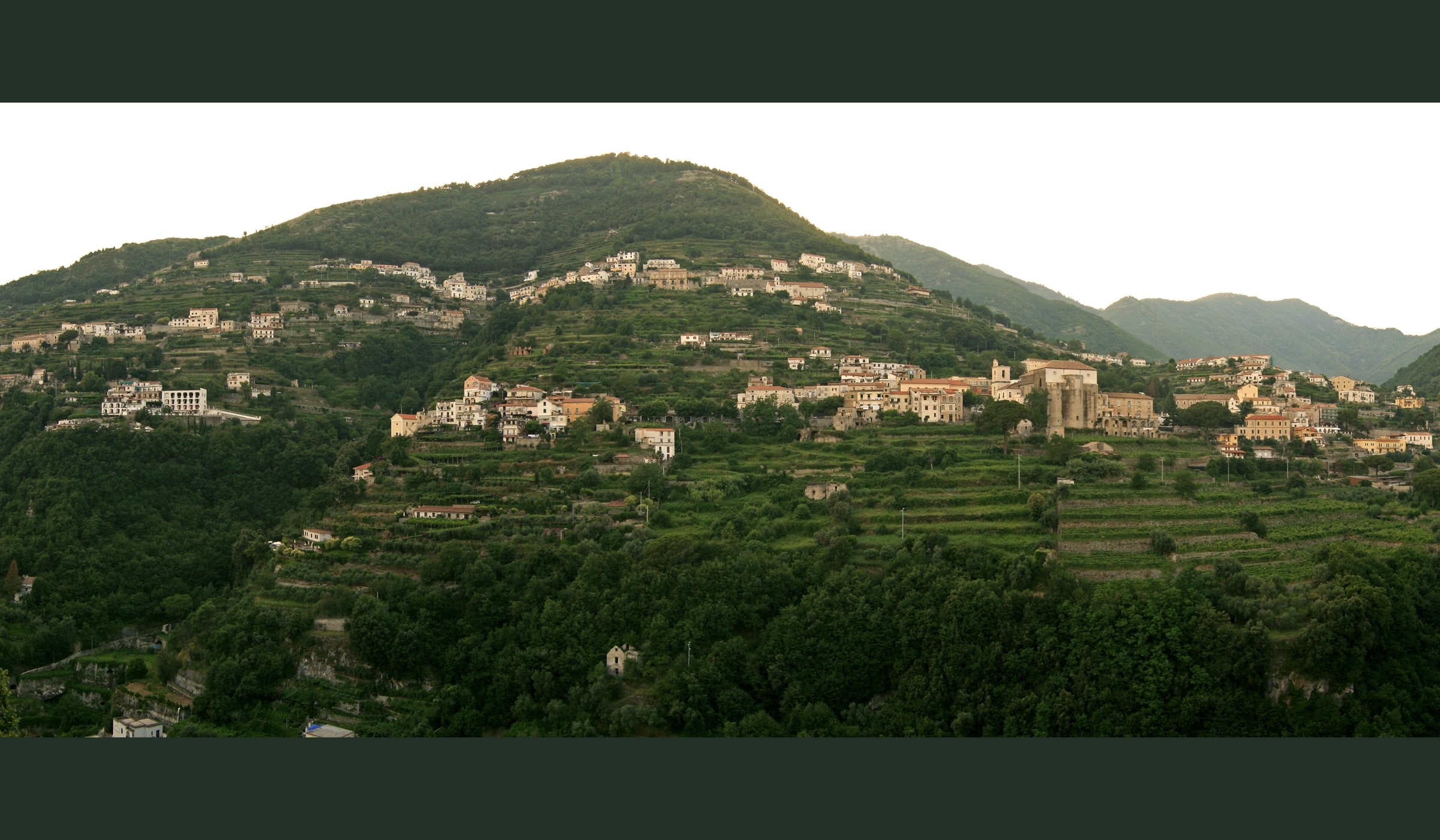
The photograph on this page is a public-domain panorama of Scala, used to show the mountain setting around the monastery rather than to imply a close view of the event chapel. The monastery’s own photographs remain under its copyright and are not reproduced without permission.
Approach Scala as a school of Eucharistic attention. Learn the received 1732 account with its source differences; honor the witnesses and the Church inquiry without claiming a certainty the surviving online record cannot supply; pray with the living community if invited; and leave with Alphonsus’s question about who still waits to hear good news. The deepest continuity here is not a preserved object but a community still organizing its day around Christ the Redeemer.
Visit a living Redemptoristine monastery where the 1732 Eucharistic-sign tradition and the origins of St. Alphonsus’s missionary congregation meet in a continuing rhythm of Mass, adoration, and prayer.
The story & the place today
What happened here—and what a pilgrim can find now
Each record separates the devotional tradition from the present-day visitor evidence. A mapped locality remains visible even when an exact shrine or surviving object has not yet been verified.
Reported Eucharistic signs during exposition at Scala
During several periods of solemn Eucharistic exposition in autumn 1732, witnesses reported seeing forms associated with Christ’s Passion in or around the Host. Official Catholic sources differ on the precise dates and details; the Diocese of Nocera Inferiore-Sarno reports an ecclesiastical inquiry and testimony sent to Rome.
Church of the Redemptoristine monastery at Scala
The Blessed Sacrament exposed in the monastery church during the reported manifestations
The living Monastery of the Most Holy Redeemer remembers the event; no original miracle object is identified
Remembered in Redemptorist history and in a chapel dedicated to the Eucharistic miracle; no fixed universal liturgical feast
Visitor note: The monastery chapel opens for scheduled public Mass, adoration, and Vespers; telephone before visiting
Church wording: Received Catholic and Redemptorist tradition with a reported 1732–1733 ecclesiastical inquiry; no surviving formal decree located — Diocese of Nocera Inferiore-Sarno account, Archdiocese of Amalfi-Cava publication, and official Redemptorist histories
The reports surround the November 9, 1732 foundation of the Redemptorists and later influenced the imagery associated with the Redemptorist emblem.
The sacred connection
People and objects remembered here
These relationships are part of the destination record, with feast days and catalog qualifications shown where available.
founded the Redemptorists at Scala and gave testimony about the reported Eucharistic signs
Feast: August 1foundress of the Redemptoristine order whose first community took shape at Scala
Feast: September 11What to notice
Look closely at the place and its story
The living first monastery
Meet the continuing Redemptoristine community where the order took shape in 1731.
The 1732 testimony
Read the reported signs through official Catholic accounts that preserve both a core tradition and differing dates.
Alphonsus’s foundation
Connect Eucharistic prayer with the November 9 founding of a missionary congregation for neglected communities.
Daily adoration
Join the monastery’s present prayer rhythm when the community confirms that the chapel is open.
A two-place Redemptorist route
Continue to Pagani for St. Alphonsus’s tomb, keeping Scala as the place of origins.
Feasts, anniversaries & celebrations
Two independent self-catering apartments for spiritual stays; reserve directly with the mother superior and confirm access, rates, and dates.
Accommodation details ↗How to read this page
Sources, tradition, and what is verified
The destination record was last checked on 9/29/2026.
This page records the site’s tradition as “Catholic; Redemptoristine contemplative and Redemptorist missionary tradition.” That wording describes the nature of the claim and keeps devotional tradition distinct from independently verified history.
Continue nearby