Why pilgrims come
Encounter the Eucharistic tradition and its surviving evidence
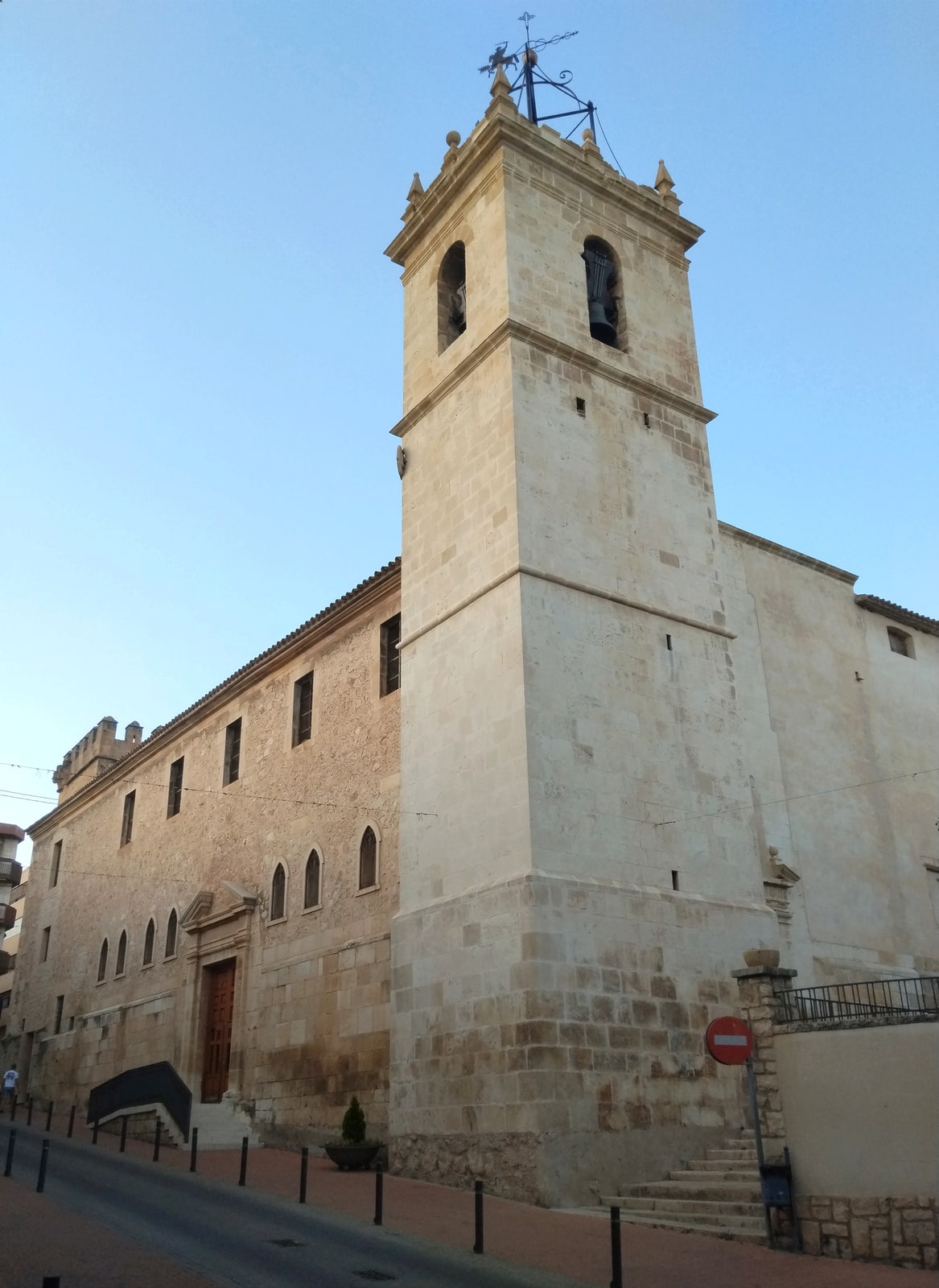
Onil’s Eucharistic destination is the Parish Church of Santiago Apóstol, where the consecrated Host known in Valencian as the Nostre Senyor Robat—“Our Stolen Lord”—is venerated in its own sacramental chapel. The story is not chiefly an account of a sudden visible transformation at Mass. It is the memory of a sacrilegious theft, a community’s long search, the Host’s recovery, and the preservation that local and diocesan Catholic sources continue to describe as extraordinary.
The municipal history names Nicolás Bernabeu, a native of nearby Tibi who had served as an altar boy in Onil. During the night of November 4–5, 1824, he reportedly hid in the church, stole a gold viril containing the consecrated Host, and took other valuables. He first concealed the objects around Tibi, moving the sacred vessel from the Volta Blanca to a place called La Pedrera before attempting to sell pieces in Alicante.
A silversmith recognized that the goods appeared to have come from a church. Bernabeu was detained, while people from Onil and neighboring towns searched the countryside. Teresa Carbonell of Tibi is credited with finding the sacred vessel and Host at La Pedrera. Civil and church authorities, clergy, and residents then accompanied it back toward Onil. The town instituted three days of prayer in reparation and thanksgiving, a pattern remembered in the annual observance today.
Local sources do not give the theft date identically. The Onil municipal festival history places it during the night of November 4–5, while the municipality’s chapel page says the event occurred in the early hours of November 6. Both agree that the Host was recovered and returned on November 28. Catholic Tourist preserves that disagreement and uses only “November 1824” for the theft rather than pretending that one exact date has been settled by the available sources.
The Host is not treated here as a generic relic. The Diocese of Orihuela-Alicante’s 2025 publication says that Jesus Christ is adored in the parish sacramental chapel in a consecrated Host preserved since the early nineteenth century. The Onil municipality likewise identifies the Host in the Capilla del Senyor Robat and describes it as incorrupt. This is a current venerated Eucharistic object in an active parish, not simply a lost item recalled by a plaque.
At the same time, “incorrupt” remains the devotional and ecclesial wording of the cited sources. The St. Carlo Acutis exhibition says that in 1943 a delegate of the Archbishop of Valencia confirmed the Host’s authenticity and preservation. This research pass did not locate the primary act or a modern laboratory report. The page therefore records the continuing custody, diocesan language, and exhibition claim without presenting a scientific conclusion Catholic Tourist has independently established.
The Host is kept in the Churrigueresque Capilla del Senyor Robat on the east side of Santiago Apóstol Parish. The chapel’s exuberant Baroque decoration contrasts with the church’s restrained stone nave. Visitors should also see the restored retablo of St. James, an earlier work transferred through several settings and returned to the parish after restoration. Its central panel presents St. James the Greater, surrounded by scenes including the Annunciation, Nativity, Adoration, Resurrection, Mary Magdalene, and the Dormition of the Virgin.
The parish is a living church of the Diocese of Orihuela-Alicante, not a museum with guaranteed object-display hours. Its current website lists the church at Calle Mayor 16 and provides direct parish contact. A 2006 letter from Bishop Rafael Palmero Ramos describes the annual feast as an occasion to deepen Eucharistic faith and turn worship into service of neighbors, especially those in need. That pastoral framing is more important than treating preservation as spectacle.
Onil has celebrated the Nostre Senyor Robat observance since 1824 on November 28, 29, and 30. November 28 is the principal day and local holiday, traditionally including a solemn procession; the municipal calendar and parish event listings show that the devotion remains public. Exact Masses, procession routes, access to the chapel, and exposition arrangements can vary, so confirm the current program directly with the parish.
Pilgrims should approach the Host as the Blessed Sacrament and follow every instruction of the clergy. Photography may be restricted, and the object may not be continuously exposed at close range. Allow time for Mass or silent adoration, the sacramental chapel, and the St. James retablo. The heart of Onil’s tradition is not that an object defeated decay as a curiosity, but that a community answered sacrilege with reparation, recovery, worship, and a two-century public memory.
Pray in the sacramental chapel before the Nostre Senyor Robat, then read the story through Onil’s continuing practice of reparation, thanksgiving, and Eucharistic service rather than as a curiosity about preservation.
The story & the place today
What happened here—and what a pilgrim can find now
Each record separates the devotional tradition from the present-day visitor evidence. A mapped locality remains visible even when an exact shrine or surviving object has not yet been verified.
The theft, recovery, and preservation of the Nostre Senyor Robat
A consecrated Host and sacred vessels were stolen from Santiago Apóstol Parish in November 1824, hidden near Tibi, found by Teresa Carbonell, and solemnly returned to Onil on November 28. The Host remains venerated in the parish sacramental chapel.
Santiago Apóstol Parish, Onil, with concealment and recovery near Tibi
The consecrated Host known as the Nostre Senyor Robat
Capilla del Senyor Robat, Santiago Apóstol Parish, Onil
Annual november 28 to 30 local feast verified
Visitor note: Active parish and sacramental chapel; confirm current access and exposition directly
Church wording: Long-standing diocesan Eucharistic devotion centered on a preserved consecrated Host — Diocese of Orihuela-Alicante and Santiago Apóstol Parish
Municipal sources disagree whether the theft occurred on the night of November 4–5 or in the early hours of November 6, but agree on the November 28 recovery and return. The 1943 authentication claim is attributed to the exhibition archive.
The sacred connection
People and objects remembered here
These relationships are part of the destination record, with feast days and catalog qualifications shown where available.
titular patron of the parish and central figure of its historic retablo
Feast: July 25Venerated Eucharistic species · Continuously held and venerated in the parish’s diocesan tradition; extraordinary preservation is not presented as an independent modern scientific finding
Active parish and Blessed Sacrament setting; confirm exposition and chapel access directly and obey photography restrictions.What to notice
Look closely at the place and its story
The Capilla del Senyor Robat
Enter the Churrigueresque sacramental chapel where the Host is presently venerated.
The recovery of November 1824
Follow the story from theft and concealment near Tibi to Teresa Carbonell’s discovery and the community’s solemn return.
A preserved source disagreement
Notice that local sources differ by a day on the theft while agreeing on the November 28 recovery.
The retablo of St. James
Study the restored panels centered on the parish patron and scenes from the lives of Christ, Mary, and the saints.
Three days of Eucharistic memory
The November 28–30 observance transforms the 1824 return into prayer, procession, reparation, and thanksgiving.
Feasts, anniversaries & celebrations
How to read this page
Sources, tradition, and what is verified
The destination record was last checked on 9/29/2026.
This page records the site’s tradition as “Roman Catholic parish, Eucharistic reparation, and local diocesan pilgrimage.” That wording describes the nature of the claim and keeps devotional tradition distinct from independently verified history.
Continue nearby