Why pilgrims come
Discover what makes Basilica and Shrine of Our Lady of Impruneta a place of pilgrimage
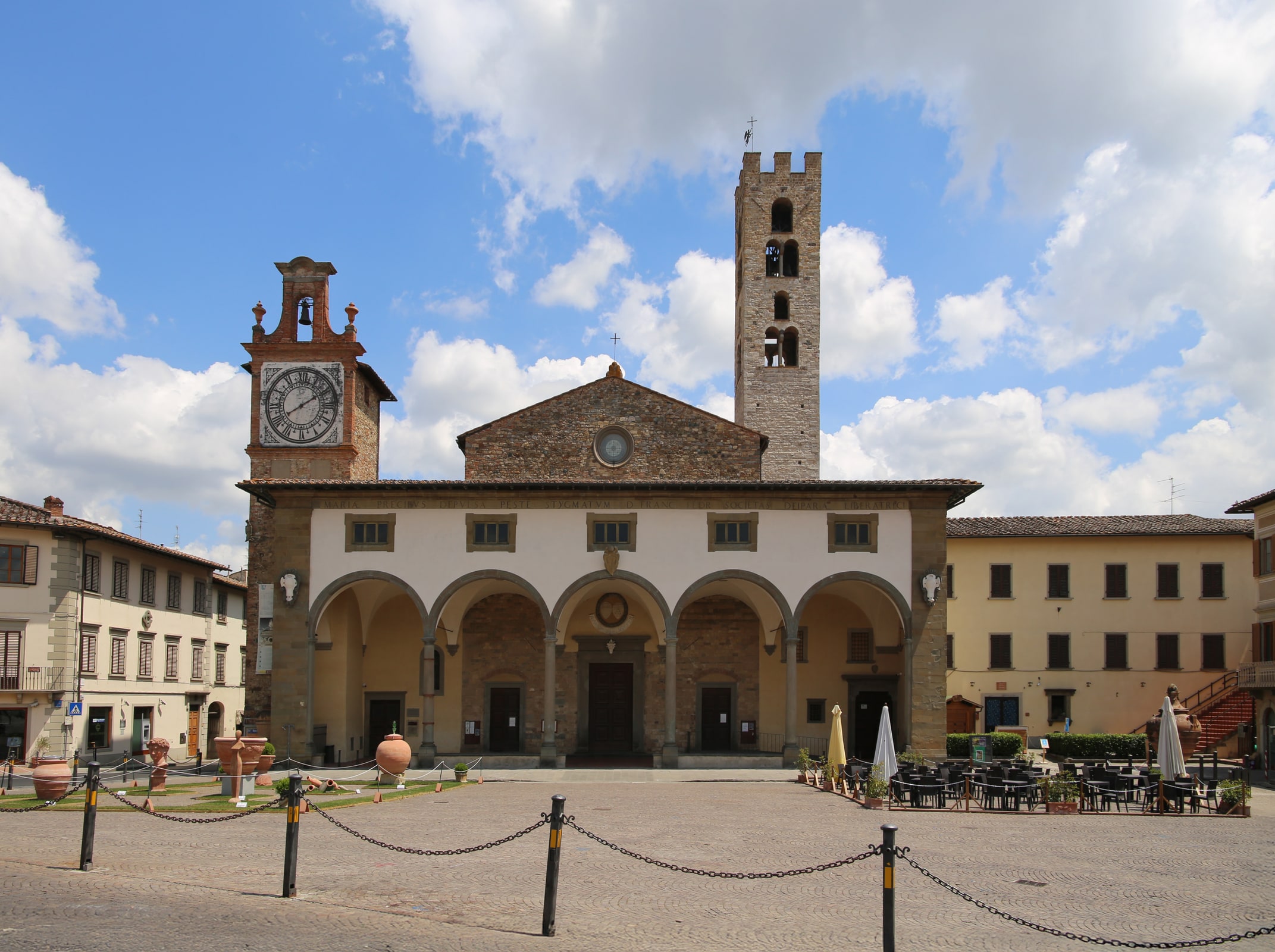
At the northern gateway to Chianti, the Basilica of Santa Maria all'Impruneta preserves the image that generations of Florentines have invoked as a special protectress of their city. The shrine belongs to the rural hills, yet its history is inseparable from Florence: in times of plague, flood, war, and public fear, the image was carried in solemn procession from Impruneta into the city.
The basilica's origins combine record and legend. A surviving inscription dates the church's consecration to January 3, 1060, and Romanesque fabric remains in the crypt and bell tower. Tradition tells that oxen stopped and knelt at the place where a long-hidden image of Mary was discovered. The further claim that St. Luke painted it belongs to devotional tradition, not demonstrable art history; the shrine itself distinguishes the power of the tradition from the limits of documentary proof.
By the fourteenth century, devotion to the Madonna of Impruneta had transformed the rural parish church into a major sanctuary equipped to receive pilgrims. The revered panel was repeatedly taken to Florence. One of the most remembered processions accompanied the city's deliverance from the plague of 1630–1633, after which grateful Florentines contributed to the loggia and presented valuable votive gifts.
The church also tells a story of destruction and recovery. Bombing in July 1944 devastated much of the basilica and its Baroque decoration. The Marian image survived after being moved for safety and returned to Impruneta in 1947 on an ox-drawn cart, consciously repeating the visual language of the ancient finding legend.
The image is normally veiled rather than continuously exposed. The official basilica presently celebrates Mass at the Madonna's altar on Wednesday mornings with an exposition of the image; additional public expositions follow the sanctuary's calendar. Pilgrims should consult the official site rather than assume the image will be visible at any random hour.
This is an excellent first or final stop for a Catholic journey through Chianti. It gives the region a Marian center and reveals that the famous Tuscan landscape was also a network of parish churches, processions, vows, and pilgrimage roads. Come for Mass if possible, visit the treasury when arranged, and let the long relationship between country shrine and city teach how a sacred image can become part of a people's shared memory.
Build the visit around the venerated image rather than treating the basilica as a roadside art stop. Wednesday morning currently offers Mass at the Madonna’s altar and an announced exposition; add the treasury museum by advance arrangement.
The sacred connection
People and objects remembered here
These relationships are part of the destination record, with feast days and catalog qualifications shown where available.
Sacred image · Historic image with a documented centuries-old public cult; attribution to St. Luke and discovery story are devotional traditions
The official shrine currently identifies Wednesday morning Mass at the Madonna’s altar as a regular opportunity for exposition. Confirm before travel.What to notice
Look closely at the place and its story
The Madonna of Impruneta
Encounter the image carried to Florence across centuries of plague, flood, war, and public prayer.
Wednesday exposition
When the current schedule permits, attend Mass at the Madonna’s altar and see the normally veiled image exposed.
Romanesque roots and wartime rebuilding
Trace the 1060 consecration, surviving medieval fabric, 1944 destruction, and postwar restoration.
Treasury and ex-votos
The gifts surrounding the shrine preserve the memory of Florentine gratitude and supplication.
How to read this page
Sources, tradition, and what is verified
The destination record was last checked on 9/22/2026.
This page records the site’s tradition as “Roman Catholic; Marian sanctuary of the Archdiocese of Florence.” That wording describes the nature of the claim and keeps devotional tradition distinct from independently verified history.
Continue nearby