Why pilgrims come
Visit the resting place and legacy of St. Zita
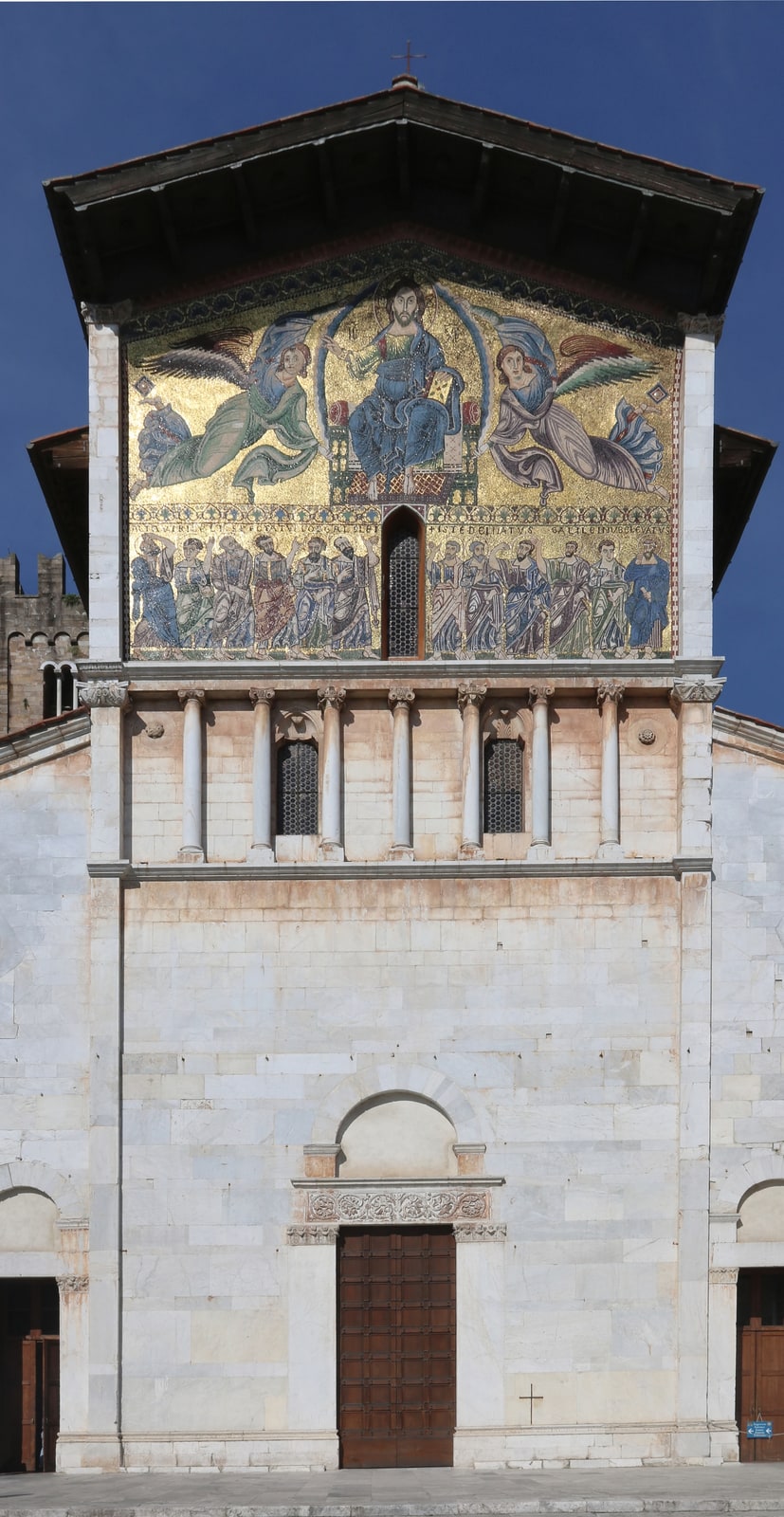
The golden mosaic on the facade of San Frediano is one of Lucca's unforgettable images, but the basilica's deepest Catholic significance lies inside. Here the people of Lucca venerate the body of St. Zita, the household servant whose hidden fidelity made an ordinary life of work into a school of holiness.
Zita was born in 1218 at Monsagrati in the Diocese of Lucca. At about twelve she entered domestic service in the Fatinelli household and remained there for decades. Her charity, patience, prayer, and conscientious work won respect even after early hostility. The familiar miracle stories—bread changed into flowers, food multiplied for the poor—express the Church's memory of a woman whose sanctity was practiced through daily responsibilities rather than public office.
She died on April 27, 1278. Lucca's citizens insisted that she receive an honored burial in San Frediano, and devotion grew around her tomb. Her cult was formally confirmed in the seventeenth century, and Pope Pius XII later named her patron of domestic workers. Her body, vested and visible within its reliquary, remains the focal point of pilgrimage to the basilica.
San Frediano has its own ancient story. Tradition associates its foundation with St. Frediano, an Irish-born bishop of Lucca; a church here is documented by 685. The present Romanesque basilica took shape largely in the twelfth century. Its rare thirteenth-century facade mosaic shows Christ ascending in glory, while the interior preserves a celebrated Romanesque baptismal font, medieval and Renaissance chapels, and art connected with Lucca's devotion to the Holy Face.
Each September 13 the evening Luminara di Santa Croce begins at San Frediano and moves through candlelit streets toward the cathedral. That procession connects this basilica with Lucca's wider sacred geography. A pilgrim can therefore begin with Zita's holiness in ordinary work, walk the processional route, and end before the ancient Holy Face of Christ.
Do not reduce Zita to a quaint patroness of housework. Her shrine asks whether service performed without applause can become a real path to union with God. Pray for domestic workers and caregivers, for those whose labor is overlooked, and for the grace to make necessary daily work an offering rather than a burden.
Begin at St. Zita’s reliquary, then read the basilica’s mosaic, baptismal font, and chapels through the theme of humble service becoming holiness. Pair the visit with Lucca Cathedral and the Holy Face.
The sacred connection
People and objects remembered here
These relationships are part of the destination record, with feast days and catalog qualifications shown where available.
body and principal shrine
Feast: April 27traditional founder and patron of the basilica
Feast: November 18Bodily relics · Ecclesiastically preserved and publicly venerated
Access follows the active basilica’s current worship and visitor schedule, with special arrangements around the April feast.What to notice
Look closely at the place and its story
Body of St. Zita
Pray before the servant saint whose hidden work became a path of sanctity.
Ascension mosaic
See the rare Byzantine-influenced mosaic crowning the Romanesque facade.
Romanesque baptismal font
Read the carved biblical cycle within one of Lucca’s most important medieval churches.
Beginning of the Luminara
Understand San Frediano as the starting point of Lucca’s candlelit Holy Cross procession.
Feasts, anniversaries & celebrations
How to read this page
Sources, tradition, and what is verified
The destination record was last checked on 9/22/2026.
This page records the site’s tradition as “Roman Catholic; minor basilica in the Archdiocese of Lucca.” That wording describes the nature of the claim and keeps devotional tradition distinct from independently verified history.
Continue nearby