Why pilgrims come
Discover what makes Lucca Cathedral and the Holy Face of Lucca a place of pilgrimage
Lucca Cathedral keeps one of medieval Europe's most influential images of Christ: the Volto Santo, or Holy Face of Lucca. The monumental wooden crucifix presents Christ alive upon the cross, clothed in a long tunic and looking outward with large glass eyes. Pilgrims traveling the Via Francigena made Lucca a major stopping place because of it, and the image eventually became a symbol of the city itself.
Tradition says Nicodemus began carving the crucifix from his memory of Jesus but did not dare complete the face; it appeared miraculously finished. Hidden for centuries, the image was placed on an unmanned boat, reached the Italian coast near Luni, and was brought toward Lucca on an ox-drawn cart. A further legend says it moved from San Frediano to the cathedral during the night, revealing where it wished to remain. These stories explain the devotion but should not be confused with documentary provenance.
Modern scientific work has made the object more remarkable without proving the legend. Radiocarbon testing places the wood in the late eighth or ninth century, making the Volto Santo the oldest surviving monumental wooden sculpture in the West according to the cathedral museum. Its early date helps explain why the image generated copies across Europe and why Lucca's version became central to the visual culture of medieval pilgrimage.
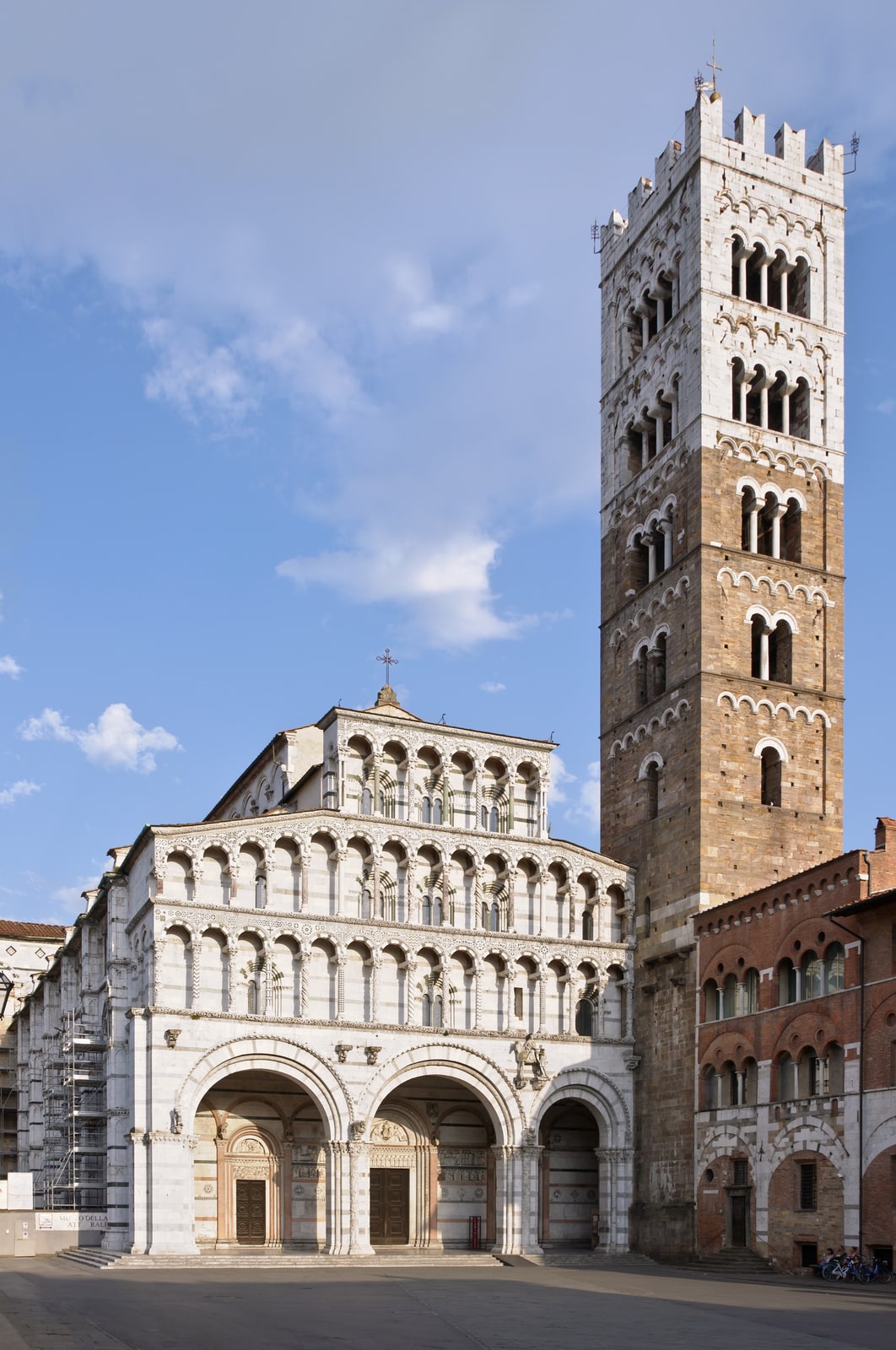
The cathedral itself was founded, according to tradition, by St. Frediano and became the city's cathedral by the eighth century. Pope Alexander II, formerly Bishop Anselm of Lucca, inaugurated a new building in 1070 in the presence of Matilda of Tuscany. The asymmetrical Romanesque facade, sculpted portals, pilgrimage labyrinth, lofty Gothic interior, tomb of Ilaria del Carretto by Jacopo della Quercia, and paintings by Ghirlandaio and Tintoretto make the church important even apart from the Holy Face.
On the evening of September 13, the Luminara di Santa Croce carries a candlelit procession from San Frediano through Lucca to the cathedral. The Exaltation of the Holy Cross follows on September 14, when the Volto Santo is honored with particular solemnity and traditionally adorned with its precious ornaments. The route binds the city's churches and streets into one act of public devotion.
The great crucifix underwent an extensive conservation project and returned to public view in 2025. Display arrangements can continue to change as the work is reintegrated with Matteo Civitali's fifteenth-century tempietto, so pilgrims should consult the cathedral complex before travel. Stand before the image not as a curiosity but as generations of pilgrims did: looking upon Christ who reigns through self-giving love.
Begin with the Volto Santo, separating its devotional legend from the sculpture’s extraordinary verified age. Then follow the cathedral’s pilgrimage labyrinth, portals, tombs, and paintings before walking to San Frediano.
The sacred connection
People and objects remembered here
These relationships are part of the destination record, with feast days and catalog qualifications shown where available.
traditional founder of the cathedral church
Feast: November 18Sacred image · Historic early-medieval sculpture dated by radiocarbon analysis; legendary attribution to Nicodemus is devotional tradition
Consult the cathedral complex for current hours, ticketing, liturgical access, and restoration-related display changes.What to notice
Look closely at the place and its story
The Holy Face of Lucca
Encounter the monumental early-medieval crucifix that made Lucca a major center of European pilgrimage.
Legend and scientific dating
Hold the Nicodemus tradition together with radiocarbon evidence placing the sculpture in the late eighth or ninth century.
Pilgrimage labyrinth and sculpted portals
Read the cathedral facade as a threshold shaped for medieval pilgrims.
Ilaria del Carretto
See Jacopo della Quercia’s celebrated funerary monument without losing sight of the cathedral’s liturgical center.
Luminara di Santa Croce
Return on September 13 if possible to see Lucca’s churches and streets joined by candlelight.
Feasts, anniversaries & celebrations
How to read this page
Sources, tradition, and what is verified
The destination record was last checked on 9/22/2026.
This page records the site’s tradition as “Roman Catholic; cathedral of the Archdiocese of Lucca and Holy Cross shrine.” That wording describes the nature of the claim and keeps devotional tradition distinct from independently verified history.
Continue nearby