Why pilgrims come
Visit the resting place and legacy of St. Mary Magdalene de’ Pazzi
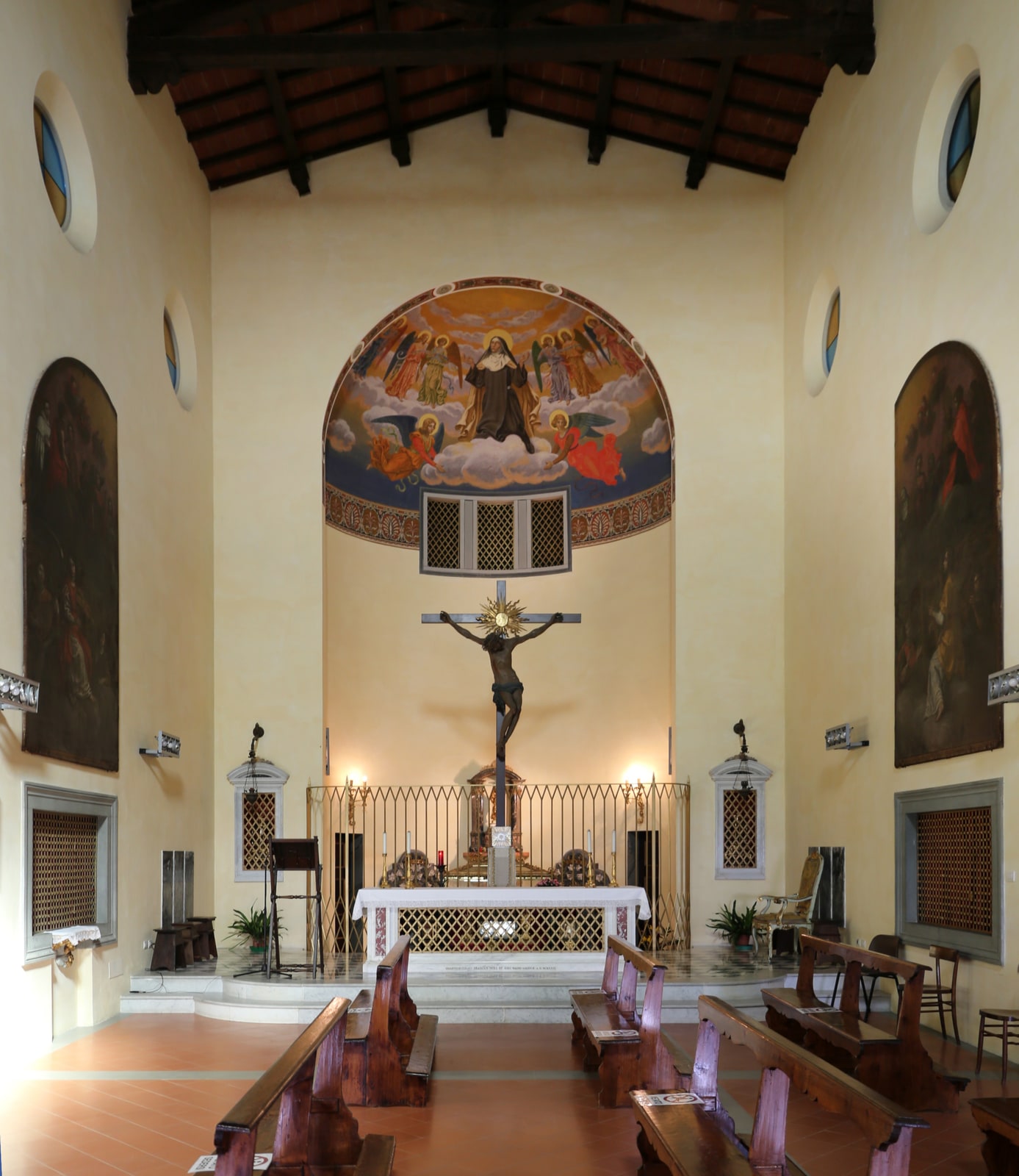
In the Careggi hills north of central Florence, the cloistered Carmelite monastery of Santa Maria Maddalena de’ Pazzi preserves the body of the Florentine mystic whose life joined intense contemplative prayer to service, community life, and a passionate desire for renewal in the Church. This is her principal present-day pilgrimage destination, distinct from the former monastery at Borgo Pinti where she lived and died.
She was born Caterina de’ Pazzi in Florence on April 2, 1566. Benedict XVI’s account describes an unusually early attraction to prayer and the Eucharist: she received First Communion at ten and made a private vow of virginity soon afterward. On January 30, 1583, she entered the Carmelite monastery of Santa Maria degli Angeli in Borgo San Frediano and took the name Mary Magdalene. Serious illness led her community to permit an early profession on May 27, 1584.
Her mystical experiences were not written as a polished autobiography. At the instruction of her superiors, sisters recorded her words and experiences in manuscript collections known as The Forty Days, The Colloquies, Revelations and Intelligences, and The Probation. Those texts describe both consolation and trial, but her spirituality consistently returns to the Trinity, the Incarnation, the Eucharist, and Christ’s suffering love.
Mary Magdalene also wrote letters urging reform and fidelity in the Church. The drama of that language can obscure the ordinary work surrounding it: she served the community, formed novices, and practiced charity within the enclosure. Benedict XVI presents her mysticism as inseparable from ecclesial communion and from a daily life shaped by the Gospel.
After years of physical suffering, she died on May 25, 1607, at about three in the afternoon. Urban VIII beatified her less than two decades later, and Clement IX canonized her in 1669. Church sources describe her body as incorrupt. When the Carmelites left their earlier Florentine house in 1928, they brought her body to the present monastery at Careggi, where it is venerated in the monumental gilded-bronze and precious-stone urn designed by Giovanni Battista Foggini in the early eighteenth century.
Pilgrims should approach this as a living enclosed monastery, not a museum stop. Pray at the saint’s shrine, read a short passage from her writings, and protect the silence of the community. The Archdiocese of Florence lists the monastery within the parish territory of San Pietro a Careggi, but a reliable public schedule for visitors, Mass, or confession was not located. Contact the monastery or parish before making a special journey, and never assume that enclosure, liturgy, or access to the church will follow tourist hours.
Pray at the bodily shrine of Florence’s Carmelite mystic, then read her life through the unity of Eucharistic devotion, Trinitarian prayer, service to her sisters, and love for the Church. Respect the silence and enclosure of the living community.
The sacred connection
People and objects remembered here
These relationships are part of the destination record, with feast days and catalog qualifications shown where available.
principal shrine, bodily remains, and living Carmelite community
Feast: May 25Bodily remains · Longstanding ecclesial custody; described as incorrupt by official Church sources
This is an enclosed monastery. Confirm current church access and any feast-day arrangements before travel.What to notice
Look closely at the place and its story
The saint’s monumental urn
Venerate her body in the Foggini shrine translated here with the Carmelite community in 1928.
A life formed by the Eucharist
Recall the First Communion, Carmelite profession, and sacramental center of her spirituality.
Mysticism recorded by her sisters
Meet the manuscript collections that preserve her prayer, trials, and theological language.
A contemplative who loved the Church
Hold her reforming letters together with service, obedience, and ordinary community life.
Living Carmelite enclosure
Let the active monastery shape a visit marked by quiet, reverence, and restraint.
Feasts, anniversaries & celebrations
How to read this page
Sources, tradition, and what is verified
The destination record was last checked on 9/29/2026.
This page records the site’s tradition as “Roman Catholic; Discalced Carmelite enclosed monastery.” That wording describes the nature of the claim and keeps devotional tradition distinct from independently verified history.
Continue nearby